
-
2439
-
2230
-
1587
-
1517
-
1419
Highbrow Culture in Politics
Downloads
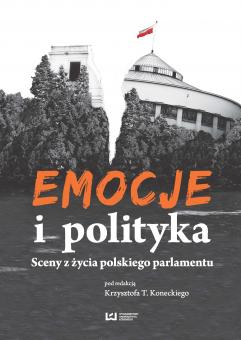
Quoting other peopleʼs arguments by politicians, to rely on someone elseʼs work is rarely seen, but often causing extreme emotions. Recalling (especially inaccurate) the fragment from foreign language authors can cause misunderstanding, confusion of content and change the original meaning. The rhetorical device of this kind can be traced and watched several times by access to the media, what was done in our sociological analysis. Politicians, like actors, through the selection of specific measures of self-presentation (in this case, quotations from literature, cite the author of the widely known) provide customers reality as amended, such that they would like to be seen (Goffman 2008). The analyzed verbal speech in the Sejm were characterized by a strong emotional tone and illustrates language, that is far from the classical canons of savoir vivre (Marcjanik 2014; Achtelik, Tambor 2013). Verbal bon ton in parliament has, through its application, fulfilled many functions, from polite sarcasm through the manifesto of the supremacy, to the personal presentation of erudition. At the outset, the author describes leading concepts used in the chapter. In the next part the author addresses the videos with the participation of politicians who during their public appearances quoted of another authors. In summary the author of the chapter focuses on the function of citations and there are taken into account the positive aspects of using the prose/poetry by individuals elected to public office.
License

This work is licensed under a Creative Commons Attribution-NonCommercial-NoDerivatives 4.0 International License.
How to Cite
Category
- Archaeology
- Bibliology and information science
- Biology
- Chemistry
- Economics and management
- Ethnology and cultural anthropology
- Polish philology
- Foreign language studies
- Philosophy
- Physics
- Geography
- History
- Linguistics
- Judaica
- Culture and art
- Literary Studies
- Mathematics
- Pedagogy
- Textbooks for foreigners
- Political science and international relations
- Law
- Psychology
- Sociology
- Other
- Open Access
Series
- 100 Years of Independence
- The Academy of Local Governments
- The Academy of Management and Finance
- Handicapable
- Literary and Linguistic Analects
- Balkans XX/XXI
- Bibliotheca Litteraria
- Bibliotheca Philosophica
- Biography and Biography Research
- Byzantina Lodziensia
- Contemporary Asian Studies Series
- Digitisation
- Education for Wisdom
- Economics
- Film! Scholars
- Finance
- Gerontology
- Interdisciplinary Urban Studies
- Literary Interpretations
- Jerzy Giedroyc and...
- Jerzy Giedroyc and Witnesses of History
- Winter of Life?
- Linguistics
- Judaica Lodzensia
- Jurisprudence
- What Is Man?
- Cognitive Science
- Communication and Media
- A Very Short Introduction
- Literary Culture of Lodz
- Literary Studies
- Lodz Studies in English and General Linguistics
- Lodz in the Polish People's Republic. The Polish People's Republic in Lodz
- Manufactura Hispánica Lodziense
- Marketing
- The monographs of the Section of Disability Sociology of the Polish Sociological Association
- The Art of Learning – The Learning of Art
- Faces of Feminism
- Faces of war
- Biographical Perspectives
- Politology
- Poland and Central and Eastern Europe in the 20th Century
- Polish Film Culture
- Law
- The Polish People's Republic. Biographies
- Existence and Literature Project
- The Psychology of Everything
- Research on Science & Natural Philosophy
- Romanistyka dla Teatru
- Series Ceranea
- The Conference on Social Pedagogy under the Patronage of the Committee on Pedagogical Sciences of the Polish Academy of Sciences
- Art – Media – Culture
- Pedagogical Therapy
- Creativity and Education
- Vade Nobiscum
- Warsztaty z Geografii Turyzmu
- Early Education
- In Search for the 21st Century Ideas
- The Tower of Babel – in Polish
- Management
- Private Life of Poles in the 19th Century