

-
5213
-
3502
-
3368
-
3175
-
2941
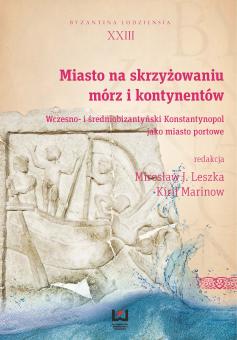
Miasto na skrzyżowaniu mórz i kontynentów. Wczesno- i średniobizantyński Konstantynopol jako miasto portowe
Byzantina Lodziensia XXIII
Mirosław J. Leszka (red.)
Kirił Marinow (red.)
Tom:
XXIII
Seria:
Byzantina Lodziensia
Książka
ISBN-13 (15)
978-83-8088-370-3
E-book
ISBN-13 (15)
978-83-8088-371-0
Słowa kluczowe:
Konstantynopolitańskie porty, rzymska marynarka wojenna, biskupi Konstantynopola, Chazarowie, Komnen
Opublikowane:
29 lipca 2016
Kategorie:
Historia, Otwarty dostęp
Pliki do pobrania
Konstantynopol to miasto szczególne, tak ze względu na wyjątkowe miejsce w dziejach średniowiecznego świata, jak i walory swego geograficznego położenia. Usytuowane malowniczo nad zatoką Złotego Rogu, Bosforem i morzem Marmara od swoich początków, jeszcze jako Bizancjum związane było z morzem. Szczególnie uwidoczniło się to w czasach, kiedy stało się ono centrum państwowości wschodniorzymskiej, wielką aglomeracją, zamieszkiwaną przez setki tysięcy ludzi. Wówczas gros zaopatrzenia żywnościowego, materiałów budowlanych, ale i np. dóbr luksusowych docierało drogą morską i wyładowywanych było w konstantynopolitańskich portach. Drogą morską przybywali do Miasta w różnych celach także ludzie: posłowie, kupcy, duchowni, pielgrzymi, ci, którzy marzyli o zrobieniu kariery i ci, którzy na cesarskim dworze dobijać się chcieli sprawiedliwości. Właśnie związkom Konstantynopola z morzem poświęcona została prezentowana książka.
Konstantynopolitańskie porty IV–XII w.
Mirosław J. Leszka
Wszystkie okręty cesarza Rozważania nad stanem rzymskiej marynarki wojennej za panowania cesarza Maurycjusza (582–602)
Łukasz Różycki
Wygnani biskupi Konstantynopola w późnej starożytności i ich kontakty ze stolicą nad Bosforem
Rafał Kosiński
Chazarowie w Konstantynopolu (VII–XI w.)
Jarosław Dudek
Winieta Konstantynopola na mapie z Ebstorf
Piotr Kochanek
Hodegon – z rozważań nad pierwotną lokalizacją konstantynopolitańskiego sanktuarium
Piotr Łukasz Grotowski
ACO, Acta Conciliorum Oecumenicorum, t. I, Concilium Universale Ephesenum, ed. E. Schwartz, Berolini et Lipsiae 1921–1930; t. II, Concilium Universale Chalcedonense, ed. E. Schwartz, Berolini et Lipsiae 1932–1938; t. III, Collectio Sabbaitica contra Acephalos et Origeniastas destinata. Insunt Acta Synodorum Constantinopolitanae et Hierosolymitanae A. 536, ed. E. Schwartz, Berolini 1940; t. IV, Concilium Universale Constantinopolitanum sub Iustiniano habitum, ed. E. Schwartz, J. Straub, Berolini et Lipsiae 1914 (1971).
Akta soborowe, Sacrorum conciliorum nova et amplissima collectio, ed. G.D. Mansi, t. IX, Venetii 1763.
Agapiusz, Agapios, Kitab al-‘Unvan, ed. A.A. Vasiliev, [w:] PO 8, 1912, s. 399–547.
Andrzej Dandolo, Andreae Danduli Venetorum Ducis Chronicon Venetum, [w:] Rerum italicarum scriptires, t. XII, 1, ed. L.A. Muratori, Bologna 1900.
Anna Komnena, Annae Comnenae Alexias, ed. D.R. Reinsch, A. Kambylis, Berlin–New York 2001.
Antologia grecka, The Greek Anthology, ed. W.R. Paton, t. III, London–New York 1925.
Aretas z Cezarei, Arethae Scripta Minora, rec. G.L. Westerink, t. II, Lipsiae 1972.
Atanazy z Aleksandrii, Historia arian, Athanasius, Werke, Bd. II, 1, Die Apologien, hrsg H.G. Opitz, Berlin–Leipzig 1935.
Barhadbesabba z Arbaïa, Historia kościelna, La seconde partie de l’histoire de Barhadbešabba ‘Arbaïa et controverse de Théodore de Mopsueste avec les macédoniens, ed. F. Nau, PO 9, Paris 1913, s. 493–677.
Bar Hebraeus, The Chronograhy of Abu‘l-Faraj (1225–1286), the son of Aaron, the Hebrew physician commonly knows as Bar Hebraeus, ed. E.A.W. Budge, Amsterdam 1976.
Beniamin z Tudeli, Die Reisebeschreibungen R. Benjamin von Tudela, ed. M.N. Adler, Jerusalem 1903.
Buondelmonti, Christoph. Bondelmontii Florentini, Librum insularum Archipelagi, ed. G.B.L. Sinner, Lipsiae–Berolini 1824.
Buondelmonti, Cristoforo Buondelmonti, Liber insularum archipelagi, hrsg. I. Siebert, M. Plassmann, Wiesbaden 2005.
Buondelmonti, Legrand É., Description des îles de l’archipel Grec (1420) par Christophe Buondelmonti, Amsterdam 1970.
CJ, Corpus Iuris Civilis, vol. II, Codex Iustinianus, rec. P. Krueger, Berolini 1906.
CTh, Theodosiani libri XVI cum Constitutionibus Sirmondianis et Leges novellae ad Theodosianum pertinentes, ed. Th. Mommsen, P.M. Meyer, Berlin 1905.
Dispositio, Dispositio topographica, [w:] Scriptores Originum Constantinopolitanarum, ed. T. Preger, t. II, Lipsiae 1907 (reprint New York 1975), s. 290–313.
Epifaniusz, Epiphanius Salaminensis, Ancoratus, ed. K. Holl, Berlin 1915.
Eustacjusz Makrembolita, Eustathius Macrembolites, De Hysmines et Hysminiae amoribus libri XI, ed. M. Marcovich, Monachii et Lipsiae 2001.
Eustacjusz z Tesaloniki, Komentarz do Iliady, Eustathii archiepiscopi Thessalonicensis commentarii ad Homeri Iliadem pertinentes, ed. M. Van der Valk, vol. I, Leiden 1971.
Eustacjusz z Tesaloniki, Zdobycie Tesaloniki, Eustathios of Thessaloniki, The Capture of Thessaloniki, ed., transl. J.R. Melville-Jones, Canberra 1988.
Ewagriusz Scholastyk, The Ecclesiastical History of Evagrius with the scholia, ed. J. Bidez, L. Parmentier, London 1898.
Ewagriusz Scholastyk, Historia Kościoła, przeł. S. Kazikowski, wstęp E. Wipszycka, Warszawa 1990.
Filostorgiusz, Historia kościelna, Philostorgius, Kirchengeschichte. Mit dem Leben des Lucian von Antiochien und den Fragmenten des arianischen Historiographen, hrsg J. Bidez, bearb. F. Winkelmann, Berlin 1981.
Filoteusz, Oikonomidès N.N., Les listes de préséance byzantines des IXe et Xe siècles, Paris 1972, s. 63–205.
Focjusz, Biblioteka, Photius, Bibliothéque, ed. R. Henry, t. I, Paris 1959.
Focjusz, Homilia X, Focjusz, Homilia X na inaugurację kościoła Nea Ecclesia, przeł. M. Dzielska, Znak 46.3, 1994, s. 57–61.
Grzegorz Wielki, Święty Grzegorz, Listy, t. I, tłum. J. Czuj, Warszawa 1954.
Hezjod, Tarcza, Hesiodus, Scutum, [w:] Hesiodus, Carmina, rec. A. Rzach, Stutgardiae et Lipsiae 1992, s. 99–130.
Hezjod, Tarcza, [w:] Hezjod, Narodziny bogów (Theogonia). Prace i dni. Tarcza, przeł. J. Łanowski, Warszawa 1999.
Hudūd al-‛Ālam, Hudūd al-‛Ālam, The Regions of the World: A Persian Geography 372 A. H. – 982 A.D., transl. V. Minorsky, pref. V.V. Barthold, Oxford 1937.
Ibn Hurdãdbeh, Kitab al-masãlik wa’mamãlik, [w:] Źródła arabskie do dziejów Słowiańszczyzny, red. G. Labuda, przeł. T. Lewicki, t. I, Wrocław–Kraków 1956, s. 41–157.
Jakub, Jacobus Sarugensis, Gedicht über die Messe für die Verstorbenen, übersetzt S. Landesdorfer, Kempten–München 1912.
Jan Kantakuzen, Ioannis Cantacuzeni Eximperatoris historiarum Libri IV, rec. L. Schopeni, t. I–III, Bonnae 1828–1831.
Jan Kinnamos, Ioannis Cinnami Epitome Rerum ab Ioanne et Alexio Comnenis Gestarum, A. Meineke, Bonn 1836.
Jan Malalas, Ioannis Malalae chronographia, rec. J. Thurn, Berolini et Novi Eboraci 2000.
Jan Skylitzes, Ioannis Scylitzae Synopsis Historiarum, ed. H. Thurn, Berlin–New York 1973.
Jan z Bejt-Aftonii, Żywot Sewera, Vie de Sévère par Jean, superieur de monástere de Beith-Aphthonia avec divers textes syriaques, grecs et latins, éd. M.-A. Kugener, [w:] PO 2, Paris 1907, s. 203–400.
Jan z Efezu, Żywoty świętych Wschodu, John of Ephesus, Lives of the Eastern Saints, ed. E.W. Brooks, PO 18, Paris 1924.
Jan Zonaras, Ioannis Zonarae Epitome historiarum, ed. Th. Büttner-Wobst, Bonnae 1897.
Jan Zonaras, Ioannis Zonarae Epitome historiarum, ed. L. Dindorfius, t. IV, Lipsiae 1871.
Jerzy Akropolites, Georgii Acropolitae, Opera, rec. A. Heisenberg, t. I, Lipsiae 1903.
Jerzy Kedrenos, Georgius Cedrenus, Compendium Historiarum, ed. I. Bekker, Bonnae 1838–1839.
Jerzy Kodynos, Georgii Codini Excerpta de antiquitatibus Constantinopolitanis, rec. I. Bekker, Bonnae 1843.
Jerzy Kodynos, Pseudo-Kodinos and the Constantinopolitan court: offices and ceremonies, transl. R. Macrides, J.A. Munitiz, D. Angelov, Surrey-Burlington 2013.
Jerzy Mnich, Georgii Monachi Chronicon, ed. C. de Boor, vol. II, Lipsiae 1904.
Jerzy Mnich, Georgios Monachos, [w:] Theophanes Continuatus, Ioannes Cameniata, Symeon Magister, Georgios Monachos, ed. B.G. Niebuhr, rec. I. Bekker, Bonnae 1838, s. 761–924.
Jerzy Pachymeres, Georges Pachymérè, Relations historiques, ed. A. Failler, trad. V. Laurent, t. I, Paris, 1984.
Józef Genezjusz, Iosephi Genesii Regum libri quattuor, rec. A. Lesmüller-Werner, H. Thurn, Berlin 1973.
Kallinik, Żywot Hypacjusza, Callinicos, Vie d`Hypatios, ed., trad. G.J.M. Bartelink, Paris 1971.
Konstantyn Manasses, Constantini Manassi Breviarium historiae metricum, rec. I. Bekker, Bonnae 1837.
Konstantyn Porfirogeneta, O ceremoniach, Constantini Porphyrogeniti De cerimoniis aulae byzantinae, vol. I, ed. I.I. Reiske, Bonnae 1829.
Konstantyn Porfirogeneta, O zarządzaniu państwem, Constantine Porphyrogenitus De administrando imperio, ed. Gy. Moravcsik, R.J.H. Jenkins, Washington 1967.
Konstantyn z Rodos, Constantine of Rhodes, On Constantinople and the Church of the Holy Apostles, ed. L. James, I. Vassis, Farnham–Burlington 2012.
Kontynuacja Teofanesa, Theophanes Continuatus, [w:] Theophanes Continuatus, Ioannes Cameniata, Symeon Magister, Georgius Monachus, ed. B.G. Niebuhr, rec. I. Bekker, Bonnae 1838, s. 1–484.
Kronika do 1234 roku, Chronicon Anonymi ad annum 1234 pertinens, ed. J.B. Chabot, Lovanii 1952.
Kronika Wielkanocna, Chronicon Paschale, rec. L. Dindorfus, t. I, Bonnae 1836.
Krótkie zapiski historyczne, Constantinople in the Early Eighth Century: The Parastaseis Syntomoi Chronikai, ed. A. Cameron, J. Herrin, Leiden 1984.
Krótkie zapiski historyczne, Scriptores originum Constantinopolitanarum, ed. T. Preger, Lipsiae 1901.
Krótkie zapiski historyczne, Parastáseis sýntomoi chroníkoí, Filipczak P., Kokoszko M., Kompa A., [w:] Z badań nad wczesnobizantyńskim Konstantynopolem, red. M.J. Leszka, K. Marinow, A. Kompa, Łódź 2011 [= AUL.FH 87], s. 269–310.
Księga papieska, Liber Pontificalis, ed. D. Duchesne, Paris 1955–1957.
Księga Suda, Suidae Lexicon, hrsg. A. Adler, Bd. I–V, Lipsiae 1928–1938.
al-Kufi, Abu Muhammad Ahmad ibn A’sam al-Kufi, Kniga zavojevanij (izvlečenija po istorii Azerbejdžana VII–IX vv.), prev. E.M. Bunijatov, Baku 1981.
Leon Choirosfaktes, Leon Magistros Choirosphaktes, Chiliostichos Theologia: Editio princeps, Einleitung, kritischer Text, Übersetzung, Kommentar, Indices besorgt von I. Vassis, Berlin 2002.
Libaniusz, Libanius, Progymnasmata, [w:] Libanii Opera, ed. R. Foerster, vol. VIII, Lipsiae 1915.
Liberatus, Liberatus, [w:] ACO, t. II, s. 98–141.
List Konrada do opata Wibalda, MGH.D, t. IX, 195, s. 354–355.
List Konrada do cesarza Manuela, MGH.D, t. IX, 224, s. 396–397.
Listy Jana Chryzostoma, Ioannes Chrysostomus, Epistulae, PG, t. 52, kol. 549–748.
Listy Nestoriusza, La lettre de Nestorius aux habitants de Constantinople, éd. E.W. Brooks, ROC 15, 1910, s. 275–281.
Mapa z Ebstorf, Die Ebstorfer Weltkarte: kommentierte Neuausgabe in zwei Bänden, Bd. I: Atlas, Bd. II: Untersuchungen und Kommentar, hrsg. von H. Kugler, unter Mitarbeit von S. Glauch, A. Willing, digitale Bildbearbeitung Th. Zapf, Berlin 2007.
Miller K., Die Ebstorfkarte, eine Weltkarte aus dem 13. Jahrhundert, Stuttgart–Wien 1900.
Marcellin Komes, The Chronicle of Marcellinus, ed., transl. B. Croke, Sydney 1995.
Marek Eugenikos, Markos Eugenikos, Syngrammatia diafora, [w:] Maurogordateios bibliothēkē, syd. A. Papadopoulos-Kerameōs, t. II, En Kōnstantinoupolei 1884, s. 94–105.
al-Masudi, Abu l-Hasan ‛Alí al-Mas ‛udí, Rýžoviště zlata a doly drahokamů, přel. I. Hrbek, Praha 1983.
Melchior Lorichs, Lorichs M., Konstantinopel unter Sultan Suleiman dem Grossen aufgenommen im Jahre 1559 nach der Handzeichnung des Künstlers (Melchior Lorichs aus Flensburg) in der Universitätsbibliothek zu Leiden [Bibl.Publ. cod.1758] mit anderen alten Plänen, hrsg. und erläutert von E. Oberhummer, München 1902.
Menander, The History of Menander the Guardsman, ed., transl. R.C. Blockley, Liverpool 1985.
Michał Dukas, Michaelis Ducae Nepotis Historia Byzantina, rec. I. Bekker, Bonnae 1834 [= PG 157, kol. 749–1166].
Michał Syryjczyk, Chronique de Michel le Syrien, Patriarche Jacobite d’Antioche 1166–1199, ed. J.-B. Chabot, t. II, Paris 1901.
Mikołaj Mistyk, Listy, Nicholas I Patriarch of Constantinople, Letters, ed., transl. R.J.H. Jenkins, L.G. Westerink, Washington 1973.
Nestoriana, Nestoriana. Die Fragmente des Nestorius, ed. F. Loofs, Halle 1905.
Nestoriusz, Le livre d’Héraclide de Damas, éd. P. Bedjan, Paris 1910.
Nicefor Gregoras, Nicephori Gregorae Byzantina historia, ed. L. Schopeni, t. I, Bonnae 1831.
Nicefor Kalistos, Nicephorus Callistus, Historia ecclesiastica, PG 145–147.
Nicefor, patriarcha Konstantynopola, Zarys historii, Nikephoros Patriarch of Constantinople, Short History, ed. C. Mango, Washington 1990.
Nicefor, patriarcha Konstantynopola, Polemiki, S. Nicephori patriarchae Antirrhetici tres adversus Constantinum Copronymum, [w:] PG 100, kol. 206–534.
Nicetas Choniates, Nicetae Choniatae Historia, ed. I.A. van Dieten, t. I, Berolini–Novi Eboraci 1975.
Notycje konstantynopolitańskie, Notitia urbis Constantinopolitanae, [w:] Notitia Dignitatum accedunt Notitia urbis Constantinopolitanae et Latercula Provinciarum, ed. O. Seeck, Berolini 1876 (repr. Frankfurt am Main 1962), s. 227–243.
O kościele Świętej Mądrości, Perí tés hagías Sofías, [w:] Scriptores originum Constantinopolitanarum, ed. T. Preger, t. I, Lipsiae 1901, s. 74–108.
Opowieść proroka Izajasza, Biljarski I., Skazanije na Isaja Proroka i formiraneto na političeskata ideologija na rannosrednovekovna Bălgarija, Sofija 2011.
Owidiusz, Ovide, Héroides, texte établi par H. Bornecque et trad. par M. Prevost, Paris 1928.
Palladiusz, Dialog o życiu Jana Chryzostoma, Palladios, Dialogue sur la vie de Jean Chrysostome, ed., trad. A.-M. Malingrey, Ph. Leclercq, t. I, Paris 1988.
Patria I, II, III, Scriptores Originum Constantinopolitanarum, ed. T. Preger, t. II, Lipsiae 1907 (reprint New York 1975).
Patria, Accounts of Medieval Constantinople: the Patria, transl. A. Berger, Cambridge Mass.–London 2013.
Paweł Diakon, Historia Longobardów, Pauli Historia Langobardorum, ed. L. Bethmann, G. Waitz, [w:] MGH. SRLI, Hannoverae 1878.
Paweł Diakon, Historia rzymska. Historia Longobardów, przeł., wstęp, komentarz I. Lewandowski, Warszawa 1995.
Pero Tafur, Andanças é viajes por diverseas partes del mundo avidos (1435–1439), ed. J. de la Espada, Madrid 1874.
Petroniusz, Uczta Trymalchiona, tłum. L. Staff, Warszawa 1994.
Pielgrzym angielski, Ciggaar K.N., Une description de Constantinople traduite par un pèlerin anglais, REB 34, 1976, s. 211–268, 245–263 (tekst źródła).
Pielgrzym armeński, Brock S., An Armenian pilgrim’s description of Constantinople, REArm 4, 1967, s. 81–102.
Pierre Gilles, Petri Gyllii De topographia Constantinopoleos, Lugduni 1562 (reprint 1967).
Powieść minionych lat, Povest’ vremennych let, red. D.S. Lichačev, Leningrad 1950.
Prokopiusz z Cezarei, O budowlach, Procopius, De aedificis libri VI, ed. J. Haury, Lipsiae 1964.
Prokopiusz z Cezarei, O wojnach, Procopii Caesariensis opera omnia, ed. J. Haury, rev. G. Wirth, vol. I–II, Leipzig 1962–1963.
Pryscjan, Prisciani grammatici De laude Anastasii Imperatoris, [w:] Procope de Gaza, Priscien de Cesaree, Panegyriques de l’empereur Anastase Ier, ed. A. Chauvot, Bonn 1986, s. 52–83.
Pseudo-Apollodor, Apollodori bibliotheca, ed. R. Wagner, [w:] Mythographi Graeci 1, Lipsiae 1894, s. 1–169.
Pseudo-Jerzy Mnich, Georgii Monachii vitae imperatorem recentiorum, [w:] Theophanes Continuatus, Ioannes Cameniata, Symeon Magister, Georgius Monachius, ed. B.G. Niebuhr, rec. I. Bekker, Bonnae 1838, s. 761–924.
Pseudo-Symeon Magister, Symeonis Magistri Annales, [w:] Theophanes Continuatus, Ioannes Cameniata, Symeon Magister, Georgios Monachos, ed. B.G. Niebuhr, rec. I. Bekker, Bonnae 1838, s. 601–760.
Pseudo-Zachariasz, Historia kościelna, Historia Ecclesiastica Zachariae Rhetori vulgo adscripta, ed. E.W. Brooks, t. II, Lovanii 1924.
Regesty, Dölger F., Regesten der Kaiserurkunden des Oströmischen Reiches von 565–1453, Bd. I–II, München 1924–1996.
Romuald z Salerno, Romoaldi II, archiepiscopi Salernitani Annales a. 893–1178, ed. W. Arndt, [w:] MGH.SS, t. XIX, s. 387–461.
Ruy Gonzalez de Clavijo, Embajada a Samarcanda. Vida y hazañas del gran Tamorlán, Madrid 2008.
Ibn Rosteh, Kitãb al-A‛lãq an-nafisa, [w:] Źródła arabskie do dziejów Słowiańszczyzny, przeł. T. Lewicki, t. II, 2, Wrocław–Warszawa 1977, s. 7–151.
Seduliusz, Carmen paschale, [w:] Sedulius, Opera omnia, rec. I. Huemer, Vindobonae 1885, s. 14–146 [= PL 19, kol. 549A–752A].
Sokrates, Socrates, Kirchengeschichte, hrsg. G.Ch. Hansen, M. Širinjan, Berlin 1995.
Sozomen, Sozomenus, Kirchengeschichte, hrsg J. Bidez, G.Ch. Hansen, Berlin 1960.
Stefan z Nowogrodu, Putešestvie Stefana Novgorodca po svjatym mestam okolo 1350 goda, red. I.P. Sacharov, [w:] I.P. Sacharov, N. Vlasov, Putešestvija russkich ljudej v čužie zemli, t. II, St. Peterburg 1839, s. 13–28.
Stefan z Nowogrodu, Choždenie Stefana Novgorodca. Opisanie Konstantinopolja načala XIV veka, red. M.N. Speranskij, [w:] Iz starinnoj novgorodskoj literatury XIV veka, Leningrad 1934, s. 5–82.
Stefan z Nowogrodu, Choždenie Stefana Novgorodca, tłum. L.A. Dmitriev, [w:] Pamjatniki literatury Drevnej Rusi, t. IV, XIV – seredina XV veka, Moskva 1981, s. 28–41.
Stefan z Nowogrodu, Ot strannika Stefanova Novgorodca, ed. G.P. Majeska, [w:] Russian Travelers to Constantinople in the 14th and 15th centuries, Washington 1984, s. 28–47.
Stefan z Nowogrodu, Le Pèlerinage d’Etienne de Novgorod, trad. S. Khitrovo, [w:] Itinéraires russes en Orient, t. 1, 1, Genève 1889, s. 113–125.
Stefan z Nowogrodu, La peregrinación de Esteban de Novgorod, tłum. J. Márquez Gémar, [w:] Peregrinos Rusos en los siglos XII–XVI, ed. i d e m, Málaga 2014, s. 101–117.
Symeon Magister, Symeonis Magistri et Logothetae Chronicon, rec. S. Wahlgren, Berolini 2006.
Synaksarion Kościoła konstantynopolitańskiego, Synaxarium Ecclesiae Constantinopolitanae, éd. H. Delehaye, [w:] Propylaeum ad Acta Sanctorum Novembris, Bruxelles 1902.
Synezjusz, Synesios, Epistolae, [w:] PG 66, kol. 1322–1560.
Synodicon Vetus, The Synodicon Vetus, ed. J. Duffy, J. Parker, Washington 1979.
at-Tabari, Al-Tabari, The Early ‘Abbāsĩ Empire, vol. II; The son and grandson of al-Mansur, the reign of Al-Mahdi, al-Hadi and Harun al-Rashid, ed. J.A. Williams, Cambridge–New York 1988.
Taktykon Bienieszewicza, Oikonomidès N., Les Listes de préséance Byzantines des IX et X siècles, Paris 1972, s. 237–253.
Taktykon eskurialski, Oikonomidès N., Les Listes de préséance Byzantines des IX et X siècles, Paris 1972, s. 255–277.
Taktykon Uspienskiego, Oikonomidès N., Les Listes de préséance Byzantines des IX et X siècles, Paris 1972, s. 41–63.
Teodor Balsamon, Die Epigramme des Theodoros Balsamon, ed. K. Horna, WSt 25, 1903, s. 165–217 (tekst 178–204).
Teodor Lektor, Theodoros Anagnostes, Kirchengeschichte, hrsg G.Ch. Hansen, Berlin 1971.
Teodor Prodromos, Rhodanthe et Dosicles, ed. M. Marcovich, Stutgardiae et Lipsiae 1991.
Teodor Skutariotes, Anonýmou Sýnopsis chroniké, [w:] Mesaiōnikē Bibliothēkē, ed. C. Sathas, vol. VII, Venetia 1894.
Teodor Synkellos, Theodorus Syncellus, Homilia de obsidione Constantinopolitana sub Heraclio imperatore, BHG 1061, [w:] Analecta Avarica, ed. L. Sternbach, Cracoviae 1900, s. 297–334.
Teodoret, Historia kościelna, Kirchengeschichte, hrsg L. Parmentier, bearb. F. Scheidweiler, Berlin 1954.
Teodoret, Leczenie chorób hellenizmu, Theodoretus Cyrensis, Graecarum affectionum curatio, [w:] PG 83, kol. 783–1152.
Teodoret z Cyru, Leczenie chorób hellenizmu, tłum. S. Kalinkowski, Warszawa 1981.
Teofanes, Theophanis Chronographia, rec. C. de Boor, t. I, Lipsiae 1883.
Teofilakt Symokatta, Theophylacti Simocattae Historiae, ed. C. de Boor, Lipsiae 1887.
Wielka inskrypcja Bilge-kagana, Stebleva I.V., Poetika drevneturkskoj literatury i ejo transformacija v ranneklasičeskij period, Moskva 1976, s. 178–189.
Wiktor z Tunnuny, Vittore da Tunnuna, Chronica. Chiesa e impero nell’età di Giustiniano, a cura di A. Placanica, Firenze 1997.
Wilhelm z Tyru, Historia rerum in partibus transmarinis gestarum a tempore successorum Mahumeth usque ad annum MCLXXXIV edita a venerabili Willermo Tyrensi archiepiscopo, éd. A. Beugnot et A. Langlois, t. II, Paris 1844.
Zosym, Zosime, Histoire nouvelle, éd. et trad. F. Paschoud, t. I–III, Paris 1979–2000.
Zosym, Nowa historia, tłum. H. Cichocka, Warszawa 1993.
Żywot Eutymiusza, Vita Euthymii patriarchae CP, ed. P. Karlin-Hayter, Brussels 1970.
Żywot Konstantyna, Żywot Konstantyna, [w:] Żywoty Konstantyna i Metodego (obszerne), przekł., przyp. T. Lehr-Spławiński, Warszawa 2000, s. 1–93.
Żywot św. Tomais, Vita S. Thomaidis, [w:] Acta Sanctorum Novembris, t. IV, ed. H. Delehaye, Bruxellis 1925, s. 234–42.
Ahrweiler H., Byzance et la mer, Paris 1966.
Aleksidze A.D., Vizantijski roman XII veka, Tbilisi 1965.
Allen P., The „Justinianic” Plague, B 49, 1979, s. 5–20.
Angelidi Ch., Papamastorakis T., The Veneration of the Virgin Hodegetria and the Hodegon Monastery, [w:] Mother of God: Representations of the Virgin in Byzantine Art, ed. M. Vassilaki, Milano 2000, s. 373–387.
Angelidi Ch., Un texte patriographique et édifiant: Le «Discours narratif» sur les Hodègoi, REB 52, 1994, s. 113–149.
Ankori Z., Karaites in Byzantium. The Formative Years, 970–1100, New York–Jerusalem 1959.
Antioch. The Lost Ancient City, ed. Ch. Kondoleon, Princeton 2000.
Artamonov M.N., Istorija Chazar, Leningrad 1962.
Asal R., Theodosian Harbour and Sea Trade in Byzantine Istanbul, [w:] Istanbul Archaeological Museums. Proceedings of the 1st Symposium on Marmara – Metro Salvage Excavations 5th–6th May 2008, ed. U. Kocabaş, Istanbul 2010, s. 153–160.
Ashtor E., Hisdai (Hasdai) ibn Shaprut, [w:] Encyclopaedia Judaica. Second Edition, ed. F. Skolnik, M. Berenbaum, Th. Gale, t. IX, Jerusalem 2007, s. 145–146.
Asutay-Effenberger N., Die Landmauer von Konstantinopel‒İstanbul. Historisch-topographische und baugeschichtliche Untersuchungen, Berlin‒New York 2007.
Aubé P., Roger II. Twórca państwa Normanów włoskich, przekł. B. Biały, Warszawa 2012.
Aussaresses F., L’auteur de Stratégicon, REA 8, 1906, s. 23–40.
Avenarius A., Die Awaren in Europa, Bratislava 1974.
Babinger F., Drei Stadtansichten von Konstantinopel, Galata („Pera”) und Skutari aus dem Ende des 16. Jahrhunderts, Wien 1959.
Babinger F., Eine unbemerkte holländische Grossansicht von Konstantinopel (um 1665), NAWG.PHK 3, 1962, s. 82–90.
Babinger F., Zwei Stambuler Gesamtansichten aus den Jahren 1616 und 1642, München 1960.
Bacci M., Il pennello dell‘evangelista. Storia delle immagini sacre attribuite a san Luca, Pisa 1998.
Bacci M., The legacy of the Hodegetria: Holy icons and legends between East and West, [w:] Images of the Mother of God, ed. M. Vassiliaki, Aldershot–Burlington, 2005, s. 321–331.
Băjenaru C., Minor Fortifications in the Balkan-Danubian Area from Diocletian to Justinian, Cluj-Napoca 2010.
Bakir-Barthel S., Müller H., Inschriften aus der Umgebung von Saittai, ZPE 36, 1979, s. 163–194.
Balard M., Constantinople et les ports pontiques: topographie, liens entre le port et la ville, fonctions, [w:] Les ports et la navigation en Méditerranée au Moyen Âge, ed. G. Fabre, D. Le Blévec, D. Menjot, Paris 2009, s. 191–200.
Balard M., Genueńczycy w Cesarstwie Bizantyńskim, PNH 10.2, 2011, s. 53–68.
Balderston D., Out of Context: Historical Reference and the Representation of Reality in Borges, Durham 1993.
Baldini Lippolis I., Case e palazzi a Costantinopoli tra IV e VI secolo, CCARB 41, 1994, s. 279–311.
Ball J., Khargah Oasis. Its Topography and Geology, Cairo 1900.
Baltoyanni Ch., The Mother of God in Portable Icons, [w:] Mother of God, ed. M. Vassilaki, Milano 2000, s. 139–153.
Balty J., Nouveaux exemples de sales à stibadium à Palmyre et à Apamée, [w:] N. Duval, Orbis Romanus Christianusque, Paris 1995, s. 205–212.
Barbet A., La peinture funéraire en Roumanie, RAP 10, 1995, s. 283–285.
Bardill J., Brickstamps of Constantinople, t. I, Text, Oxford 2004.
Bardill J., The Golden Gate in Constantinople. A Triumphal Arch of Theodosius I, AJA 103, 1999, s. 671–696.
Barnes T.D., Athanasius and Constantius. Theology and Politics in the Constantinian Empire, Cambridge 1993.
Barsanti C., Un panorama di Costantinopoli dal „Liber insularum archipelaghi” di Cristoforo Buondelmonti, [w:] L’arte di Bisanzio e l’Italia al tempo dei Paleologi, Roma 1999, s. 35–54.
Başaran S., ‘Iron Ways’ and an Ancient Harbour of the Marmara Cost, [w:] The ‘Old Ships’ of the ‘New Gate’, ed. U. Kocabaş, Istanbul 2008, s. 11–22.
Bassett S.G., John V Palaiologos and the Golden Gate in Constantinople, [w:] Τὸ Ἑλληνικόν. Studies in Honor of Speros Vryonis Jr., New Rochelle (N.Y.) 1996, s. 117–133.
Baumgärtner I., Die Wahrnehmung Jerusalems auf mittelalterlichen Weltkarten, [w:] Jerusalem im Hoch- und Spätmittelalter, Frankfurt am Main 2001, s. 271–334.
Baur Ch., Der heilige Johannes Chrysostomus und seine Zeit, Bd. I–II, München 1929–1930.
Beaton R., The Medieval Greek Romance, Cambridge–London–New York 1996.
Beekes R., Etymological Dictionary of Greek, Leiden–Boston 2010.
Benzinger I., Emesa, [in:] RE, Bd. V, Stuttgart 1905, kol. 2496–2497.
Berchem van D., Recherches sur la chronologie de Syrie et de Mésopotamie, Sy 31, 1954, s. 265–267.
Beresford J., The Ancient Sailing Season, Leiden 2013.
Berger A., Das Bad in der byzantinischen Zeit, München 1982.
Berger A., Bardill J., The Representation of Constantinople in Hartmann Schedel’s „World Chronicle”, and Related Pictures, BMGS 21, 1998, s. 2–37.
Berger A., Die Häfen von Byzanz and Konstantinopel, [w:] Griechenland und das Meer, hrsg. E.K. Chrystos, Mannheim–Möhnesee 1999, s. 111–118.
Bevan G.A., The Case of Nestorius: Ecclesiastical Politics in the East, 428–451 CE, Toronto 2005.
Bevan G.A., The Last Days of Nestorius in the Syriac Sources, JCSSS 7, 2007, s. 39–54.
Bičurin N.Ju., Sobranije svedenij o narodach obitavšich w Srednej Azii v drevnie vremena, t. I, Moskva–Leningrad 1950.
Biljarski I., Skazanije na Isaja Proroka i formiraneto na političeskata ideologija na rannosrednovekovna Bălgarija, Sofija 2011.
Binski P., The Cosmati at Westminster and the English Court Style, ArtB 72, 1990, s. 6–34.
Blaudeau Ph., Alexandrie et Constantinople (451–491), Roma 2006.
Böhm M., Flota i polityka morska Aleksego I Komnena, Kraków 2012.
Böhm M., Rola flot obcych w procesie ostatecznego rozkładu sił morskich Cesarstwa Bizantyńskiego (1118–1204), Oświęcim 2016.
Bolognesi Recchi-Franceschini E., The Great Palace 1999, ASTo 19.1, 2002, s. 155–168.
Bolognesi Recchi-Franceschini E., Il Gran Palazzo, BRSBS 2, 2000, s. 197–242.
Bolognesi Recchi-Franceschini E., La X Omelia di Fozio. Quale ekphrasis della chiesa di S. Maria Hodegetria, SMed 28, 1987, s. 381–398.
Bolognesi Recchi-Franceschini E., The Great Palace Survey: the Fourth Season (1995), ASTo 14.2, 1996, s. 15–30.
Borg B., The Dead as Guest at Table?, [w:] Portraits and Masks: Burials Customs in Roman Egypt, ed. L.M. Berbier, London 1997, s. 26–32.
Born R., Die Christianisierung der Städte der Provinz Scythia Minor, Wiesbaden 2012.
Bozoyan A., La Vie arménienne de saint Étienne de Sougdaia, [w:] La Crimée entre Byzance et le Khaganat khazar, éd. C. Zuckerman, Paris 2006, s. 87–107.
Bralewski S., The Porphyry Column in Constantinople and the Relics of the True Cross, SCer 1, 2011, s. 87–100.
Brand Ch.M., Byzantium confronts the West 1180–1204, Cambridge Mass. 1968.
Brandt T., The Heruls, Copenhagen 2009.
Bregman J., Synesius of Cyrene. Philosopher – Bishop, Berkeley–Los Angeles–London 1982.
Bréhier L., Les institutions de l‘empire byzantin, Paris 1949.
Bremmer J.N., The Early Greek Concept of the Soul, Princeton 1983.
Brincken A.-D. von den, Jerusalem on Medieval Mappaemundi, [w:] The Hereford World Map, ed. P.D.A. Harvey, London 2006, s. 355–379.
Brincken A-D. von den, Studien zur Universalkartographie des Mittelalter, hrsg. Th. Szabó, Göttingen 2008.
Brincken A-D. von den, Roma nella cartografia medieval (secoli IX–XIII), trad. L. Balbiani, [w:] Roma antica nel Medioevo, Milano 2001, s. 210–229.
Brock S., An Armenian pilgrim’s description of Constantinople, REArm 4, 1967, s. 81–102.
Bürchner L., Hypaipa, [in:] RE, Bd. IX, I, Stuttgart 1914, kol. 195–196.
Burkert W., Greek Religion. Archaic and Classical, Oxford 1985.
Burton J.B., Reviving the Pagan Greek Novel in a Christian World, GRBS 39.2, 1998, s. 179–216.
Byzantine Constantinople. Monuments, Topography and Everyday Life, ed. N. Necipoğlu, Leiden–Boston–Köln 2001.
Cameron Av., Notes on the Sophiae, the Sophianae and the Harbour of Sophia, B 37, 1967, s. 11–20.
Campbell S., The Mosaics of Antioch, Toronto 1988.
Capizzi C., L’imperatore Anastasio I (492–518), Roma 1969.
Casson L., Ships and Seamanship in the Ancient World, Princeton 1971.
Chadwick H., The Exile and Death of Flavian of Constantinople, JTS 6, 1955, s. 17–34.
Chalandon F., Jean II Comnene (1118–1143) et Manuel Comnene (1143–1180), Paris 1912.
Chantraine P., Dictionnaire étymologique de la langue grecque, Paris 1977.
Chatdzēantōniou E., E thrēskeutikē politikē tou Anastasiou I (491–518), Thessalonikē 2009.
Chera C., Wandmalerei aus dem 4. Jh. n. Chr. in einem Grab von Tomis (Constanta-Rumänien), [w:] Functional and Spatial Analysis of Wall Painting, ed. E.M. Moormann, Leiden 1993, s. 136–140.
Ciggaar K.N., Une Description de Constantinople dans le Tarragonensis 55, REB 53, 1995, s. 117–140.
Ciggaar K.N., Une description de Constantinople traduite par un pèlerin anglais, REB 34, 1976, s. 211–268.
Classen P., La politica di Manuele Comneno tra Fredercio Barbarossa e le citte italiane, [w:] Popolo e Stato in Italia nell‘età di Federico Barbarossa, Turin 1970, s. 263–279.
Conca F., Il romanzo bizantino del XII secolo, Torino 1994.
Cormack R., Interpreting the Mosaics of S. Sophia at Istanbul, AHist 4.2, 1981, s. 131–149.
Cormack R., Malowanie duszy. Ikony, maski pośmiertne i całuny, przekł. K. Kwaśniewicz, Kraków 1999.
Cormack R., Painting after Iconoclasm, [w:] Iconoclasm, ed. A. Bryer, J. Herrin, Birmingham 1977, s. 147–161.
Corpus der spätantiken und frühchristlichen Wandmalereien Bulgariens, hrsg. R. Pillinger, Wien 1999.
Corsten Th., Die Inschriften von Kios, Bonn 1985.
Croke B., Commentary, [w:] The Chronicle of Marcellinus, ed., transl. B. Croke, Sydney 1995, s. 53–139.
Cumont F., Lux perpetua, Paris 1949.
Cupane C., Traumpaläste von Byzanz. Eine unbeachtete Ansicht von «Constantinople imaginaire», NRh 6, 2010, s. 407–439.
Ćurčić S., Architecture in the Balkans from Diocletian to Süleyman the Magnificent, New Haven 2010.
Curta F., The Making of the Slavs: History and Archaeology of the Lower Danube Region c. 500–700, Cambridge 2001.
Curtis E., Roger of Sicily and the Normans in lower Italy, New York–London 1912.
Cutler A., Kazhdan A., Lazaros, [in:] ODB, vol. II, s. 1197–1198.
Dagron G., Naissance d’une capitale. Constantinople et ses institutions de 330 à 451, Paris 1974.
Dark K. R., Houses, streets and shops in Byzantine Constantinople from the fifth to the twelfth centuries, JMH 30, 2004, s. 83–107.
Dark K.R., The Byzantine Church and Monastery of St. Mary Peribleptos in Istanbul, BMag 141, 1999, s. 656–664.
Dark K.R., The Eastern Harbours of Early Byzantine Constantinople, B 75, 2005, s. 152–163.
Dark K.R., Kostenec J., The Byzantine Patriarchate in Constantinople and the Baptistery of the Church of Hagia Sophia, AZGB 36, 2006, s. 113–130.
Davies J., Death, Burial, and Rebirth in the Religions of Antiquity, London 1999.
Deger-Jalkotzy S., Mykenische Herrschaftsformen ohne Paläste und die griechische Polis, Aege 12, 1995, s. 367–377.
Demangel R., Contribution de la topographie de l’Hebdomon, Paris 1945.
Dennis G.T., Court Intellectuals and Rhetoric, [w:] Byzantine Court Culture from 829 to 1204, ed. H. Maguire, Washington 1997, s. 131–140.
Dentzer J.M., Le motif du banquet couché dans le Proche-Orient et le monde grec du VIIe au IVe siècle avant J.-C., Rome 1982.
Deycke G., Efendi R., Die Dysenterie in Konstantinopel, [w:] Für die Türkei: Selbstgelebtes und Gewolltes, t. II, hrsg. R. Rieder, Jena 1904, s. 183–315.
Diehl Ch., Rapport sur les fouilles du corps d‘occupation français à Constantinople, CRAIBL 67.3, 1923, s. 241–248.
Diehl E., Pityus, [in:] RE, Bd. XX, Stuttgart 1950, kol. 1883–1884.
Dirimtekin F., Fetihten Önce Marmara Surları, Istanbul 1953.
Dmitriev L.A., Stefan Novgorodec, [in:] Slovar’ knižnikov i knižnosti Drevnej Rusi (XI – pervaja polovina XIV v.), Leningrad 1987, s. 447–448.
von Dobschütz E., Maria Romaia. Zwei unbekannte Texte, BZ 12, 1903, s. 173–214.
Dolansky F., Honouring the Family Dead on the Parentalia, Phoe 65, 2011, s. 125–157.
Dölger F., Regesten der Kaiserurkunden des oströmischen Reiches von 565–1453, t. I, München–Berlin 1924.
Dölger F., Schneider A.M., Byzanz, Bern 1952.
Downey G., The Tombs of the Byzantine Emperors at the Church of the Holy Apostles in Constantinople, JHS 79, 1959, s. 27–51.
Drinkwater J. F., The revolt and ethnic origin of the usurper Magnentius (350–53) and the rebellion of Vetranio (350), Chi 30, 2000, s. 131–159.
Du Cange Ch. Du Fresne, Glossarium ad scriptores mediae et infimae Graecitatis, t. I, Lugduni 1688.
Dudek J., Chrzest Chazarii – projekty i próby realizacji, Poznań 2014.
Dunbabin K.M.D., The Roman Banquet. Images of Convivality, Cambridge 2003.
Dunlop D.M., The History of Jewish Khazars, New York 1967.
Duval N., Le lit semi-circulaire de repas. Une invention d’Hélagabale?, [w:] Historiae Augustae Colloquium Bonnense, Bari 1997, s. 129–152.
Düzgüner F., Anaplous ve Prookhthoi’de Yeni Buluntular, Hagia Maria Hodegetria ve Nea Ekklesia (Mesakepion) Kiliseleri, [w:] Myth to Modernity. Istanbul, eds N. Başgelen, B. Johnson, Istanbul 2002, s. 32–50.
Düzgüner F., Iustınıanus Dönemi’nde İstanbul’da Yapılar. Procopius’un Birinci Kitab (Analiz), Istanbul 2004.
Eastmond A., Art and Identity in Thirteenth-Century Byzantium. Hagia Sophia and the Empire of Trebizond, Burlington 2004.
Effenberger A., Die Illustrationen – Topographische Untersuchungen: Konstantinopel/ İstanbul und ägäische Örtlichkeiten, [w:] Cristoforo Buondelmonti, Liber insularum archipelagi, hrsg. I. Siebert, M. Plassmann, Wiesbaden 2005, s. 13–89.
Elster M., Bibliographie Kloster Ebstorf. Ebstorfer Weltkarte, Uelzen 2006.
Eyice S., İstanbul’da Bizans İmparatorlarının Sarayı: Büyük Saray, STAD 1.3, 1988.
Eyice S., Two Mosaic Pavements from Bithynia, DOP 17, 1963, s. 373–383.
Fabricius J., Die hellenistischen Totenmahlreliefs, München 1999.
Felton D., Dead, [w:] A Companion to Greek Religion, ed. D. Ogden, Oxford 2007, s. 86–99.
Filipczak P., Bunty i niepokoje w miastach wczesnego Bizancjum (IV wiek n.e.), Łódź 2009.
Foss C., Amaseia, [in:] ODB, vol. I, s. 74.
Foss C., Ankyra, [in:] ODB, vol. I, s. 102.
Foss C., Euchaita, [in:] ODB, vol. II, s. 737.
Foss C., Gangra, [in:] ODB, vol. II, s. 821.
Freely J., Çakmak A.S., Byzantine Monuments of Istanbul, Cambridge 2004.
Frend W.H.C., The Fall of Macedonius in 511 – a Suggestion, [w:] Kerygma und Logos. Festschrift für Carl Andresen zum 70. Geburtstag, hrsg. A.M. Ritter, Göttingen 1979, s. 183–195.
Frisk H., Griechisches Etymologisches Wörterbuch, Heidelberg 1960.
Fröhlich W., The Marriage of Henry VI and Constance of Sicily, ANSt 15, 1992, s. 99–115.
Gardiner R., The Age of the Galley: Mediterranean Oared Vessels since pre-Classical Times, Conway 2004.
Gautier P., Jean V l’Oxite, patriarche d’Antioche, REB 22, 1964, s. 128–157.
Gautier P., Le typikon du Christ Sauveur Pantocrator, REB 32, 1974, s. 1–145.
Gee R., From Corpse to Ancestor, [w:] The Materiality of Death: Bodies, Burials, Beliefs, ed. F. Fahlander, Oxford 2008.
Gerola G., Le vedute di Costantinopoli di Cristoforo Buondelmonti, SBN 3, 1931, s. 249–279.
Glass D., Papal Patronage in the Early Twelfth Century: Notes on the Iconography of Cosmatesque Pavements, JWCI 32, 1969, s. 386–390.
Golb N., Pricak O., Chazarsko-evrejskie dokumenty X veka, Moskva 1997.
Golden P.B., The Khazar Studies, Budapest 1980.
Golden P.B., Khazar Turkic ghulâms in Caliphal Service, JA 292, 2004, s. 279–309.
Golden P.B., Khazar Turkic ghulâms in Caliphal Service: onomastic note, AEMA 12, 2002/2003, s. 15–27.
Gonosova A., City and the People, [w:] Antioch. The Lost Ancient City, ed. Ch. Kondoleon, Princeton 2000.
Goodman M., Rzym i Jerozolima. Zderzenie antycznych cywilizacji, przekł. O. Ziemkiewicz, Warszawa 2007.
Grabar A., L’Hodigitria et L’Eleousa, ZLU 10, 1974, s. 3–14.
Greatrex G., Bardill J., Antiochus the „Praepositus”: A Persian Eunuch at the Court of Theodosius II, DOP 50, 1996, s. 171–197.
Green B., Christianity in Ancient Rome. The First Three Centuries, New York 2010.
Grégoire H., Géographie byzantine, BZ 19, 1913, s. 59–61.
Grierson Ph., The Tombs and Obits of the Byzantine Emperors (337–1042), DOP 16, 1962, s. 1–63.
Grillmeier A., Hainthaler Th., Christ in Christian Tradition, vol. II, From the Council of Chalcedon (451) to Gregory the Great (590–604), part II, London 1995.
Grützmacher G., Synesios von Kyrene, Leipzig 1913.
Guidobaldi A.G., L’opus sectile pavimentale in area bizantina, [w:] Associazione Italiana per lo Studio e la Conservazione del Mosaico, Atti del 1o Colloquio, Ravenna 1993, s. 643–663.
Guilland R., Constantinople byzantine: Le port palatin du Boucoléon, Bsl 11, 1950, s. 187–206.
Guilland R., Etudes de titulature et de prosopographie byzantines. Les chefs de la marine byzantine, BZ 44, 1951, s. 212–240.
Guilland R., Études de topographie de Constantinople byzantine, vol. I–II, Berlin–Amsterdam 1969.
Guilland R., Études sur le grand Palais de Constantinople. La terrasse du Phare, JÖBG 13, 1964, s. 87–102 [= Berlin–Amsterdam 1969].
Guilland R., Les ports de Byzance sur la Propontide, B 23, 1953, s. 181–238.
Haarer F.K., Anastasius I. Politics and Empire in the Late Roman World, Cambridge 2006.
Hägg T., The Novel in Antiquity, Oxford 1983.
Haldon J., Warfare, State and Society in the Byzantine World, 565–1204, London 1999.
Halleux A. de, La première session du concile d’Éphèse (22 juin 431), ETL 69, 1993, s. 48–87.
Harris J., Bizancjum i wyprawy krzyżowe, przekł. J. Grudzińska, Warszawa 2005.
Hendy M.F., Studies in the Byzantine Monetary Economy c. 300–1450, Cambridge 1985.
Herz P., Finances and Costs of the Roman Army, [w:] A Companion to the Roman Army, ed. P. Erdkamp, Oxford 2007, s. 306–322.
Hippodrom/Atmeydanı. İstanbul‘un Tarih Sahnesi, Istanbul 2010.
Høgel Ch., Symeon Metaphrastes: Rewriting and Canonization, Copenhagen 2002.
Hollingsworth P.A., Leo IV the Khazar, [in:] ODB, vol. II, s. 1209.
Honigmann E., Anthimus of Trebizond, Patriarch of Constantinople (June 535 – March 536), [w:] Patristic Studies, Città del Vaticano 1953, s. 185–193.
Horden P., Mediterranean Plague in the Age of Justinian, [w:] The Cambridge Companion to the Age of Justinian, ed. M. Maas, Cambridge 2007, s. 134–160.
Houben H., Roger II. von Sizilien. Herrscher zwischen Orient und Okzident, Darmstadt 1997.
Howard-Johnston J., Byzantine Sources for Khazar History, [w:] The World of the Khazars. New Perspectives, ed. P.B. Golden, Leiden–Boston 2007, s. 163–193.
Huelsen Ch., La pianta di Roma dell’Anonimo Einsidlense, Roma 1907.
Hunger H., Antiker und byzantinischer Roman, Heidelberg 1980.
Hunger H., Die byzantinische Literatur der Komnenenzeit, AAW 105, 1968, s. 59–76.
Hunger H., Kresten O., Archaisierende Minuskel und Hodegonstil im 14. Jahrhundert, JÖB 29, 1980, s. 187–236.
Hunger H., On the Imitation (MIMESIS) of Antiquity in Byzantine Literature, DOP 23/24, 1969/1970, s. 17–38.
Hurbanič M., História a mýtus. Avarský útok na Konštantinopol roku 626 v legendách, Prešov 2010.
Huxley G., Byzantinochazarika, Her 140, 1990, s. 69–87.
Ilski K., Sobory w polityce religijnej Teodozjusza II, Poznań 1992.
Irmscher J., Das „Haus der Marina”, [w:] GERAS, ed. L. Varcl, R.F Willetts, Praha 1963, s. 129–133.
Istanbul Archaeological Museums. Proceedings of the Ist Symposium on Marmara – Metro Salvage Excavations 5th–6th May 2008, ed. U. Kocabaş, Istanbul 2010.
Ivanov S.A., Drevnearmjanskoe Žytije Stefana Surožskogo, [w:] Chazarskij projekt / The Khazarian Project, ed. V. Petrukhin, Jerusalema–Moskva 2005, s. 311–316.
Ivanov S.A., V poiskach Konstantinopolja. Putevoditel’ po vizantijskomu Stambulu i okrestnostjam, Moskva 2011.
Jacoby D., Les quartiers juifs de Constantinople à l’époque byzantine, B 37, 1967, s. 168–189.
Jacoby D., The Jewish Community of Constantinople from the Komenan to the Palaiologan Period, VV 53, 1998, s. 31–40.
Jacoby D., The Jews of Constantinople and their demographic hinterland, [w:] Constantinople and its Hinterland, ed. C. Mango, Aldershot 1995, s. 221–232.
Janin R., Constantinople byzantine. Développement urbain et répertoire topographique, Paris 1964.
Janin R., Eutichio, patriarcha di Costantinopoli, [in:] Bibliotheca sanctorum, t. V, Roma 1964, kol. 323–324.
Janin R., Géographie ecclésiastique de l’empire Byzantin, t. I, 3, Les églises et les monastères, Paris 1969.
Janin R., La topographie de Constantinople byzantine. Études et découvertes (1918–1938), EO 38, 1939, s. 118–150.
Jeffreys E., Four Byzantine Novels, Liverpool 2012.
Jeffreys E., The Comnenian Background to the Romans d’Antiquité, B 48, 1980, s. 455–486.
Jeffreys E., The sebastokratorissa Irene as Patron, WJK 60.1, 2012, s. 177–194.
Jenkins R.J.H., Mango C.A., The Date and Significance of the Tenth Homily of Photius, DOP 9/10, 1956, s. 123–140.
Jensen R., Dining with the Dead, [w:] Commemorating the Dead, ed. L. Brink, Berkeley 2008, s. 107–143.
Jurewicz O., Andronikos I. Komnenos, Amsterdam 1970.
Kaegi W. E., Kazhdan A., Petra, [w:] ODB, vol. III, s. 1642–1643.
Kaegi W., Heraclius: emperor of Byzantium, Cambridge 2003.
Kałużyński S., Tradycje i legendy ludów Mongolii, Warszawa 1978.
Kaplan M., Konstantynopol a gospodarka miejska, [w:] Świat Bizancjum, t. II, red. J.-C. Cheynet, Kraków 2011, s. 283–324.
Kazhdan A., Eutychios, [in:] ODB, vol. II, s. 759.
Kazhdan A., Parastaseis syntomoi chronikoi, [in:] ODB, vol. II, s. 1586.
Kazhdan A., Sougdaia, [in:] ODB, vol. III, s. 1931.
Kazhdan A., Stephen of Sougdaia, [in:] ODB, vol. III, s. 1954.
Kelly J.N.D., Złote usta. Jan Chryzostom, tłum. K. Krakowczyk, Bydgoszcz 2001.
Kidonopoulos V., Bauten in Konstantinopel 1204–1328, Wiesbaden 1994.
Kienast D., Untersuchungen zu den Kriegsflotten der römischen Kaiserzeit, Bonn 1966.
Kızıltan Z., Excavations at Yenikapı, Sirkeci and Üsküdar within Marmaray and Metro Projects, [w:] Istanbul Archaeological Museums. Proceedings of the 1st Symposium on Marmara – Metro Salvage Excavations 5th–6th May 2008, ed. U. Kocabaş, Istanbul 2010, s. 1–16.
Klauser Th., Die Cathedra im Totenkult der heidnischen und christlichen Antike, Münster 1927.
Kochanek P., Cesarstwo Bizantyńskie w kartografii Zachodu około roku 1000, TKHPAN 12, 2015.
Kochanek P., Konstantinopel in den Weltkarten des Beatus von Liébana, VP 31, 2011, 527–541.
Kochanek P., Winiety metropolii Pentarchii na mapach średniowiecznych i wczesnonowożytnych, VP 34, 2014, s. 213–296.
Kokovcov P.K., Jevrejsko-chazarskaja perepiska v X veke, Leningrad 1932.
Kompa A., Konstantynopolitańskie zabytki w Stambule, [w:] Z badań nad wczesnobizantyńskim Konstantynopolem, Łódź 2011 [= AUL.FH 87], s. 123–214.
Kompa A., Kto i dlaczego zabił Papatzysa i Baltzigisa?, [w:] Byzantina Europaea. Księga jubileuszowa ofiarowana Profesorowi Waldemarowi Ceranowi, red. M. Kokoszko, M.J. Leszka, Łódź 2007, s. 265–277.
Kompa A., Leszka M.J., Wolińska T., Mieszkańcy stolicy świata. Konstantynopolitańczycy między starożytnością a średniowieczem, Łódź 2014.
Kondakow Nikodim Pawłowicz, Les Costumes orientaux à la Cour Byzantine, B 1, 1924, s. 7–49.
Konstantynopol – Nowy Rzym. Miasto i ludzie w okresie wczesnobizantyńskim, red. M.J. Leszka, T. Wolińska, Warszawa 2011.
Kosiński R., Dzieje Akacjusza, patriarchy Konstantynopola w latach 471–489, USS 9, 2010, s. 63–97.
Kosiński R., Dzieje Nestoriusza, biskupa Konstantynopola w latach 428–431, [w:] U schyłku starożytności. Studia źródłoznawcze, t. VII, Warszawa 2008, s. 30–63.
Kosiński R., Euphemios, Patriarch of Constantinople in the Years 490–496, JÖB 62, 2012, s. 57–79.
Kostenec J., Walking thru Byzantium. Great Palace Region, Istanbul 2008.
Kotłowska A., Las w literaturze bizantyńskiej, SMOKL 11, 2012, s. 131–144.
Kotłowska A., Zwierzęta w kulturze literackiej Bizantyńczyków, Poznań 2013.
Kotzabassi S., The Monastery of Pantokrator between 1204 and 1453, [w:] The Pantokrator Monastery in Constantinople, ed. e a d e m, Boston–Berlin 2013, s. 57–69.
Kralidēs A.F., Oi Chazaroi kai to Byzantio (The Khazars and Byzantium), Athēna 2003.
Krautheimer R., Early Christian and Byzantine Architecture, New Haven–London 1986.
Kuban D., Istanbul, an urban history: Byzantion, Constaninopolis, Istanbul, Istanbul 2010.
Kutschera Hugo, Die Chasaren. Historische Studien, Wien 1909.
Labuda G., La Chronologie des guerres de Byzance contre les Avares et les Slaves à la fin du VIe siècle, Bsl 11.2, 1950, s. 167–173.
Laiou A., Byzantium and the Crusaders in the Twelfth Century, [w:] Urbs Capta, ed. e a d e m, Paris 2005.
Lamma P., Comneni e Staufer, t. I–II, Roma 1955.
Lampros S.P., Ho Marianos kōdiks 524, NEll 8, 1911, s. 3–59, 123–192.
Lee A., The Empire at War, [w:] The Cambridge Companion to the Age of Justinian, ed. M. Maas, Cambridge 2005, s. 113–133.
Lemerle P., Cinq études sur le XIe siècle byzantin, Paris 1977.
Leszka M.B., Kościół i jego wpływ na życie mieszkańców Konstantynopola, [w:] Konstantynopol – Nowy Rzym, red. M.J. Leszka, T. Wolińska, Warszawa 2011, s. 350–400.
Leszka M.J., Bułgaria i Chazarzy wobec walk o władzę w Bizancjum w początkach VIII w., BP 9/10, 1999, s. 49–62.
Leszka M.J., Konstantynopolitańczycy w obliczu klęsk elementarnych i zagrożenia ze strony barbarzyńców, [w:] A. Kompa, M.J. Leszka, T. Wolińska, Mieszkańcy stolicy świata, Łódź 2014, s. 307–346.
Leszka M.J., The Monk versus the Philosopher. From the History of the Bulgarian-Byzantine War 894–896, SCer 1, 2011, s. 55–70.
Leszka M.J., Symeon I Wielki a Bizancjum. Z dziejów stosunków bułgarsko-bizantyńskich w latach 893–927, Łódź 2013.
Lewis A.R., Runyan T., European Naval and Maritime History, 300–1500, Bloomington 1985.
Lichačev D.S., Literatura Novgoroda XIII–XIV vv., [w:] Istorija russkoj literatury, red. A.S. Orlov, t. II, 1, Moskva–Leningrad 1945, s. 121–123.
Lidov A., The Flying Hodegetria, [w:] The Miraculous Image in the Late Middle Ages and Renaissance, ed. E. Thunø, Rome 2004, s. 291–321.
Lilie R.J., Handel und Politik zwischen dem byzantinischen Reich und den italienischen Kommunen Venedig, Pisa und Genua in der Epoche der Komnenen und der Angeloi (1081–1204), Amsterdam 1984.
Lindsay H., Eating with Dead, [w:] I. Nielsen, H.S. Nielsen, Melas in a Social Context, Aarhus 1998, s. 67–80.
Liphschitz N., Pulak C., Shipwrecks of the Portus Theodosiacus, Sky 9.2, 2009, s. 164–171.
Littlewood A.R., Romantic paradises: the rôle of the garden in the Byzantine romance, BMGS 5, 1979, s. 95–114.
Luibheid C., The Arianism of Eusebius of Nikomedia, ITQ 43, 1976, s. 3–23.
MacAlister S., Aristotle on the Dream: a Twelfth-Century Romance Revival, B 60, 1990, s. 195–212.
MacAlister S., Byzantine Twelfth Century Romances: a Relative Chronology, BMGS 15, 1991, s. 175–210.
Macchiarella G., Teodosio il Grande, la Porta Aurea e l’Egitto, [w:] Medioevo: immagini e ideologia, a cura di A.C. Quintavalle, Milano 2005, s. 73–82.
Macridy Th., Casson S., Excavations at the Golden Gate, Constantinople, Archa 72, 1923, s. 63–104.
Macridy Th., Casson S., Excavations at the Golden Gate, Constantinople, Archa 81, 1931, s. 63–84.
Magdalino P., The Bath of Leo the Wise, [w:] Maistor: Classical, Byzantine and Renaissance Studies for Robert Browning, ed. A. Moffatt, Canberra 1984, s. 225–240.
Magdalino P., The Bath of Leo the Wise and the ‘Macedonian Renaissance’ Revisited: Topography, Iconography, Ceremonial, Ideology, DOP 42, 1988, s. 97–118.
Magdalino P., The „Columns” and the Acropolis Gate, [w:] Filopation. Festschrift für Arne Effenberger, ed. N. Asutay-Effenberger, Mainz 2012, s. 147–156.
Magdalino P., L’Église du Phare et les reliques de la Passion à Constantinople (VIIe–XIIIe siècles), [w:] Byzance et les reliques du Christ, Paris 2004, s. 15–30.
Magdalino P., The Empire of Manuel I Komnenos 1143–1180, Cambridge 1993.
Magdalino P., Harbors of Byzantine Constantinople, [w:] Stories from the Hidden Harbor, ed. Z. Kızıltan, Istanbul 2013, s. 11–15.
Magdalino P., In Search of the Byzantine Courtier: Leo Choirosphaktes and Constantine Manasses, [w:] Byzantine Court Culture from 829 to 1204, ed. H. Maguire, Washington 1997, s. 141–165.
Magdalino P., The Maritime Neighborhoods of Constantinople, DOP 54, 2000, s. 210–226.
Magdalino P., Medieval Constantinople, [w:] Studies on the History and Topography of Byzantine Constantinople, Aldershot 2007, art. I, s. 1–110.
Magdalino P., Observations on the Nea Ekklesia of Basil I, JÖB 37, 1987, s. 51–64.
Magdalino P., Nelson R.S., The emperor in Byzantine art of the twelfth century, BF 8, 1982, s. 123–183.
Maguire H., The Medieval Floors of the Great Palace, [w:] Byzantine Constantinople: monuments, topography and everyday life, ed. N. Necipoğlu, Leiden–Boston–Köln 2001, s. 153–174.
Majeska G.P., Russian Pilgrims in Constantinople, DOP 56, 2002, s. 93–108.
Majeska G.P., Russian Travelers to Constantinople in the 14th and 15th centuries, Washington 1984.
Majeska G.P., St. Sophia in the Fourteenth and Fifteenth Centuries, DOP 27, 1973, s. 69–87.
Makk M., The Arpads and the Comnenoi, Budapest 1989.
Malay H., Gül Y., New Inscriptions from Saittai, ZPE 44, 1981, s. 81–90.
Mango C., The Church of Saints Sergius and Bacchus at Constantinople and the Alleged Tradition of Octagonal Palatine Churches, JÖB 21, 1972, s. 189–193.
Mango C., The Church of Sts. Sergius and Bacchus once again, BZ 68, 1975, s. 385–392.
Mango C., Constantinople as Theotokoupolis, [w:] Mother of God, ed. M. Vassilaki, Milano 2000, s. 17–25.
Mango C., Studies on Constantinople, Aldershot–Brookfield 1993.
Mango C., The Triumphal Way of Constantinople and the Golden Gate, DOP 54, 2000, s. 173–188.
Mango C., Yerasimos S., Melchior Lorichs’ Panorama of Istanbul, 1559, Bern 1999.
Manners I.R., Constructing the Image of a City, AAAG 87, 1997, s. 72–102.
Marinis V., Architecture and Ritual in the Churches of Constantinople. Ninth to Fifteenth Centuries, Cambridge 2014.
Marinow K., Porty, [w:] Konstantynopol – Nowy Rzym, red. M.J. Leszka, T. Wolińska, Warszawa 2011, s. 151–157.
Marinow K., Umocnienia Konstantynopola, [w:] Konstantynopol – Nowy Rzym, red. M.J. Leszka, T. Wolińska, Warszawa 2011, s. 157–177.
Marki E., Die frühchristliche Grabmalerei in Thessaloniki, [w:] Frühchristliches Thessaloniki, hrsg. C. Breytenbach, Tübingen 2007, s. 55–63.
Matthew D., The Norman Kingdom of Sicily, Cambridge 1992.
Mazal O., Der Roman des Konstantinos Manasses, Graz–Wien 1967.
McGuckin J., Saint Cyril of Alexandria and the Christological Controversy, New York 2004.
Megaw A.H.S., Notes on Recent Work of the Byzantine Institute in Istanbul, DOP 17, 1963, s. 333–371.
Migliorini T., Teodoro Prodromo, Amaranto, MG 7, 2007, s. 183–245.
Milewski I., Antyczne prywatne uroczystości kommemoratywne praktykowane przez chrześcijan w okresie wczesnobizantyńskim, ChA 6, 2014, s. 206–219.
Milewski I., Depozycje i zsyłki biskupów w Cesarstwie Wschodniorzymskim (lata 325–451), Gdańsk 2008.
Minorskij V.F., Istorija Širvana i Derbenda X–XI vekov, Moskva 1963.
Moravčik Ju., Proischoždenije slova TZITZAKION, SK 4, 1931, s. 69–76.
Moravcsik G., Byzantium and the Magyars, Budapest 1970.
Moravcsik G., Byzantinoturcica, Bd. II, Sprachreste der Türkvölker in den byzantinischen Quellen, Berlin 1983.
Morris I., Death – Ritual and Social Structure in Classical Antiquity, Cambridge 1992.
Mosin V., Les Khazares et les Byzantins d’après l’anonyme de Cambridge, B 6, 1931, s. 309–325.
Mühlestein H., Die oka-Tafeln von Pylos, Basel 1956.
Müller-Wiener W., Die Häfen von Byzantion, Konstantinopolis, Istanbul, Tübingen 1994.
Müller-Wiener W., Bildlexikon zur Topographie Istanbuls. Byzantion–Konstantinupolis–Istanbul bis zum Beginn des 17. Jahrhunderts, Tübingen 1977.
Naumenko V.E., Vizantijsko-chazarskie otnošenija v seredine IX veka, [w:] Chazarskij projekt, ed. V. Petruchin, Ierusalim–Moskva 2005, s. 231–244.
Nelson R.S., Theoktistos and Associates in Twelfth-Century Constantinople, PGMJ 15, 1987, s. 53–78.
Niederau K., Veneto-Byzantinische Analekten zum Byzantinisch-Normannischen Krieg 1147–1158, Aachen 1983.
Noonan Th.S., Byzantion and the Khazars: a special relationship?, [w:] Byzantine Diplomacy, ed. J. Shepard, S. Franklin, Aldershot 1992, s. 109–132.
Noonan Th.S., Nomads and Sedentarists in a Multi-Ethnic Empire: The Role of the Khazars in the Khazar Khaganate, AEMA 15, 2006/2007, s. 107–124.
Norwich J.J., Byzantium: The Early Centuries, New York 2005.
Oates D., Studies in the Ancient History of Northern Iraq, Oxford 1968.
Oberhummer E., Beroia, [in:] RE, Bd. III, Stuttgart 1897, kol. 304–306.
Oekland-Papadaki S., The Representation of Justinian’s Column in a Byzantine Miniature of the Twelfth Century, BZ 82, 1989, s. 225–233; 83, 1990, s. 63–71.
Oğan A., Bizans mimari tarihinde Istanbul kiliseleri ve mozaikler, GSa 5, 1944, s. 103–115.
Oikonomides N., The holy icon as an asset, DOP 45, 1991, s. 35–44.
Oikonomides N., Les listes de préséance byzantines des IX et X siècles, Paris 1972.
Oikonomides N., St. George of Mangana, Maria Skleraina, and the „Malyj Sion” of Novgorod, DOP 34/35, 1980/1981, s. 239–246.
The ‘Old Ships’ of the ‘New Gate’, ed. U. Kocabaş, Istanbul 2008.
Oppermann M., Das frühe Christentum an der Westküste des Schwarzen Meeres und im anschliessenden Binnenland, Langenweißbach 2010.
Ormerod H., Piracy in the Ancient World, Liverpool 1997.
Ousterhout R.G., Water and Healing in Constantinople Reading the Architectural Remains, [w:] Life is Short, Art Long, ed. B. Pitarakis, Istanbul 2015, s. 65–77.
Özgümüş F., Peribleptos (‘Sulu’) Monastery in Istanbul, BZ 93, 2000, s. 508–520.
Palmer L.M., Military Arrangements for the Defense of Pylos, Minos 5, 1956, s. 120–145.
Pedone S., The Marble Omphalos of Saint Sophia in Constantinople, [w:] Mosaics of Turkey, ed. M. Sahin, Istanbul 2011, s. 749–768.
Pentcheva V., The ‘activated’ icon: the Hodegetria procession and Mary’s Eisodos, [w:] Images of the Mother of God, ed. M. Vassilaki, Aldershot–Burlington 2005, s. 195–208.
Periente A., Parens y Parentalia, Eme 44, 1976, s. 303–319.
Pertosjan J.A., Drevnij gorod na beregach Bosfora. Istoričeskie očerki, Moskva 1986.
Peschlow U., Zum byzantinischen opus sectile-Boden, [w:] Beiträge zur Altertumskunde Kleinasiens, Festschrift für Kurt Bittel, hrsg. R.M. Boehmer, Mainz 1983, s. 435–447.
Petit L., Monodie de Nicétas Eugénianos sur Théodore Prodrome, VV 9, 1902, s. 446–463.
Philippides M., Hanak W.K., The Siege and the Fall of Constantinople in 1453, Surrey–Burlington 2011.
Phillips J., Druga krucjata, przekł. N. Radomski, Warszawa 2014.
Pilhofer P., Katalog der Inschriften von Philippi, Bd. II, Tübingen 2009.
Piltz E., Middle Byzantine Court Costume, [w:] Byzantine Court Culture from 829 to 1204, ed. H. Maguire, Washington 1997.
Pinatsi Ch., New observations on the pavement of the church of Haghia Sophia in Nicaea, BZ 99, 2008, s. 119–126.
Pitsakēs K., Hē ektasē tēs axousias henos yperoriou patriarchē, [w:] Byzantium in the 12th Century, ed. N. Oikonomidès, Athens 1991, s. 91–139.
Plague and the End of Antiquity. The Pandemic of 541–750, ed. L. Little, Cambridge 2007.
Pohl W., Die Awaren. Ein Steppenvolk in Mitteleuropa 567–822 n. Chr., München 1988.
Polek K., Pandemia, epidemia i katastrofy naturalne a przemiany gospodarcze w strefie śródziemnomorskiej w VI w., [w:] Homo, qui sentit, red. J. Banaszkiewicz, Poznań 2013, s. 85–126.
Politis L., Eine Schreiberschule im Kloster TΩΝ ΟΔΗΓΩN, BZ 51, 1958, s. 17–36, 261–287.
Politis L., Nouvelles données sur Joasaph, copiste du monastère des Hodèges, ICS 7, 1982, s. 299–322.
Poljakova S.V., Iz istorii vizantijskogo romana, Moskva 1979.
Prigent V., Stockage du grain dans le monde byzantin (VIIe–XIIe siècle), MEFRM 120.1, 2008, s. 7–37.
Pringle D., Defence of Byzantine Africa from Justinian to the Arab Conquest, London 1981.
Proxorov G.M., A Codicological Analysis of the Illuminated Akathistos to the Virgin (Moscow, State Historical Museum, synodal gr.429), DOP 26, 1972, s. 239–252.
Pryor J., Jeffreys E., The Age of the Dromon. The Byzantine Navy ca 500–1204, Leiden–Boston 2006.
Pudliszewski J., Prywatne uroczystości nagrobne w świetle epitafiów łacińskich w okresie wczesnego cesarstwa, Gdańsk 1997.
Pulak C., Ingram R., Jones M., Eight Byzantine Shipwrecks from the Theodosian Harbour Excavations at Yenikapı in Istanbul, Turkey: an introduction, IJNA 44.1, 2015, s. 39–73.
Pulak C., Ingram R., Jones M., Galleys and Merchantmen, TINA. MAP 1, 2014, s. 8–25.
Pulak C., Ingram R., Jones M., Matthews S., The Shipwrecks of Yenikapı and Their Contribution to the Study of Ship Construction, [w:] Stories from the Hidden Harbor, ed. Z. Kızıltan, Istanbul 2013, s. 22–34.
Ragone G., Il „Liber insularum Archipelagi” di Cristoforo die Buondelmonti: Filologia del testo, filologia dell’immagine, [w:] Humanisme et culture géographie à l’époque du Concile de Constance, ed. D. Marcotte, Turnhout 2002, s. 177–217.
Rance P., Narses and the Battle of Taginae (Busta Gallorum) 552: Procopius and Sixth-Century Warfare, Hi 54.4, 2005, s. 424–472.
Reddé M., Mare nostrum. Les infrastructures, le dispositif et l’histoire de la marine militaire sous l’empire romain, Paris 1986.
Reynolds J.M., Honouring Benefactors at Aphrodisias. A New Inscription, AP 3, 1996, s. 121–126.
Rhoby A., Vom jambischen Trimeter zum byzantinischen Zwölfsilber, WSt 124, 2011, s. 117–142.
Rieder R., Für die Türkei: Selbstgelebtes und Gewolltes, t. I, Jena 1903.
Robert L., Documents d’Asie Mineure, BCH 101, 1977, s. 43–132.
Rochow I., Byzanz im 8 Jahrhundert in der Sichts des Theophanes, Berlin 1991.
Rohde E., Der griechische Roman und seine Vorläufer, Leipzig 1900.
Rohde E., Psyche. Seelenkult und Unsterblichkeitsglaube der Griechen, Tübingen 1925.
Ross Denison E., Thomson V., The Orkhon Inscriptions, BSOS 5.4, 1930, s. 861–876.
Ruge W., Kokusos, [in:] RE, Bd. VI, Stuttgart 1921, kol. 1065.
Rüpke J., Religion der Römer, München 2006.
Samellas A., Death in the Eastern Mediterranean (50–600 A.D.), Tübingen 2002.
Schissel O., Der byzantinische Garten, SÖAW.PHK 221, 1942, s. 21–28.
Schmitt T., Die Bekehrung des Synesios von Kyrene, Leipzig–München 2001.
Schneider A.M., Byzanz. Vorarbeiten zur Topographie und Archäologie der Stadt, Berlin 1936.
Schneider A.M., Des Michael Herberer aus Bretten Beschreibung Konstantinopols, FDA 69, 1949, s. 245–249.
Schneider A.M., Giovanni Teminis Ansicht von Konstantinopel, JDAI 57, 1942, s. 221–231.
Schneider A.M., Zur Stambulansicht des Giovanni Temini, JDAI 59/60, 1944/1945, s. 79–80.
Schumann W., Der Wandel der Verkehrsbedeutung der Mittelmeerhäfen Karthago, Alexandria, Konstantinople und Marseille und seine geographischen Ursachen, Greifswald 1937.
Schwartz E., Publizistische Sammlungen zum acacianischen Schisma, München 1934.
Schwyzer E., Griechische Grammatik, Bd. I, München 1939.
Semenov I.G., Chazarsko-vizantijskie otnošenija vo vtoroj polovine VII – načale VIII v., VV 71 (96), 2012, s. 40–56.
Ševčenko I., Notes on Stephen, the Novgorodian Pilgrim to Constantinople in the XIV Century, SF 12, 1953, s. 165–175.
Shepard J., The Khazars’ Formal Adoption of Judaism and Byzantium’s Northern Policy, OSP 31, 1998, s. 11–34.
Shephenson P., Byzantium’s Balkan Frontier. A Political Study of the Northern Balkans 900–1204, Cambridge 2000.
Shlosser F., The Reign of the Emperor Maurikios (582–602), Athens 1994.
Simonetti M., La crisi ariana nel IV secolo, Roma 1975.
Sinor D., The establishment and dissolution of the Türk empire, [w:] The Cambridge History of Early Inner Asia, ed. D. Sinor, Cambridge 1990, s. 285–316.
Sinor D., The Uighurs, [w:] The Cambridge History of Early Inner Asia, ed. D. Sinor, Cambridge 1990, s. 317–342.
Sirks B., Food for Rome, Amsterdam 1991.
Speck P., Artabasdos, der rechtgläubige Vorkämpfer der göttlichen Lehren, Bonn 1981.
Spychała D., Cesarze rzymscy a arianizm od Konstantyna Wielkiego do Teodozjusza Wielkiego (312–395), Poznań 2007.
Spychała D., Saint Paul et Macedonius ou la lutte pour le thrône de l’évêque de Constantinople sous le règne de Constance II, [w:] Studia Lesco Mrozewicz ab amicis et discipulis dedicata, ed. S. Ruciński, Poznań 2011, s. 377–390.
Stathakopoulos D., Famine and Pestilence in the Late Roman and Early Byzantine Empire, Birmingham 2004.
Stebleva I.V., Poetika drevneturkskoj literatury i ejo transformacija v ranneklasičeskij period, Moskva 1976.
Stichel R.H.W., Das Coliseo de Spiriti in Konstantinopel: ein Phantom, IM 51, 2001, s. 445–459.
Stories from the Hidden Harbor: Shipwrecks of Yenikapı, ed. Z. Kızıltan, Istanbul 2013.
Striker C.L., Hayes J.W., The Myrelaion (Bodrum Camii) in Istanbul, Princeton 1981.
Strzelczyk J., Longobardowie. Ostatni z wielkiej wędrówki ludów V–VIII wiek, Warszawa 2014.
Strzygowski J., Das goldene Thor in Konstantinopel, JKDAI 8.1, 1893, s. 1–39.
Šuvalov P.V., Sekret armii Justiniana. Vostočnorimskaja armija v 491–641 gg., Sankt-Peterburg 2006.
Swoboda W., Sudak, [in:] Słownik starożytności słowiańskich, t. V, Wrocław–Warszawa 1975, s. 468–446.
Syvänne I., The Age of Hippotoxotai: Art of War in Roman Military Revival and Disaster (491–636), Tampere 2004.
Tafler W., Paul of Constantinople, HTR 43, 1950, s. 30–92.
Talbot A.M., Healing shrines in late Byzantine Constantinople, [w:] Constantinople and its Legacy. Annual Lecture, Toronto 2000 [= e a d e m, Women and Religious Life in Byzantium, Aldershot 2001, art. XIV].
Talbot A.M., The Restoration of Constantinople under Michael VIII, DOP 47, 1993, s. 243–261.
Tâpkova-Zaimova V., Miltenova A., Istoriko-apokaliptičnata knižnina vâv Vizantija i v srednovekovna Bâlgarija, Sofija 1996.
Tatić-Djurić M., L’icône de l’Odigitria et son culte au XVIe siècle, [w:] Byzantine East, Latin West, ed. C. Moss, Princeton 1995, s. 557–564.
Thomov Th.S., New Information about Cristoforo Buondelmonti’s Drawings of Constantinople, B 66, 1996, s. 431–453.
Thönges-Stingaris R. N., Das Griechische Totenmahl, MDAI.AA 80, 1965, s. 1–99.
Tinnefeld F.H., Der Blachernenpalast in Schriftquellen der Palaiologenzeit, [w:] Lithostroton. Festschrift für Marcell Restle, hrsg. B. Borkopp-Restle, Stuttgart 2000, s. 277–285.
Treadgold W., Byzantium and its Army 284–1081, Stanford 1995.
Turcan R., The Gods of Ancient Rome. Religion in Everyday Life from Archaic to Imperial Times, New York 2000.
Turnbull S., The Walls of Constantinople AD 324–1453, ill. P. Dennis, Oxford 2004.
Tyszkiewicz L., Słowianie i Awarowie. Organizacja plemienna Słowian, Wrocław 2009.
Tyszkiewicz L., Słowianie i ludy tureckie przed pojawieniem się Protobułgarów na Półwyspie Bałkańskim, [in:] i d e m, Barbarzyńcy w Europie. Studia z późnego antyku i wczesnego średniowiecza, Wrocław 2007, s. 19–30.
Uchitel A., On the ‘Military’ Character of the o-ka Tablets, Kad 23, 1984, s. 136–163.
Vaan M. de, Etymological Dictionary of Latin and the other Italic Languages, Leiden–Boston 2008.
Valeva J., La peinture funéraire dans les provinces orientales de l’émpire romain dans l’antiquité tardive, HAM 7, 2001, s. 167–208.
Van Millingen A., Byzantine Constantinople. The Walls of the City and Adjoining Historical Sites, London 1899.
Vasiliev A.A., Byzance et les Arabes, t. II, 2, La dynastie Macédonienne (867–959), Bruxelles 1950.
Vasiliev A.A., Hārūn ibn Yahya and his description of Constantinople, SK 5, 1932, s. 149–163.
Velkov V.I., Cities in Thrace and Dacia in Late Antiquity (Studies and Materials), Amsterdam 1977.
Vin J.P.A. van der, Travellers to Greece and Constantinople. Ancient Monuments and Old Traditions in Medieval Travellers’ Tales, vol. I, Istanbul 1980.
Vitti E., Die Erzählung über den Bau der Hagia Sophia in Konstantinopel, Amsterdam 1986.
Weigand E., Neue Untersuchungen über das Goldene Tor in Konstantinopel, MDAI. AA 39, 1914, s. 1–64.
Weiss R., Un umanista antiquario: Cristoforo Buondelmonti, LIt 16.2, 1964, s. 105–116.
Weiss R., Cristoforo Buondelmonti, [in:] Dizionario Bibliografico Italiano, t. VIII, Roma 1966, s. 199.
Weiss R., Cristoforo Buondelmonti, [in:] Dizionario biografico degli Italiani, a cura di A.M. Ghisalberti, t. XV, Roma 1972, s. 198–200.
Weissbach F.H., Singara, [in:] RE, zweite Reihe, Bd. III, Stuttgart 1927, kol. 232–233.
Wheeler M.R.E., The Golden Gate of Constantinople, [in:] Archaeology in the Levant. Essays for Kathleen Kenyon, ed. R. Moorey, P. Parr, Warminster 1978, s. 238–241.
Whitby M., Eutychius Patriarch of Constantinople. An Epic Holy Man, [in:] Homo Viator: Classical Essays for John Bramble, ed. M. Whitby, Ph. Hardie and M. Whitby, Bristol 1987, s. 297–308.
Whitby M., The Emperor Maurice and his Historian Theophylact Simocatta on Persian and Balkan Warfare, Oxford 1988.
Whitby M., The History of Theophylact Simocatta an English Translation with Introduction and Notes, transl. Michael Whitby, Mary Whitby, Oxford 1986.
Wilkinson K.W., Palladas and the Age of Constantine, JRS 99, 2009, s. 36–60.
Wilkinson K.W., Palladas and the Foundation of Constantinople, JRS 100, 2010, s. 179–194.
Wilke J., Die Ebstorfer Weltkarte, Bd. I, Textband, Bielefeld 2001.
Wilamowitz-Moellendorff U., Die Glaube der Hellenen, Bd. I, Berlin 1937.
Wissowa G., Religion und Kultus der Römer, München 1912.
Wójcik M., Plaga Justyniana: Cesarstwo wobec epidemii, ZP.UKSW 11.1, 2011, s. 377–401.
Wolf B., Jerusalem und Rom: Mitte, Nabel – Zentrum, Haupt. Die Metaphern „Umbilicus mundi” und „Caput mundi” in den Weltbildern der Antike und des Abendlands bis in die Zeit der Ebstorfer Weltkarte, Bern–Berlin 2010.
Wolińska T., Konny posąg Justyniana w Konstantynopolu. Ideologia i sztuka, [in:] Z badań nad wczesnobizantyńskim Konstantynopolem, red. M.J. Leszka, K. Marinow, A. Kompa, Łódź 2011 [=AUL.FH 87], s. 239–258.
Wolińska T., Sycylia w polityce Cesarstwa Bizantyńskiego w VI–IX wieku, Łódź 2005.
Wulzinger K., Melchior Lorichs Ansicht von Konstantynopel als topographische Quelle, [in:] Festschrift Georg Jacob zum 70. Geburtstag, 26. Mai 1932, gewidmet von Freunden und Schülern, hrsg. T. Menzel, Wiesbaden 1932, s. 355–368.
Zachoder B.N., Kaspijskij svod svedenij o Vostočnoj Jevrope. Gorgan i Povol’že v IX–X vv., Moskva 1962.
Zacos G., Veglery A., Byzantine Lead Seals, vol. I, 1, Basel 1972.
Zajączkowski A., Ze studiów nad zagadnieniem chazarskim, Kraków 1947.
Zástěrová B., Les Avares et les Slaves dans la Tactique de Maurice, Praha 1971.
Zilliacus H., ΤΡΑΓΩΙΔΙΑ und ΔΡΑΜΑ in metaphorischer Bedeutung, Arc n.s. 2, 1958, s. 217–220.
Zuckerman C., Learning from the Enemy and More. Studies in “Dark Centuries” Byzantium, Mil 2, 2005, s. 79–135.
Zuckerman C., On the Date of the Khazar’s Conversion to Judaizm and the Chronology of the Kings of the Rus Oleg and Igor. A Study of the Anonymus Khazar “Letter” from the Genizach of Cairo, RÉB 53, 1995, s. 237–270.
Zuckerman C., Short notes. Two notes on the early history of the thema of Cherson, BMGS 21, 1997, s. 210–222.
Zuckerman C., The Khazar and Byzantium – The First Encounter, [in:] The World of the Khazars. New Perspectives. Selected Papers from the Jerusalem 1999 International Khazar Colloquium hosted by the Ben Zvi Institute, ed. P.B. Golden, H. Ben-Shammai, A. Róna-Tas, Leiden–Boston 2007, s. 399–432.
Dane do pobrania nie są jeszcze dostępne.
Prawa autorskie (c) 2016 © Copyright by the Authors, Łódź 2016; © Copyright for this edition Uniwersytet Łódzki, Łódź 2016
Licencja

Utwór dostępny jest na licencji Creative Commons Uznanie autorstwa – Użycie niekomercyjne – Bez utworów zależnych 4.0 Międzynarodowe.
Jak cytować
Leszka, M. J., & Marinow, K. (Red.). (2016). Miasto na skrzyżowaniu mórz i kontynentów. Wczesno- i średniobizantyński Konstantynopol jako miasto portowe: Byzantina Lodziensia XXIII (T. XXIII). Wydawnictwo Uniwersytetu Łódzkiego. https://doi.org/10.18778/8088-371-0
Dyscypliny
- Archeologia
- Bibliologia i informatologia
- Biologia
- Chemia
- Ekonomia i zarządzanie
- Etnologia i antropologia kulturowa
- Filologia polska
- Filologie obce
- Filozofia
- Fizyka
- Geografia
- Historia
- Językoznawstwo
- Judaica
- Kultura i sztuka
- Literaturoznawstwo
- Matematyka
- Pedagogika
- Podręczniki dla cudzoziemców
- Politologia i stosunki międzynarodowe
- Prawo
- Psychologia
- Socjologia
- Varia
- Otwarty dostęp
Seria
- 100 lat niepodległości
- Akademia Samorządowa
- Akademia Zarządzania i Finansów
- Aktywni (nie)pełnosprawni
- Analecta Literackie i Językowe
- Bałkany XX/XXI
- Bibliotheca Litteraria
- Bibliotheca Philosophica
- Biografia i Badanie Biografii
- Byzantina Lodziensia
- Contemporary Asian Studies Series
- Cyfryzacja
- Edukacja dla Mądrości
- Ekonomia
- Filmo!znawcy
- Finanse
- Gerontologia
- Interdyscyplinarne Studia Miejskie
- Interpretacje Literackie
- Jerzy Giedroyc i…
- Jerzy Giedroyc i Świadkowie Historii
- Jesień Życia?
- Językoznawstwo
- Judaica Łódzkie
- Jurysprudencja
- Kim Jest Człowiek?
- Kognitywistyka
- Komunikacja i Media
- Krótkie Wprowadzenie
- Kultura Literacka Łodzi
- Literaturoznawstwo. Sylwetki
- Łódzkie Studia z Językoznawstwa Angielskiego i Ogólnego
- Łódź w PRL. PRL w Łodzi
- Manufactura Hispánica Lodziense
- Marketing
- Monografie Sekcji Socjologii Niepełnosprawności PTS
- Nauka Sztuki – Sztuka Nauki
- Neuronauka w psychologii
- Oblicza feminizmu
- Oblicza wojny
- Perspektywy Biograficzne
- Politologia
- Polska a Europa Środkowo-Wschodnia w XX wieku
- Polska Kultura Filmowa
- Prawo
- PRL. Biografie
- Projekt: Egzystencja i Literatura
- Psychologia Wszystkiego
- Research on Science & Natural Philosophy
- Romanistyka dla Teatru
- Series Ceranea
- Stała Konferencja Pedagogiki Społecznej pod Patronatem Komitetu Nauk Pedagogicznych PAN
- Sztuka-Media-Kultura
- Terapia Pedagogiczna
- Twórczość i Edukacja
- Vade Nobiscum
- Warsztaty z Geografii Turyzmu
- Wczesna Edukacja
- W poszukiwaniu idei XXI wieku
- W Wieży Babel po polsku
- Zarządzanie
- Życie prywatne Polaków w XIX wieku