

-
5015
-
3725
-
3200
-
3015
-
2752
Kształtowanie się pojęcia odruchu w XVII i XVIII wieku
Georges Canguilhem
Marcin Leszczyński
Uniwersytet Łódzki
, Wydział Filozoficzno-Historyczny, Instytut Filozofii, Katedra Historii Filozofii
https://orcid.org/0000-0002-9496-2467
Tom:
IX
E-book Fragment
ISBN-13 (15)
978-83-8331-957-5
Książka
ISBN-13 (15)
978-83-8331-956-8
Słowa kluczowe:
historia nauki, historia biologii, filozofia biologii, filozofia umysłu, odruch, Georges Canguilhem
Opublikowane:
6 maja 2026
Kategorie:
Filozofia
Pliki do pobrania
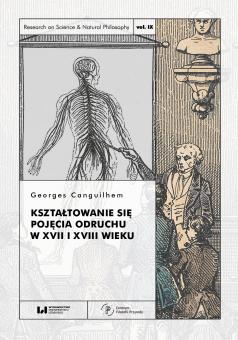
W niniejszej książce, która powstała jako praca doktorska, Georges Canguilhem śledzi historyczne etapy kształtowania się pojęcia odruchu w XVII i XVIII wieku, czyli od pierwszych eksperymentów dotyczących relacji między układem nerwowym a mięśniowym, aż po sformułowanie teorii mimowolnych ruchów zwierząt w epoce nowożytnej. Pojęcie odruchu nie ogranicza się do wyników konkretnych odkryć naukowych, a tym bardziej nie można przypisać jego sformułowania jednej postaci. Ta kwestia zakresu z zakresu biologii ukazuje bogatą i złożoną historię konceptulaną, która przeciwstawia się – odziedziczonej po Kartezjuszu – perspektywie „mechanistycznej” w ujmowaniu problemów życia biologicznego. Właśnie tę historię przedstawia nam Canguilhem, wskazując na liczne źródła i powiązania, badając prace fizjologów i biologów, takich jak Willis, Haller, Unzer i Pochaska. Jest to wzorcowa – i klasyczna – praca z historii nauki i epistemologii.
Garrison F.H., Morton L.T., A Medical Bibliography, A check-list of texts illustrating the history of the medical sciences, Grafton & Co, London 1943 [Aktualna wersja bibliografii Garrisona i Mortona została zamieniona w bazę danych dostępną on-line pod adresem: https://www.historyofmedicine.com – przyp. tłum.].
Sprengel K.P.J., Versuch einer pragmatischen Geschichte der Arzneikunde, J. Gebauer, Halle 1792–1803.
Daremberg Ch., Histoire des sciences médicales comprenant l’anatomie, la physiologie, la médicine, la chirurgie et les doctrines de pathologie générale, t. 2, J.-B. Baillière, Paris 1870.
Dumesnil R., Histoire illustrée de la médecine, Plon, Paris 1935.
Guyénot É., Les sciences de la vie aux XVIIe et XVIII siècles, Albin Michel, Paris 1941.
Lejeune F., Leitfaden zur Geschichte der Medizin, G. Thieme, Leipzig 1943.
Nordenskiöld E., Geschichte der Biologie, tłum. z j. szwedz. na j. niem. G. Schneider, G. Fischer, Jena 1926.
Rádl E., Geschichte der biologischen Theorien in der Neuzeit, t. 1, wyd. 2, W. Engelmann, Leipzig 1913.
Rádl E., The history of biological theories, tłum. z j. niem. na j. ang. E.J. Hatfield, Oxford, University Press, Oxford 1930.
Singer Ch., Histoire de la biologie, tłum. z j. ang. na j. franc. F. Gidon, Payot, Paris 1934.
Boruttau H., Geschichte der Physiologie in ihrer Anwendung auf die Medizin bis zum Ende des neunzehnten Jahrhunderts, [w:] Handbuch der Geschichte der Medizin, Th. Puschmann, M. Neuburger, J. Pagel (red.), t. 2, G. Fischer, Jena 1903, s. 327–456.
Foster M., Lectures on the History of Physiology during the 16th, 17th and 18th Centuries, Cambridge University Press, Cambridge 1924.
Rothschuh K.E., Geschichte der Physiologie, Springer, Berlin 1953.
Neuburger M., Die historische Entwicklung der experimentellen Gehirn und Rückenmarksphysiologie vor Flourens, F. Enke, Stuttgart 1897.
Soury J., Le système nerveux central. Structure et fonctions. Histoire critique des théories et des doctrines, Carré & Naud, Paris 1899.
Bastholm E., The history of muscle physiology, Munksgaard, Kopenhagen 1950.
Arystoteles, Aristotelis De Animalium motione et De Animalium incessu, W. Jaeger (red.), Teubner, Leipzig 1913.
Arystoteles, Traité de l’âme, wyd. G. Rodier, Paris, Leroux, 1900; wyd. polskie O duszy, przekł. P. Siwek, PWN, Warszawa 1988.
Arystoteles, Historia animalium; wyd. polskie Zoologia, przekł. P. Siwek, PWN, Warszawa 1982.
Arystoteles, De partibus animalium; wyd. polskie O częściach zwierząt, przekł. P. Siwek, PWN, Warszawa 1990.
Arystoteles, De generatione animalium; wyd. polskie O rodzeniu się zwierząt, przekł. P. Siwek, PWN, Warszawa 1984.
Galen, De motu musculorum, [w:] Idem, Claudii Galeni Opera omnia, C.G. Kühn (red.), Cnobloch, Leipzig 1821–1833, t. 4.
Galen, De fœtuum formatione libellus, [w:] Idem, Claudii Galeni Opera omnia, C.G. Kühn (red.), Cnobloch, Leipzig 1821–1833, t. 4.
Galen, De usu partium, [w:] Idem, Claudii Galeni Opera omnia, C.G. Kühn (red.), Cnobloch, Leipzig 1821–1833, t. 3.
Galen, De placitis Hippocratis et Platonis libri novem, [w:] Idem, Claudii Galeni Opera omnia, C.G. Kühn (red.), Cnobloch, Leipzig 1821–1833, t. 5.
Galen, Œuvres choisies, tłum. na j. franc. Ch. Daremberg, Paris 1854.
Leonardo da Vinci, Les carnets de Léonard de Vinci, E.M. Curdy (red.), przekł. na j. franc. L. Servicen, Gallimard, Paris 1942.
d’Acquapendente F., De Musculis, ks. 1: De Musculi Fabrica, ks. 2: De Musculi actione, ks. 3: De Musculi utilitatibus, [w:] Idem, Opera omnia Anatomica et Physiologica, van Kerckhem, Leyde 1738.
Harvey W., Exercitatio anatomica de motu cordis et sanguinis in animalibus, Fitzer, Frankfurt 1628.
Harvey W., Étude anatomique du mouvement du cœur et du sang chez les animaux, tłum. fr. C. Laubry, Doin, Paris 1950.
Allbutt T.C., The innate heat, [w:] Contributions to medical and biological research, dedicated to Sir William Osler, Hoeber, New York 1919, t. 1, s. 219–225.
Bourgey L., Observation et expérience chez les médecins de la Collection Hippocratique, Vrin, Paris 1953.
Bréhier É., Chrysippe, Alcan, Paris 1910.
Corte M. de, La doctrine de l’intelligence chez Aristote, Vrin, Paris 1934.
Figard L., Un médecin philosophe au XVIe siècle. Étude sur la psychologie de Jean Fernel, Alcan, Paris 1903.
Gilson É., Descartes, Harvey et la scolastique, [w:] Idem, Études sur le rôle de la pensée médiévale dans la formation du système cartésien, Vrin, Paris 1930.
Gomperz T., Les penseurs de la Grèce, tłum. z j. niem. na j. fr. A. Reymond, t. 3, Payot et Cie, Paris 1911.
Jaeger W., Das Pneuma in Lykeion, „Hermes” 1913, t. 48.
Jaeger W., Diokles von Karystos, de Gruyter, Berlin 1938.
Jaeger W., Praefatio, [w:] Aristotelis De Animalium motione et De Animalium incessu, W. Jaeger (red.), Teubner, Leipzig 1913.
Le Blond J.-M., Introduction: Le Philosophe de la vie, [w:] Idem, Aristote, philosophe de la vie. Le livre premier du Traité sur les parties des animaux, Aubier, Paris 1945.
Meyer J.B., Aristoteles Thierkunde, Reimer, Berlin 1855.
Philippson L.P., De internarum humani corporis partium cognitione Aristotelis cum Platonis sententiis comparata, List, Berlin 1831.
Pouchet G., La biologie aristotélique, „Revue philosophique de la France et de l’étranger” 1884, t. 18, s. 353–384 i 531–557; 1885, t. 19, s. 47–63, 173–207 i 288–310.
Schuhl P.-M., Les premières étapes de la philosophie biologique, „Revue d’histoire des sciences et de leurs applications” 1952, t. 5, nr 3, s. 197–221.
Sherrington C.S., Note on the history of the word tonus, [w:] Contributions to medical and biological Research, dedicated to Sir William Osler, Hoeber, New York 1919, t. 1, s. 261–268.
Sherrington C.S., The Endeavour of Jean Fernel, Cambridge University Press, Cambridge 1946.
Singer C., Rabin C., A Prelude to Modern Science. Discussion of the History, Sources and Circumstances of the Tabulae anatomicae sex of Vesalius, Cambridge University Press, Cambridge 1946.
Stein L., Die Psychologie der Stoa, Calvary, Berlin 1886.
Taylor A.E., A commentary on Plato’s Timaeus, Clarendon Press, Oxford 1928.
Verbeke G., L’évolution de la doctrine du Pneuma, du stoïcisme à saint Augustin, Desclée de Brouwer, Paris 1945.
Descartes R., Œuvres de Descartes, C. Adam, P. Tannery (red.), Cerf, Paris 1897–1910.
Descartes R., Œuvres et lettres, A. Bridoux (red.), wyd. 2, Gallimard, Paris 1953.
Borelli G.A., De motu animalium (1680–81), Gessari, Neapol 1734, uzupełnione traktatami J. Bernoulliego: De motu musculorum; De effervescentia et fermentatione.
Binet L., Médecins, biologistes et chirurgiens, S.E.G.E.P., Paris 1954.
Dreyfus Le-Foyer H., Les conceptions médicales de Descartes, „Revue de Métaphysique et de Morale” 1937, t. 44, nr 1, s. 237–286.
Gueroult M., Descartes selon l’ordre des raisons, cz. 2: L’âme et le corps, Aubier, Paris 1953.
Herpin A., La querelle de la découverte de la circulation, J.-B. Baillière, Paris 1943.
Saint-Germain B. de, Descartes considéré comme physiologiste et comme médecin, Victor Masson, Paris 1869.
Willis T., Opera omnia, Huguetan, Lyon 1681.
Willis T., Opera omnia, H. Vetstenius, Amsterdam 1682.
Croone W., De ratione motus musculorum (1664), [w:] T. Willis, Opera omnia, t. 1, Lyon 1681, s. 417–434.
Stenonis N., Elementorum myologiae specimen (1667), [w:] Idem, Opera philosophica, V. Maar (red.), Vilhelm Tryde, Kopenhagen 1910.
McKie D., Fire and the flamma vitalis: Boyle, Hooke and Mayow, [w:] Science Medicine and History, written in honour of Charles Singer, E.A. Underwood (red.), t. 1, Oxford University Press, Oxford 1953, s. 469–488.
Gassendi P., De anima, ks. 3, [w:] Idem, Opera omnia, t. 2: Syntagmatis Philosophici, Partis secundae, seu Physicae, Sectionis Tertiae, Membrum Posterius, De Rebus Terrenis Viventibus, seu de Animalibus, Anisson & Devenet, Lyon 1658.
Stenonis N., Discours sur l’anatomie du cerveau, [w:] Idem, Opera philosophica, t. 2, V. Maar (red.), Vilhelm Tryde, Copenhagen 1910.
Berkeley G., La Siris (1744), tłum. na j. franc. G. Beaulavon, D. Parodi, A. Colin, Paris 1920; wyd. polskie Siris. Łańcuch filozoficznych refleksji i dociekań wraz z Dodatkami, tłum. i oprac. A. Grzeliński, M. Szymańska-Lewoszewska, Wydawnictwo Naukowe UMK, Toruń 2013.
La Mettrie J.O. de, L’homme machine (1748), [w:] Idem, Œuvres philosophiques, Amsterdam 1774.
La Mettrie J.O. de, Textes choisis de La Mettrie, M. Tisserand (red.), Éditions sociales, Paris 1954.
Hartley D., Observations on man, his frame, his duty, and his expectations, London 1749.
Encyclopédie ou Dictionnaire raisonné des sciences, des arts et des métiers, D. Diderot (red.), Briasson, David, Le Breton, Durand, Paris: artykuły Âme (des bêtes), Animal, Esprits animaux, Instinct, Nerf, Musculaire, Sensibilité.
Haller A. von, Elementa physiologiae corporis humani, t. 4, Cerebrum, Nervi, Musculi, Grasset, Lausanne 1766.
Bachelard G., La psychanalyse du feu, Gallimard Paris 1938; fragmenty w j. polskim [w:] Wyobraźnia poetycka. Wybór pism, H. Chudak (red.), przekł. H. Chudak, A. Tatarkiewicz, PIW, Warszawa 1975.
Wahl J., Tableau de la philosophie française, Éditions de la Revue Fontaine, Paris 1946.
Swammerdam J., Biblia naturae, sive Historia insectorum, Severinus, Leyde, t. 1 – 1737, t. 2 – 1738.
Gottsched J.C., Dissertatio de motu musculorum (1694), [w:] Disputationum anatomicarum selectarum, A. von Haller (red.), t. 3, Vandenhoeck, Göttingen 1748.
Astruc J., De phantasia sive imaginatione (1723), [w:] Disputationum anatomicarum selectarum, A. von Haller (red.), t. 4, Vandenhoeck, Göttingen 1749.
Astruc J., An sympathia partium a certa nervorum positura in interno sensorio? (1736), [w:] Disputationum anatomicarum selectarum, A. von Haller (red.), t. 4, Vandenhoeck, Göttingen 1749.
Sympathie, [w:] Encyclopédie ou Dictionnaire raisonné des sciences, des arts et des métiers, D. Diderot (red.), Briasson, David, Le Breton, Durand, Paris 1751–1758.
Whytt R., An Essay on the Vital and other Involuntary Motions of Animal, Hamilton, Balfour and Neill, Edinburgh 1751.
Whytt R., Observations on the Nature, Causes, and Cure of those Disorders which have been commonly called Nervous, Hypochondriac, or Hysteric, To which are prefixed some Remarks on the Sympathy of the Nerves, Balfour, Edinburgh 1764.
Whytt R., Traité des maladies nerveuses, hypochondriaques et hystériques, Didot, Paris 1777.
Le Cat C.-N., Traité de l’existance [sic], de la nature et des propriétés du fluide des nerfs, et principalement de son action dans le mouvement musculaire, Berlin 1765.
Haller A. von, Elementa physiologiae corporis humani, t. 4, Cerebrum, Nervi, Musculi, Grasset, Lausanne 1766.
Bernard C., Le cahier rouge, Gallimard, Paris 1942.
Bachelard G., La terre et les rêveries du repos, José Corti, Paris 1948 [Rozdział Le serpent (Wąż) został przetłumaczony na j. polski przez A. Tatarkiewicz – zob.: G. Bachelard, Wyobraźnia poetycka, wyb. H. Chudak, tłum. H. Chudak, A. Tatarkiewicz, Warszawa 1979, s. 331–356].
Fulton J.F., Muscular Contraction and the Reflex control of Movement, Williams & Wilkins, Baltimore 1926.
Rostand J., Les origines de la biologie expérimentale et l’Abbé Spallanzani, Fasquelle, Paris 1951.
Thomas A., Le nouveau-né normal et l’anencéphale, „La Presse médicale” 1954, t. 63, nr 42, s. 885–886.
Kant I., Träume eines Geistersehers, erlaütert durch Traüme der Metaphysik, Kanter, Königsberg 1766; wyd. polskie: I. Kant, Marzenia jasnowidzącego objaśnione przez marzenia metafizyki, tłum. W.M. Kozłowski, [w:] Idem, Pisma przedkrytyczne, Rolewski, Toruń 1999, s. 83–139.
Unzer J.A., Erste Gründe einer Physiologie der eigentlichen thierischen Natur thierischer Körper, Weidmanns Erben und Reich, Leipzig 1771.
Prochaska G., De functionibus systematis nervosi Commentatio, [w:] Idem, Adnotationum academicorum. Fasciculus tertius, Wolfgang Gerle, Prag 1784; G. Prochaska, Operum minorum anatomici, physiologici et pathologici argumenti, t. 2, Wappler & Beck, Wien 1800.
Prochaska G., Lehrsätze aus der Physiologie des Menschen, C.F. Wappler, Wien 1797.
Bichat X., Recherches physiologiques sur la vie et la mort (1799), A. Delahays, Paris 1855.
Bichat X., De l’influence nerveuse dans les sympathies, „Journal de Médecine, Chirurgie, Pharmacie” 1801, t. 2, s. 472–483.
Legallois C.J.J., Expériences sur le principe de la vie notamment sur celui des mouvements du coeur, et sur le siège de ce principe, D’Hautel, Paris 1812.
Koyré A., The significance of the Newtonian synthesis, „Archives internationales d’Histoire des Sciences” 1950, nr 11, s. 291–311.
Laignel-Lavastine M., Sources, principes, sillage et critique de l’œuvre de Bichat, „Bulletin de la Société française de Philosophie” 1952, R. 46, nr 1, s. 1–35.
Hall M., On a particular function of the Nervous System, „Proceedings of Zoological Society” 1832, t. 2.
Hall M., On the reflex function of the medulla oblongata and medulla spinalis, „Philosophical Transactions of Royal Society” 1833, t. 123, s. 635–665.
Müller J., Handbuch der Physiologie des Menschen, t. 1 – 1833, t. 2 – 1840, Hölscher, Koblenz.
George J.D., Contribution to the history of the nervous system, „London Medical Gazette” 1837–1838, t. 22, s. 40–47 i 93–96.
Arnold J.W., Die Lehre von der Reflex – Function für Physiologen und Aerzte, Groos, Heidelberg 1842.
Longet F.A., Anatomie et physiologie du système nerveux, t. 1, Fortin, Paris 1842.
Pflüger E., Die sensorischen Functionen des Rückenmarks der Wirbeltiere nebst einer neuen Lehre über die Leitungsgesetze der Reflexionen, Hirschwald, Berlin 1853.
Jeitteles L., Wer ist der Begründer der Lehre von den Reflexbewegungen?, „Vierteljahrschrift für die praktische Heilkunde” 1858, R. 15, t. 4, s. 50–72.
Bois-Reymond E. du, Gedächtnisrede auf Johannes Müller (1858), [w:] Abhandlungen der Akademie der Wissenschaften, Dümmler, Berlin 1859; idem, Reden, t. 2, Biographie, Wissenschaft, Ansprachen, Veit, Leipzig 1887 [wznowienie z przypisami].
Bernard C., Leçons sur la physiologie et la pathologie du système nerveux, J.-B. Baillière, Paris 1858.
Cayrade J., Recherches critiques et expérimentales sur les mouvements réflexes, Pillet, Paris 1864.
Vulpian A., Leçons sur la physiologie générale et comparée du système nerveux, faites au Muséum d’Histoire Naturelle, Baillière, Paris 1866.
Beaunis H., Nouveaux éléments de physiologie humaine comprenant les principes de la physiologie comparée et de la physiologie générale, Baillière, Paris 1876.
Milne-Edwards H., Leçons sur la physiologie comparée de l’homme et des animaux, t. 13, Masson, Paris 1878–1879.
Eckhard C., Geschichte der Entwickelung der Lehre von den Reflexerscheinungen, „Beiträge zur Anatomie und Physiologie” 1881, t. 9, s. 29–192.
Richet C., Physiologie des muscles et des nerfs: Leçons professées à la Faculté de médecine en 1881, G. Baillière, Paris 1882.
Lhermitte J., Les fondements biologiques de la psychologie, Gauthier–Villars, Paris 1925.
Fearing F., Reflex Action. A Study in the History of Physiological Psychology, Williams & Wilkins, Baltimore 1930.
Marx E., Die Entwicklung der Reflexlehre seit Albrecht von Haller bis in die zweite Hälfte des 19. Jahrhunderts, „Sitzungsberichte der Heidelberger Akademie der Wissenschaften” 1938, nr 10, s. 3–126.
Kayser C., Réflexes et comportement, „Bulletin de la Faculté des Lettres de Strasbourg” 1947, R. 25, s. 89–110 i 133–148.
Wickersheimer E., La médecine au XVIIe siècle, [w:] Idem, Les médecins célèbres, Mazenod, Genève 1947, s. 80–85.
Hoff H.E., Kellaway P., The early history of the Reflex, „Journal of the History of Medicine and allied Sciences” 1952, t. 7, nr 3, s. 211–249.
Jefferson G., Marshall Hall, the grasp reflex and the diastaltic spinal cord, [w:] Science Medicine and History, written in honour of Charles Singer, E.A. Underwood (red.), t. 2, Oxford University Press, Oxford 1953, s. 303–320.
Bayliss W.M., Principles of General Physiology, Longmans & Green, London 1915.
Cardot H., Laugier H., Nerfs et réflexes, [w:] Traité de physiologie normale et pathologique, wyd. G.-H. Roger, L. Binet, t. 9, Masson, Paris 1933, s. 119–211.
Fulton J.F., Physiology of the nervous system, Oxford University Press, Oxford 1938.
Sherrington C.S., The integrative action of the nervous system, A. Constable, London 1906.
Soula L.-C., Précis de physiologie, wyd. 2, Masson, Paris 1953.
Starling E.H., Principles of Human Physiology, wyd. 2, Churchill, London 1915; wyd. 8 – C. Lovatt Evans (red.), Churchill, London 1941.
Déjerine J.J., Sémiologie du système nerveux, [w:] C. Bouchard (red.), Traité de pathologie générale, t. 5, Masson, Paris 1901, s. 557–1168.
Ey H., Système nerveux et troubles nerveux, „L’évolution psychiatrique” 1947, nr 1, s. 71–104.
Goldstein K., Der Aufbau des Organismus, Nijhoff, Hague 1934.
Goldstein K., La structure de l’organisme, tłum. na j. franc. E. Burckhardt, J. Kuntz, Gallimard, Paris 1951.
Minkowski M., L’état actuel de l’étude des réflexes, tłum. na j. franc. H. Ey, Masson & Cie, Paris 1927; Zum gegenwärtigen Stand der Lehre von den Reflexen in entwicklungsgeschichtlicher und anatomisch-physiologischer Beziehung, „Schweizer Archiv für Neurologie und Psychiatrie” 1924, nr 15/2, s. 239–259; 1925, nr 16/1, s. 133–152; nr 16/2, s. 266–284 [wersja oryginalna].
Petitclerc C., Réflexes tendineux, Paris 1880.
Buytendijk F.J.J., Traité de psychologie animale, P.U.F., Paris 1952.
Janet P., De l’angoisse à l’extase, t. 1, Alcan, Paris 1926.
Janet P., Les débuts de l’intelligence, Flammarion, Paris 1935.
Guillaume P., La formation des habitudes, Alcan, Paris 1936.
Lorenz K.Z., The comparative method in studying innate behaviour patterns, [w:] Symposia of the society for experimental biology, nr 4: Physiological Mechanisms in Animal Behaviour, Cambridge University Press, Cambridge 1950.
Piéron H., Vocabulaire de la psychologie, P.U.F., Paris 1951.
Pradines M., Traité de psychologie générale, t. 1, P.U.F., Paris 1943.
Spearman C.E., The Abilities of Man. Their Nature and Measurement, Macmillan, New York 1927.
Bachelard G., La formation de l’esprit scientifique, Vrin, Paris 1938; wyd. polskie: Kształtowanie się umysłu naukowego. Przyczynek do psychoanalizy wiedzy obiektywnej, tłum. D. Leszczyński, słowo/obraz terytoria, Gdańsk 2002.
Bachelard G., Le rationalisme appliqué, P.U.F., Paris 1949.
Bachelard G., L’activité rationaliste de la physique contemporaine, P.U.F., Paris 1951.
Canguilhem G., La connaissance de la vie, Hachette, Paris 1952.
Comte A., Cours de philosophie positive, t. 3: La philosophie chimique et la philosophie biologique, Schleicher, Paris 1908.
Latil P. de, La pensée artificielle, Introduction à la Cybernétique, Gallimard, Paris 1953.
Merleau-Ponty M., La structure du comportement, P.U.F., Paris 1942.
Ruyer R., Le problème de l’information et la cybernétique, „Journal de psychologie” 1952, t. 45, s. 385–418.
Ruyer R., La cybernétique et l’origine de l’information, Flammarion, Paris 1954.
Wiener N., Cybernetics or control and communication in the animal and the machine, Hermann, Paris 1948; wyd. polskie: Cybernetyka, czyli sterowanie i komunikacja w zwierzęciu i maszynie, tłum. J.M. Jaroszewski, PWN, Warszawa 1971.
Brazier M.A.B., The historical development of neurophysiology, [w:] Handbook of physiology. Neurophysiology, J. Field, H.W. Magoun, V.E. Hall (red.), t. 1, American Physiological Society, Washington D.C. 1959, s. 1–58.
Brazier M.A.B., Felice Fontana, [w:] Per la storia della neurologia Italiana: atti del Simposio internazionale di storia della neurologia, Istituto di storia della medicina, Milano 1963.
Canguilhem G., Le concept de réflexe au XIX siècle, [w:] Von Boerhaave bis Berger. Die Entwicklung der Kontinentalen Physiologie im 18. und 19. Jahrhundert, K.E. Rothschuh (red.), Fischer Verlag, Stuttgart 1964; Études d’histoire et de philosophie des Sciences, Vrin, Paris 1968 (wyd. 3 – 1975).
Clarke E., O’Malley C.D., The human brain and spinal cord; a historical study illustrated by writings from antiquity to the twentieth century, University of California Press, Berkeley 1968.
Fearing F., Reflex action. A study in the history of physiological psychology, wstęp R. Held, M.I.T., Cambridge 1970 [Jest to wznowienie fundamentalnej pracy wspomnianej we wstępie, niedostępnej w czasie, gdy pisałem niniejszą rozprawę – przyp. autora].
Green J.H.S., Marshall Hall (1790–1857): A biographical study, „Medical History” 1958, t. 2, nr 2, s. 120–133.
Hall T.S., Descartes’ physiological method: Position, principles examples, „Journal of the History of Biology” 1970, t. 3, nr 1, s. 53–79.
Isler H., Thomas Willis: ein Wegbereiter der modernen Medizin, Wissenschaftliche Verlagsgesellschaft, Stuttgart 1965.
Jackson S.W., Force and kindred notions in eighteenth-century neurophysiology and medical psychology, „Bulletin of the History of Medicine” 1970, t. 44, s. 397–410 i 539–554.
Keele K.D., Anatomies of pain, Blackwell, Oxford 1957 [patrz szczególnie rozdz. 4: The search for the «sensorium commune»].
Kruta V., Georgius Prochaska (1749–1820) et la conception du réflexe, „Scripta medica facultatum medicinae universitatum Brunensis et Olomucensis” 1961, t. 34, nr 7–8, s. 298–314.
Kruta V., Med. Dr Jir̆í Procháska, 1749–1820: z̆ivot, dílo, doba, ČSAV, Praha 1956.
Laplassotte F., Quelques étapes de la physiologie du cerveau du XVII au XIX siècle, „Annales: économies, sociétés, civilisations” 1970, nr 25, s. 599–613.
Liddell E.G.T., The discovery of reflexes, Clarendon Press, Oxford 1960.
Lowry R., The reflex model in psychology: Origins and evolution, „Journal of the History of Behavioral Sciences” 1970, t. 6, nr 1, s. 64–69.
Swazey J.P., Reflexes and motor integration. Scherrington’s concept of integrative action, Harvard University Press, Cambridge 1969.
Wolf H.-B., Zur Entdeckung des Patellarsehnenreflexes durch Erb und Westphal, ein Beitrag zum Problem der Mehrfachentdeckungen, Institut für Theorie und Geschichte der Medizin der Universität Münster, Münster 1976.
Dane do pobrania nie są jeszcze dostępne.
Prawa autorskie (c) 2026 © Librairie Philosophique J. Vrin, Paris 1977; © Copyright for Polish translation by Marcin J. Leszczyński, Łódź 2026; © Copyright for this edition by Uniwersytet Łódzki, Łódź 2026
Licencja
LicencjaJak cytować
Canguilhem, G. (2026). Kształtowanie się pojęcia odruchu w XVII i XVIII wieku (M. Leszczyński, Tłum.; T. IX). Wydawnictwo Uniwersytetu Łódzkiego. https://doi.org/10.18778/8331-957-5
Informacje o finansowaniu
-
Narodowe Centrum Nauki
Grant numbers 2018/31/N/HS1/03760
Dyscypliny
- Archeologia
- Bibliologia i informatologia
- Biologia
- Chemia
- Ekonomia i zarządzanie
- Etnologia i antropologia kulturowa
- Filologia polska
- Filologie obce
- Filozofia
- Fizyka
- Geografia
- Historia
- Językoznawstwo
- Judaica
- Kultura i sztuka
- Literaturoznawstwo
- Matematyka
- Media
- Pedagogika
- Podręczniki dla cudzoziemców
- Politologia i stosunki międzynarodowe
- Prawo
- Psychologia
- Socjologia
- Varia
- Otwarty dostęp
Seria
- 100 lat niepodległości
- Akademia Samorządowa
- Akademia Zarządzania i Finansów
- Aktywni (nie)pełnosprawni
- Analecta Literackie i Językowe
- Bałkany XX/XXI
- Bibliotheca Litteraria
- Bibliotheca Philosophica
- Biografia i Badanie Biografii
- Byzantina Lodziensia
- Contemporary Asian Studies Series
- Cyfryzacja
- Edukacja dla Mądrości
- Ekonomia
- Filmo!znawcy
- Finanse
- Gerontologia
- Interdyscyplinarne Studia Miejskie
- Interpretacje Literackie
- Jerzy Giedroyc i…
- Jerzy Giedroyc i Świadkowie Historii
- Jesień Życia?
- Językoznawstwo
- Judaica Łódzkie
- Jurysprudencja
- Kim Jest Człowiek?
- Kognitywistyka
- Komunikacja i Media
- Krótkie Wprowadzenie
- Kultura Literacka Łodzi
- Literaturoznawstwo. Sylwetki
- Łódzkie Studia z Językoznawstwa Angielskiego i Ogólnego
- Łódź w PRL. PRL w Łodzi
- Manufactura Hispánica Lodziense
- Marketing
- Monografie Sekcji Socjologii Niepełnosprawności PTS
- Nauka Sztuki – Sztuka Nauki
- Neuronauka w psychologii
- Oblicza feminizmu
- Oblicza wojny
- Perspektywy Biograficzne
- Politologia
- Polska a Europa Środkowo-Wschodnia w XX wieku
- Polska Kultura Filmowa
- Prawo
- PRL. Biografie
- Projekt: Egzystencja i Literatura
- Psychologia Wszystkiego
- Research on Science & Natural Philosophy
- Romanistyka dla Teatru
- Series Ceranea
- Stała Konferencja Pedagogiki Społecznej pod Patronatem Komitetu Nauk Pedagogicznych PAN
- Sztuka-Media-Kultura
- Terapia Pedagogiczna
- Twórczość i Edukacja
- Vade Nobiscum
- Warsztaty z Geografii Turyzmu
- Wczesna Edukacja
- W poszukiwaniu idei XXI wieku
- W Wieży Babel po polsku
- Zarządzanie
- Życie prywatne Polaków w XIX wieku