

-
4834
-
3460
-
3050
-
2854
-
2829
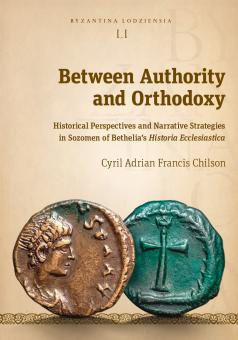
Między autorytetem a ortodoksją
Perspektywy historyczne i strategie narracyjne w Historii kościelnej Sozomena z Bethelii
Tom:
51
Seria:
Byzantina Lodziensia
E-book fragment Wydawnictwo Uniwersytetu Łódzkiego (English)
ISBN-13 (15)
978-83-8445-022-2
Książka Wydawnictwo Uniwersytetu Łódzkiego (English)
ISBN-13 (15)
978-83-8445-019-2
E-book Wydawnictwo Uniwersytetu Jagiellońskiego (English)
ISBN-13 (15)
978-83-233-7801-3
Książka Wydawnictwo Uniwersytetu Jagiellońskiego (English)
ISBN-13 (15)
978-83-233-5662-2
Słowa kluczowe:
Sozomen, historia kościelna, historiografia chrześcijańska, doktryna chrześcijańska, późna starożytność, Wczesne Cesarstwo Bizantyjskie
Opublikowane:
30 września 2026
Kategorie:
Historia, Kultura i sztuka
Pliki do pobrania
Niniejsze studium oferuje krytyczną ocenę twórczości historyka kościelnego Sozomena (Salamanes Hermias Sozomenos, ok. 370-ok. 450), którego „Historia Ecclesiastica” jest ważnym źródłem do dziejów Kościoła chrześcijańskiego za panowania dynastii Konstantyna i Teodozjusza. Analizuje ono jego życie, karierę i kontekst historyczny, przedstawiając nowe dowody na datowanie jego dzieła i argumentując, że pozostało ono niedokończone po jego śmierci. Książka sytuuje Sozomena w tradycji historiografii kościelnej ustanowionej przez Euzebiusza z Cezarei, porównując jego prace z pracami wcześniejszych historyków Kościoła, podkreślając jego wyjątkowy wkład w ten gatunek i podkreślając jego biblijną inspirację, a także powiązania z pogańską historiografią grecko-rzymską. Poprzez wnikliwą analizę kluczowych postaci, takich jak Atanazy z Aleksandrii, Konstantyn Wielki i Jan Chryzostom, książka zgłębia niuanse i często ambiwalentne podejście Sozomena do władzy cesarskiej i ortodoksji chrześcijańskiej. Rekonstruując intelektualne i teologiczne środowisko, w którym tworzył, badanie rzuca nowe światło na jego strategie narracyjne, perspektywę historyczną i interpretację głównych kontrowersji doktrynalnych. Przedstawia Sozomena jako oryginalnego i wyrafinowanego historyka, którego praca zasługuje na uznanie za znaczący wkład w późnoantyczną historiografię.
Cyril Adrian Francis Chilson - Blackfriars Studium, Oxford
Cyril Adrian Francis Chilson (b. 1962) is an instructor in Biblical Hebrew at Blackfriars Studium, Oxford, and a historian of late antique Christianity. His work focuses on late Roman and early Byzantine Christian cultural history, especially Greek ecclesiastical historiography. He studied at the Hebrew University of Jerusalem and the University of Oxford where he was a Junior Research Fellow at Blackfriars Hall. He completed his doctorate at the University of Łódź (supervisor: prof. Sławomir Bralewski). His research explores church–state relations and political theology in the Byzantine Empire, the interaction between Byzantine Christian denominations and ethnic identity, as well as Patristic and Byzantine biblical exegesis.
Sancti Ambrosii Opera: Epistulae et Acta t. I=IV, ed. O. Faller, M. Zelzer, Vienna 1968–1996.
Ammianus Marcellinus, History, trans. J.C. Rolfe, vol. I, LCL 300; vol. II, LCL 315; vol. III, LCL 335, Cambridge Mass. 1989.
Ammiani Marcellini Rerum gestarum libri qui supersunt, ed. W. Seyfarth, vol. 1–4, Stuttgart–Berlin 1978–1988.
Anthologia Graeca epigrammatum Palatina cum Planudea, ed. H. Stadtmüller, vol. 1–3, Leipzig 1894–1906.
Apollodori Bibliotheca, ed. P. Scarpi, M.G. Ciani, Verona 1996.
Aristotle, Poetics, Editio Maior, Aristoteles Semitico-Latinus 10, ed. L. TARÁN, D. GUTAS, Leiden 2012.
Aristotle: The Athenian Constitution, ed. P.J. Rhodes, Oxford 1981.
Athanasius Werke, Die Apologien, ed. H.-G. Opitz, H.C. Brenneke, U. Heil, A. von Stockhausen et al., Berlin 2007; repr. 2012.
Athanase d’Alexandrie, Traités contre les Ariens, ed. K. Metzler, K. Savvidis, trans. C. Kannengieser, L. Dinca, with A. Bara, Paris 2019 (SC 598, SC 599).
Athanase d’Alexandrie, Lettres sur les synodes, ed. & trans. A. Martin, X. Morales, H.-G. Opitz, Paris 2013 (SC 563).
Athanasius, On the Councils of Ariminum and Seleucia, ed. M. Geerard (= Clavis Patrum Graecorum 4, § 8556).
ATHANASIUS ALEXANDRINUS Werke, Band III, Historia Acephala, ed. E. SCHWARTZ, Berlin/Leipzig 1935.
Athanasius Alexandrinus, Werke, Band II, Historia Arianorum. De synodis, ed. H.-G. Opitz, Berlin 1940; repr. 2011.
Athanase d’Alexandrie, Vie d’Antoine, ed. G.J.M. Bartelink, Paris 1994 (= SC 400).
Sancti Aurelii Augustini episcopi De civitate Dei libri XXII, ed. B. Dombart, Leipzig 1863, 1877.
Basil, Letters, trans. R.J. Deferrari, London – Cambridge Mass. 1926–1934 (LCL 190, 215, 243, 270).
Bede le Venerable, Histoire Ecclésiastique du Peuple Anglais, ed. A. Crépin, M. Lapidge, P. Monat, Ph. Robin, Paris 2005 (= SC 489, 490, 491).
Callinicos, Vie d’Hypatios, ed. & trans. G.J.M. Bartelink, Paris 1971 (= SC 177).
Cassiodori Senatoris Chronica ad a. DXIX, ed. Th. Mommsen, [in:] MGH, T. XI, Chronicorum minora saec. IV, V, VI, VII, vol. II, Berlin 1894.
Cassiodori–Epiphanii Historia ecclesiastica tripartita: Historiae ecclesiasticae ex Socrate, Sozomeno et Theodorito in unum collectae et nuper de Graeco in Latinum translatae libri numero duodecim, ed. W. Jacob, R. Hanslik, Vienna 1952 (= CSEL 71).
Chronographus Anni CCCLIIII, ed. Th. Mommsen, [in:] MGH, T. IX, Chronica Minora Saeculi IV–VII, vol. 1, Berlin, 1892; repr. München 1981.
Cicero, Brutus. Orator, transl. G.L. Hendrickson, H.M. Hubbell, Cambridge Mass. 1939 (LCL 342).
M. Tullii Ciceronis De senectute, ed. D.R. Shackleton Baily, Oxford 1988.
Clemens Alexandrinus, vol. 1, Paedagogus, ed. O. STÄHLIN, 3Berlin 1972 (GCS 12).
Clemens Alexandrinus, vol. 2 , Stromata I, ed. O. STÄHLIN, L. FRÜCHTEL, U. TREU, Berlin 1970 (GCS 15).
The Letters and Other Remains of Dionysius of Alexandria, ed. C.L. Feltoe, Cambridge 1904.
Égérie, Journal de voyage (Itinéraire), ed. P. Maraval, Paris 2002 (SC 296).
Ancoratus und Panarion haer. 1–33, ed. K. Holl, Berlin 1915; vol. 2, Panarion haer. 34–64, ed. K. Holl, J. Dummer, Berlin 1922; vol. 3, Panarion haer. 65–80 / De fide, Berlin 1933.
The Panarion of Epiphanius of Salamis: Book I (Sects 1–46), trans. F. Williams, Leiden 1987; Books II & III (Sects 47–80, De Fide), trans. F. Williams, Leiden 1993.
The Fragmentary Classicising Historians of the Later Roman Empire, ed. R.C. Blockley, Liverpool 1983–1985.
Eunapios aus Sardes, Biographien über Philosophen und Sophisten. Einleitung, Übersetzung, Kommentar, ed. E.-M. Becker, Stuttgart 2013.
Euripidis Fabulae, t. II, Supplices, Electra, Hercules Furens, Troades, Iphigenia in Tauris, Ion, ed. J. Diggle, Oxford 1981.
Eusèbe de Césarée, Histoire ecclésiastique, III: Livres VIII–X et les martyrs en Palestine, ed. & trans. G. Bardy, Paris 1958 (SC 55).
Eusebius Werke, vol. 1.1. Über das Leben des Kaisers Konstantin, ed. F. Winkelmann, Berlin 1975 (GCS).
Eusebius, Life of Constantine, trans. & comm. A. Cameron, S.G. Hall, Oxford 1999.
Oratio ad Sanctorum Coetum, [in:] De Vita Constantini, IV, 24–32.
Eusebius Werke, vol. 2, Die Kirchengeschichte, ed. E. Schwartz, Th. Mommsen, Leipzig 1909; 2Berlin 1999 (GCS N.F. 6).
Eusebius, The Ecclesiastical History, vol. 1, transl. K. Lake, J.E.L. Oulton, H.J. Lawlor, London – Cambridge Mass. 1926; repr. 1992; vol. 2, London – Cambridge Mass. 1932; repr. 1980.
Eusèbe de Césarée, Histoire Ecclésiastique, ed. & trans. G. Bardy, Paris 1952–1971 (SC 31, SC 41, SC 55, SC 73 bis).
Բադմուդ’ւն եգելեձ’ւոյ Եուսեպիոսի, ed. A. Charean, Venice 1877.
Eusebius, Onomasticon, ed. R.S. Notley, Z. Safrai, Leiden 2005.
Breviarium ab Urbe condita, ed., trans., comm. B. Bleckmann, J. Gross, Paderborn 2018.
Flavii Iosephi Opera, ed. B. Niese, Berlin 1887–1895.
Josephus, Jewish Antiquities, vol. I, Books 1–3, trans. H.S.J. Thackeray, Cambridge Mass. 1930, vol. II.1, Books 3–4, trans. H.S.J. Thackeray, Cambridge Mass. 1927; vol. II.2, Books 4–6, transl. H.S.J. Thackeray, R. Marcus, Cambridge Mass. 1930; vol. III, Books 7–8, transl. R. Marcus, Cambridge Mass. 1934; vol. IV, Books 9–11, transl. R. Marcus, Cambridge Mass. 1937; vol. V, Books 12–13, transl. R. Marcus, Cambridge Mass. 1943; vol. VI, Books 14–15, transl. R. Marcus, A. Wikgren, Cambridge Mass. 1943; vol. VII, Books 16–17, transl. R. Marcus, A. Wikgren, Cambridge Mass. 1963; vol. VIII, Books 18–19, transl. L.H. Feldman, Cambridge Mass. 1965; vol. IX, transl. L.H. Feldman, Cambridge Mass. 1965 (LCL 242, 487, 490, 281, 326, 365, 489, 410, 433, 456).
Flavii Iosephi Opera, ed. B. Niese, Berlin 1887–1895.
Josephus, The Life. Against Apion, trans. H.S.J. Thackeray, Cambridge Mass. 1926 (LCL 186).
Josephus’ Contra Apionem: Studies in its Character and Context with a Latin Concordance to the Portion Missing in Greek, ed. L.H. Feldman, J.R. Levison, Leiden 1996.
Flavii Iosephi Opera, ed. B. Niese, Berlin 1887–1895.
Josephus, The Jewish war, vol. I, Books 1–2, trans. H.S.J. Thackeray, Cambridge Mass. 1927, vol. II, Books 3–4, trans. H.S.J. Thackeray, Cambridge Mass. 1927; vol. III, Books 5–7, transl. H.S.J. Thackeray, Cambridge Mass. 1928 (LCL 203, 487, 210).
Gelasius of Caesarea, Ecclesiastical History: The Extant Fragments with an Appendix Containing the Fragments from Dogmatic Writings, ed. M. Wallraff, J. Stutz, N. Marinides, Berlin 2018 (= GCS 25).
GREGOIRE DE NAZIANZE, De vita sua, ed. Ch. JUNGCK, Paris 1992 (=SC 384).
Grégoire de Nazianze, Discours 20–23, ed. J. Mossay, Paris 1980 (=SC 270).
Contra Eunomium libri I–III, ed. W. Jaeger, [in:] GNO, vol. I–II, Leiden 1960.
Gregorii Nysseni De anima et resurrectione, ed. A. SPIRA, [in:] GNO, Vol. III, Pars III, Leiden 1961.
Oratio de Deitate Filii et Spiritus Sancti, [in:] GNO, vol. X, 2, ed. E. Rhein, Leiden 1996, p. 115–144.
De infantibus praemature abreptis, [in:] GNO, vol. III, 2, Opera dogmatica minora, ed. H. Hoerner, Leiden 1987, p. 67–97.
Gregoire de Nysse, La vie de Moïse ou Traité de la perfection en matière de vertu, ed. and trans. J. Danielou, 3Paris 1968 (= SC 1bis).
S. Gregorii Magni Registrum Epistolarum, ed. D. Norberg, Turnhout 1982.
Herodoti Historiae, ed. N.G. Wilson, Oxford 2022.
Hesiodi Theogonia, Opera et Dies, Scutum, ed. F. Solmsen, Oxford 1970.
Scriptores Historiae Augustae, ed. E. Hohl, rev. C. Samberger, W. Seyfarth, Leipzig 1965–1971.
Hugh Of Saint Victor, Didascalion, PL, 176, 805.
Isidore de Péluse, Lettres, vol. I–III, ed. P. Evieux, Paris 1997–2017 (= SC 422, 454, 526).
Hieronymus, Contra Rufinum (Apologia adversus libros Rufini), ed. P. Lardet, Turnhout 1982 (= CC.SL 79).
Die Chronik Des Hieronymus / Hieronymi Chronicon, ed. R. Helm, [in:] Eusebius’ Werke, vol. 7, Leipzig 1913; repr. Berlin 1956 (= GCS 47).
Hieronymus, Contra Iohannem, ed. J.L. Feiertag, Turnhout 1999 (= CC.SL 79a).
Hieronymus, Liber de viris illustribus, ed. E.C. Richardson, [in:] Texte und Untersuchungen zur Geschichte der altchristlichen Literatur, vol. XIV.1, Leipzig 1896.
Sancti Eusebii Hieronymi Epistulae, ed. I. Hilberg, pars I, Letters 1–70, Vienna-Leipzig 1910; pars II, Letters 71–120, Vienna-Leipzig 1912; pars III, Letters 121–154, Vienna-Leipzig 1918 (= CSEL 54–56).
Vita Hilarionis, [in:] Jérôme, Trois vies de moines (Paul, Malchus, Hilarion), ed. E.M. Morales, trans. P. Leclerc, Paris 2007 (=SC 508).
Jerome, Vita Malchi, ed. C. Gray, Oxford 2015.
Jean Cassien, Conférences, ed. E. Pichery, Paris 1955–1959 (= SC 42, 52, 64).
John Cassian, Institutes, transl. C.S. Gibson, [in:] Nicene and Post-Nicene Fathers, Second Series, vol. 11, ed. P. Schaff, H. Wace, Buffalo 1894.
S. Ioannis Chrysostomi Adversus Iudaeos (Contra Ioannum), [in:] PG 48, ed. J.-P. Migne, col. 843–942.
Discourses Against Judaizing Christians, transl. P.W. Harkins, Washington 1979.
S. Ioannis Chrysostomi Comparatio regis et monachi, [in:] PG 47, ed. J.-P. Migne, col. 387–392.
A comparison between a King and a Monk against the opponents of the monastic life: two treatises by John Chrysostom, transl. D.G. Hunter, Lewiston 1988.
S. Ioannis Chrysostomi Liber in S. Babylam, contra Julianum et gentiles, [in:] PG 50, ed. J.-P. Migne, col. 533–572.
Jean Chrysostome, Discours sur Babylas, suivi de l’homélie sur Babylas, ed. M.A. Schatkin et al., Paris 1990 (= SC 362).
S. Ioannis Chrysostomi De incomprehensibili [Dei natura], contra anomoeos, absente episcopo, [in:] PG 48, ed. J.-P. Migne, col. 701–812.
John Chrysostom, Quando exsilio rediit (= Ὅτε ἀπὸ τῆς ἐξορίας ἐπανῆλθεν), (in:) PG 52, ed. J.-P. MIGNE col. 439–440,
The History of Zonaras: From Alexander Severus through the Death of Theodosius the Great, transl. T. Banchich, E. Lane, Abingdon 2009.
Sancti Leonis Magni Romani Pontificis Epistulae, ed. A. Chavasse, CCSL 138–138A, Turnhout 1973.
Sancti Leonis Magni Romani Pontificis Sermones, ed. A. Chavasse, CCSL 138B, Turnhout 2003.
Libanii Opera, vol. X, Epistulae 1–839, ed. R. Foerster, Leipzig 1903, repr. Hildesheim 1963.
Libanii Opera, vol. I–IV, ed. R. Foerster, Leipzig 1903–1908.
Liberatus Carthaginensis, Breviarium causae Nestorianorum et Eutychianorum, [in:] ACO II, vol. V, Pars II, ed. E. SCHWARTZ, Berlin 1934.
Titi Livi Ab Urbe condita, ed. W. Weissenborn, Leipzig 1930–1933.
De conscribenda historia, [in:] Luciani Opera, ed. M.D. Macleod, vol. 3, Oxford 1980.
Liber de regibus apostaticis, ad Constantium Imperatorem, [in:] Luciferi Calaritani Opera quae supersunt, ed. M. Cutino, CCSL 8, Turnhout 2009.
Marc le Diacre, Vie de Porphyre évêque de Gaza, ed. H. Grégoire, M.-A. Kugener, Paris 1930.
La conversion de Gaza au christianisme: La Vie de S. Porphyre de Gaza par Marc le Diacre, ed. and trans. A. Lamparidi, Brussels 2016 (= BHG 1570).
Commentarii in epistulam ad Romanos = Römerbriefkommentar, ed. and trans. T. Heither, vol. 1–6, Freiburg 1990–1996.
Pauli Orosii Historiarum adversum paganos libri VII , ed. A. Lippold, Leipzig 1966.
P. Ovidii Nasonis Metamorphoses, ed. R.J. Tarrant, Oxford 2004.
Palladius, Dialogus de vita Sancti Ioannis Chrysostomi / Dialogue sur la vie de Jean Chrysostome, ed. A.-M. Malingrey, Paris 1988 (= SC 341–342).
The Lausiac History of Palladius, ed. C. Butler, vol. 1, Cambridge 1898; vol. 2, Cambridge 1904.
Pallade d’Hélénopolis Histoire lausiaque, trans. N. Molinier, Bégrolles-en-Mauges, abbaye de Bellefontaine 1999.
XII panegyrici latini, ed. R.A.B. Mynors, Oxford 1964.
Vita sancti Ambrosii, Mediolanensis episcopi, a Paulino, eius notario ad beatum Augustinum conscripta, ed. and trans. M.S. Kaniecka, Washington 1928.
Philostorge, Histoire ecclésiastique, ed./trans. J. Bidez, É. Des Places, B. Bleckmann, D. Meyer, J.-M. Prieur, Paris 2013 (= SC 564).
Philostorgius, Kirchengeschichte ... mit dem Leben des Lucian von Antiochien, Fragmente eines arianischen Historiographen, ed. J. Bidez, F. Winkelmann, Berlin 1981.
Philostorgius, Church History, trans. P.R. Amidon, Atlanta 2007.
Philostorgios Kirchengeschichte, ed., trans. B. Bleckmann, M, Stein, vol. 1–2, Paderborn 2015.
Photius, Bibliothèque, ed. and transl. R. Henry, vol. 1–8, Paris 1959–1965.
De malignitate Herodoti, [in:] Plutarque, OEuvres morales, ed. and trans. J. Boulogne, vol. XI.2, Paris 1993, p. 1–90.
Polybii Historiae, ed. L. Dindorf, T. Büttner-Wobst, vol. 1–4, Leipzig 1889–1905, repr. Berlin 1998.
Polybius, The Histories, trans. W.R. Paton, rev. F.W. Walbank, C. Habicht, vol. 1, Books 1–2, Cambridge Mass. 2010; vol. 2, Books 3–4, Cambridge Mass. 2010; vol. 3, Books 5–8, Cambridge Mass. 2011; vol. 4, Books 9–15, Cambridge Mass. 2011; vol. 5, Books 16–27, Cambridge Mass. 2012; vol. 6, Books 28–39. Fragments, Cambridge Mass. 2012 (= LCL 128, 137, 138, 159, 160, 161).
Prisciani Caesariensis De laude Anastasii Imperatoris, ed. & transl. G. Ballaira, Hildesheim 2023.
The Fragmentary Classicising Historians of the Later Roman Empire, ed. R.C. Blockley, vol. 1–2, Liverpool 1983–1985.
Quintilian, The Orator’s Education (Institutio Oratoria), ed. & trans. D.A. Russell, vol. 1–5, Cambridge Mass. 2002 (= LCL 124, 125, 126, 127, 494).
Eusebius Werke, vol. 2, Die Kirchengeschichte, ed. E. Schwartz, Th. Mommsen, Leipzig 1909 (repr. Berlin 1999).
The Church History of Rufinus of Aquileia: Books 10 and 11, transl. P.R. Amidon, New York 1997.
Tyrannius Rufinus, Historia monachorum sive de Vita Sanctorum Patrum, ed. E. Schulz-Flügel, Berlin 1990; 2011 (= PTS 34).
The Lives of the Desert Fathers: the Historia Monachorum in Aegypto, transl. N. Russell, intr. B. Ward, 1London–Oxford 1981; 2Collegeville 2005.
Servii Grammatici qui feruntur in Vergilii carmina commentarii, ed. G. Thilo, H. Hagen, Leipzig 1878–1902.
History of the Patriarchs of the Coptic Church of Alexandria I–IV (= Patrologia Orientalis, vol. I.2, I.4, V.1 and X.5), ed. B. Evetts, Paris 1906–1915.
Sokrates, Kirchengeschichte, ed. G.C. Hansen, add. M. Širinjan, Berlin 1995 (= GCS N.F. 1).
Socrates, Ecclesiastical History, trans. A.C. Zenos, Edinburgh 1889, repr. 1997 (NPNF 2).
Socrate de Constantinople, Histoire ecclésiastique, ed. & transl., P. Périchon, P. Maraval, Paris 2004–2007 (SC 477, SC 493, SC 505, SC 506).
Sozomenus Kirchengeschichte, ed. G.C. Hansen, Berlin 1995 (GCS N.F. 4).
Sozomen, Ecclesiastical History, trans. C.D. Hartranft, Edinburgh 1889, repr. 1997 (NPNF 2).
Sozomène, Histoire ecclésiastique, ed. & transl. B. Grillet, G. SABBAH, A.-J. Festugière, Paris 1983–1996 (= SC 306, SC 418, SC 495, SC 516).
Sozomenos, Kirchengeschichte, ed. & transl. G.C. Hansen, vol. 1–4, Turnout 2004 (= FC 73)
C. Suetonii Tranquilli Opera, vol. I, De vita caesarum libri XII, ed. M. Ihm, Leipzig 1907.
Sulpicius Severus, Dialogus cum Gallo, [in:] Sulpicii Severi libri qui supersunt, ed. K. Halm, Vienna 1866 (= CSEL 1).
P. Cornelii Taciti Libri qui supersunt, vol. I, Ab excessu divi Augusti (Annales), ed. H. Heubner, Stuttgart 1983; rev. ed. 1994.
Tertullian, Adversus Marcionem, ed. & transl. E. Evans, Oxford 1972.
Theodoros Anagnostes, Kirchengeschichte, ed. G.C. Hansen, Berlin 1995 (GCS N.F. 3).
B. Theodoreti, episcopi Cyri, Epistolae, [in:] PG 83, ed. J.-P. Migne, Paris 1864, col. 1171–1494.
Theodoret, Kirchengeschichte, ed. L. Parmentier, G.C. Hansen, Berlin 1998 (GCS N.F. 5).
Théodoret de Cyr, Histoire ecclésiastique, ed. L. Parmentier, G.C. Hansen, ann. J. Bouffartigue, introd. A. Martin, transl. P. Canivet, rec. J. Bouffartigue, A. Martin, L. F. Thelamon. vol. 1–2, Paris 2006 (=SC 501, SC 530 = GCS, NF 5, 1983).
Thucydidis Historiae, ed. H. Stuart-Jones, J.E. Powell, Oxford 1938, rev. 2021.
Zosimi comitis et ex advocati fisci Historia nova, ed. L. Mendelssohn, Leipzig 1887, repr. Hildesheim 1963.
Acerbi S., Conflitti politico-ecclesiastici in Oriente nella tarda antichità. Il II concilio di Efeso (449), Madrid 2001.
Acerbi S., Ortodossia, eterodossia ed emarginazione religiosa nei concili orientali del V secolo: Il caso di Dioscoro di Alessandria, [in:] Religion, religiones, identidad, identidades, minorias; actas del V simposio de la Sociedad Española de Ciencias de las Religiones, Valencia 1–3 de febrero 2002, Las Casillas–Jaén 2003, p. 67–77.
Adams H., Philosophy of the Literary Symbolic, Tallahassee 1983.
Adler W., Eusebius Chronicle and its Legacy, [in:] Eusebius, Christianity, and Judaism, ed. H.W. Attridge, G. Hata, Leiden 1992, p. 467–491.
Adler W., Eusebius’ Critique of Africanus, [in:] Julius Africanus und die Christliche Weltchronik, ed. M. Wallraff, Berlin 2006, p. 147–158.
Adler W., Introduction, [in:] The Jewish Apocalyptic Heritage in Early Christianity, ed. J.E. VanderKam, W. Adler, Assen–Minneapolis 1996.
Agri D., Reading Fear in Flavian Epic: Emotion, Power, and Stoicism, Oxford 2022.
Alexandrova T.L., Феодосий II и Пульхерия в изображении Созомена (К проблеме датировки «Церковной истории»), VDI 76, 2016, p. 371–386.
Adler W., Introduction, [in:] The Jewish Apocalyptic Heritage in Early Christianity, ed. J.E. VanderKam, W. Adler, Assen–Minneapolis 1996.
Agri D., Reading Fear in Flavian Epic: Emotion, Power, and Stoicism, Oxford 2022.
Alexandrova T.L., Феодосий II и Пульхерия в изображении Созомена (К проблеме датировки «Церковной истории»), VDI 76, 2016, p. 371–386.
Allen P., Some Aspects of Hellenism in the Early Greek Church Historians, T 43, 1987, p. 368–381.
Alston W.P., Beyond Justification: Dimensions of Epistemic Evaluation, Ithaca 2005.
Amato E., Un perduto epitafio per lo storico Sozomeno? B 79, 2009, p. 20–24.
Anastos M.V., Nestorius was Orthodox, DOP 16, 1962, p. 117–140.
Anatolios K., Athanasius, London 2004.
Anatolios K., Athanasius: the Coherence of His Thought, London 1998.
Ando A., The Matter of the Gods: Religion and the Roman Empire, Berkeley 2008.
Andrade N., Syriac and Syrians in the Later Roman Empire: Questions of Identity, [in:] The Syriac World, ed. D. King, Abingdon 2019, p. 157–174.
Andrist P., The Two Faces of Apollinarius: A Glimpse into the Complex Reception of an Uncommon Heretic in Byzantium, [in:] Apollinarius und seine Folgen, ed. S.-P. Bergjan, B. Gleedeund, M. Heimgartner, Tübingen 2015, p. 285–306.
Argov E.I., A Church Historian in Search of an Identity: Aspects of Early Byzantine Palestine in Sozomen’s Historia Ecclesiastica, ZAC 9, 2005, p. 367–396.
Argov E.I., Giving the Heretic a Voice: Philostorgius of Borissus and Greek Ecclesiastical Historiography, Ath 89, 2001, p. 497–524.
Arjava A., Women and Law in Late Antiquity, Oxford 1996.
Artemi E., The Christological Controversy between Nestorius of Constantinople and Cyril of Alexandria, VP 57, 2012, p. 35–51.
Asad T., Genealogies of Religion: Discipline and Reasons of Power in Christianity and Islam, Baltimore 1993.
Ashbrook Harvey S.J., Remembering Pain: Syriac Historiography and the Separation of the Churches, B 58, 1988, p. 295–308.
Ashbrook Harvey S.J., Theodora the Believing Queen: A Study in Syriac Historiographical Tradition, Hu 4.2, 2001, p. 209–234.
Ashkenazi Y., A History of the Church of Jerusalem from its Beginnings to the Arab Conquest, PhD dissertation, Haifa 2000.
Assmann J.H., Herrschaft und Heil: Politische Theologie in Altägypten, Israel und Europa, Frankfurt am Main 2002.
Attitudes and Attitude Change, ed. W.D. Crano, P.R. Prislin, New York 2011.
The Author’s Voice in Classical and Late Antiquity, ed. A. Marmodoro, J. Hill, Oxford 2013.
Ayres L., Nicaea and its Legacy: An Approach to Fourth-Century Trinitarian Theology, Oxford 2004.
Baan L., L’évêque Chrysostom: exigences et realisations, SEA 58, 1997, p. 423–428.
Baghos M., On the Sainthood of Constantine the Great: A Case Study of his Churches in New Rome, Bas 3, 2021, p. 29–51.
Baghos Μ., The Traditional Portrayal of St Athanasius according to Rufinus, Socrates, Sozomen, and Theodoret, [in:] Alexandrian Legacy: A Critical Appraisal, ed. D. Costache, P. Kariatlis, M. Baghos, Newcastle upon Tyne 2015, p. 139–173.
Bagnall R.S., Egypt in Late Antiquity, Princeton 1993.
Bal M., Narratology: Introduction to the Theory of Narrative, 3Toronto 2009.
Baldini A., Considerazioni ulteriori su Sozomenos HE 1, 5, 1 e sulle edizioni della storia di Eunapio, ATa 12, 2004, p. 387–391.
Baldini A., Eunapio, Olimpiodoro, Filostorgio. Indizi sulle ‘responsibilità’ del patriarca Fozio, [in:] Philostorg im Kontext der spätantiken Geschichtsschreibung, ed. D. Meyer, Stuttgart 2011, p. 41–64.
Bampi M., Genre, [in:] The Routledge Research Companion to the Medieval Icelandic Sagas, ed. Á. Jakobsson, S. Jakobsson, London 2019, p. 4–14.
Banaji J., Agrarian Change in Late Antiquity: Gold, Labour and Aristocratic Dominance, Oxford 2001.
Banev K., Theophilos of Alexandria and the First Origenist Controversy: Rhetoric and Power, Oxford 2015.
Bar D., Frontier and Periphery in Late Antique Palestine, GRBS 44, 2004, p. 69–92.
Barceló P., Constantius II und seine Zeit: Die Anfange des Staatskirchentums, Stuttgart 2004.
Barceló P., La deconstrucción del poderío imperial en el siglo IV, Ger 29, 2011, p. 193–210.
Barclay W., New Testament Words, London 1964.
Bardenhewer G., Geschichte der altchristlichen Literatur, Freiburg im Breisgau 1923.
Bardy G., Introduction, [in:] Eusèbe de Césarée, Histoire Ecclesiastique, vol. IV, Paris 1960, repr. 1987, p. 101–113 (= SC 73).
Barnes T.D., Ammianus Marcellinus and the Representation of Historical Reality, Ithaca 1998.
Barnes T.D., Athanasius and Constantius: Theology and Politics in the Constantinian Empire, Cambridge Mass. 1993.
Barnes T.D., The Capitulation of Liberius and Hilary of Poitiers, Phoe 46, 1992, p. 256–265.
Barnes T.D., The Composition of Eusebius’ Onomasticon, JTS 26, 1975, p. 412–415.
Barnes T.D., Constantine: Dynasty and Power in the Later Roman Empire, Chichester 2014.
Barnes T.D., Constantine and Eusebius, Cambridge Mass. 1981.
Barnes T.D., Constantine’s Speech to the Assembly of the Saints: Place and Date of Delivery, JTS 52, 2001, p. 26–36.
Barnes T.D., The Editions of Eusebius’ Ecclesiastical History, GRBS 21, 1980, p. 191–201.
Barnes T.D., Sossianus Hierocles and the Antecedents of the Great Persecution, HSCP 80, 1976, p. 239–252.
Barnes T.D., Synesius in Constantinople, GRBS 27, 1986, p. 93–112.
Barry J., Bishops in Flight: Exile and Displacement in Late Antiquity, Oakland Cal. 2019.
Barthes R., Introduction à l’analyse structurale des récits, CommSS 8, 1966, p. 1–27.
Bauman R.A., Human Rights in Ancient Rome, London 1999.
Bausi A., Camplani A., New Ethiopic Documents for the History of Christian Egypt, ZAC 17, 2013, p. 195–227.
Baylis G.D., The Vision of Didymus the Blind: A Fourth-Century Virtue-Origenism, Oxford 2014.
Beale G.K., Handbook on the New Testament Use of the Old Testament: Exegesis and Interpretation, Grand Rapids 2012, p. 55–94.
Beard M., The Roman Triumph, Cambridge Mass. 2007.
Bebis G.S., The Apology of Nestorius: A New Evaluation, SP 11, 1972, p. 107–112.
Beck R., The Religious Market of the Roman Empire: Rodney Stark and Christianity’s Pagan Competition, [in:] Religious Rivalries in the Early Roman Empire and the Rise of Christianity, ed. L.E. Vaage, Waterloo [Ont., Canada] 2006, p. 233–252.
Becker E.-M., The Birth of Christian History: Memory and Time from Mark to Luke-Acts, New Haven 2017, p. 69–129.
Becker E.-M., Historiographical Literature in the New Testament Period (1st and 2nd Centuries CE), [in:] Handbook for the Study of the Historical Jesus, ed. T. Holmén, S.E. Porter, vol. II, Leiden 2011, p. 1787–1814.
Beckwith R.T., The Old Testament Canon of the New Testament Church, London 1985.
Beeley C.A., The Early Christological Controversy: Apollinarius, Diodore, and Gregory Nazianzen, VC 65, 2011, p. 376–407.
Beentjes P.C., Constructs of Prophets and Prophecy in the Book of Chronicles, [in:] Constructs of Prophecy in the Former and Latter Prophets and Other Texts, ed. L.L. Grabbe, M. Nissinen, Atlanta 2011, p. 21–40.
Behr J., The Formation of Christian Theology, Vol. II.1, Crestwood 2004.
Benin S.D., The Footprints of God: Divine Accommodation in Jewish and Christian Theology, Albany 1993.
Benjamin W., Geschichtsphilosophische Thesen, [in:] idem, Zur Kritik der Gewalt und andere Aufsätze, Frankfurt am Main 1965.
Bennet A., The Author, Abingdon 2005.
Berardi C.C., Linee di storiografia ecclesiastica in Sozomeno di Gaza, Bari 2016.
Berenskötter F., Nymalm N., States of ambivalence: Recovering the concept of ‘the Stranger’ International Relations, Review of International Studies 47, 2021, p. 19–38.
Bernardi D., Les disciples de Jésus du 1er siècle à Mahomet. Recherches sur le mouvement ébionite, Paris 2017.
Bergian S.-P., Athanasius und Apollinaris, [in:] Athanasius Handbuch, ed. P. Gemeinhardt, Tübingen 2011, p. 152–158.
Bevan G.A., The New Judas: The Case of Nestorius in Ecclesiastical Politics, 428–451 CE, Leuven 2016.
Bienert W.A., Introduction, [in:] Dionysius von Alexandrien, Das Erhaltene Werk, Stuttgart 1972, p. 1–24.
Blanchetière F., Julien: philhelléne, philosémite, antichrétien, JJS 33, 1980, p. 61–68.
Bleckmann C., Die Chronik des Johannes Zonaras und eine Pagane quelle zur Geschichte Konstantins, Hi 40, 1991, p. 343–365.
Bleuler L., Ambivalenz, ZPs 1, 1911, p. 266–268.
Bloch M., Apologie pour l’histoire ou metier d’historien, Paris 1949, rev. 2024.
Blockley R.C., The Development of Greek Historiography: Priscus, Malchus, Candidus, [in:] Greek & Roman Historiography in Late Antiquity Fourth to Sixth Century A.D., ed. G. Marasco, Leiden 2003, p. 289–315.
Blockley R.C., The Dynasty of Theodosius, [in:] CAH, vol. 13, ed. A. Cameron, P. Garnsey, Cambridge 1998, p. 111–137.
Blockley R.C., East Roman Foreign Policy: Formation and Conduct from Diocletian to Anastasius, Leeds 1992.
Blockley R.C., The Fragmentary Classicising Historians of the Later Roman Empire: Eunapius, Olympiodorus, Priscus and Malchus, vol. II, Liverpool 1983.
Blockley R.C., Warfare and Diplomacy, [in:] CAH, vol. 13, ed. A. Cameron, P. Garnsey, Cambridge 1998, p. 411–436.
Blowers P.M., Envy’s Narrative Scripts: Cyprian, Basil and the Monastic Sages on the Anatomy and Cure of the Invidious Emotions, MTh 25, 2008, p. 21–43.
Blumenberg H., Arbeit am Mythos, Frankfurt am Main ¹1979, ²2006.
Bonamente G., Costantino santo, CS 27, 2006, p. 735–769.
Bonamante G., Lo status quaestionis: Un bilancio storiographico, [in:] Costantino il grande alle radici dell’Europa, ed. E. dal Covolo, G. Sfameni-Gasparro, Città del Vaticano 2015, p. 33–63.
Bonner G., The Pelagian Controversy in Britain and Ireland, Per 16, 2002, p. 144–155.
Booth W., The Rhetoric of Fiction, Chicago 1961.
Bosworth A.B., Plus ça change … Ancient Historians and their Sources, CA 22, 2003, p. 167–198.
Boud’hors A., Morlet S., La Version Copte de l’Histoire Ecclésiastiques, [in:] Eusèbe de Césarée, Histoire Ecclésiastique: Commentaire, vol. I, Études d’Introduction, ed. S. Morlet, L. Perrone, Paris 2012, p. 267–270.
Bouffartigue J., Philosophie et anti-Christianisme chez l’Empereur Julien, [in:] Hellénisme et Christianisme, ed. M. Narcy, É. Rebillard, Villeneuve d’Ascq 2004, p. 111–131.
Bourbou C. et al., Nursing mothers and feeding bottles: reconstructing breast feeding and weaning patterns in Greek Byzantine populations (6th–15th centuries AD) using carbon and nitrogen stable isotope ratios, JArS 40, 2013, p. 3903–3913.
Bowersock G., Julian the Apostate, Cambridge Mass. 1978.
Bowersock G., Old and New Rome in the Late Antique Near East, [in:] Transformations of Late Antiquity: Essays for Peter Brown, ed. P. Rousseau, M. Papoutsakis, Farnham 2009, p. 37–49.
Bradshaw D., Time and Eternity in the Greek Fathers, Tho 70, 2006, p. 311–366.
Brakmann H., Eine oder zwei Koptischen Kirchengeschichten?, Mu 87, 1974, p. 128–142.
Bralewski S., Boże Zwycięstwo (ΕΝΘΕΟΣ ΝΙΚΗ) – ideologia tryumfu w historii kościelnej Euzebiusza z Cezarei, VP 63, 2015, p. 331–351.
Bralewski S., The Catalogue of Virtues in the Ecclesiastical History of Sozomen of Bethelia, VP 84, 2022, p. 31–50.
Bralewski S., Cesarz Konstantyn I Wielki wobec kontrowersji arianskiej, Poznań 2009.
Bralewski S., Cesarzowa Helena, matka Konstantyna Wielkiego w ujęciu Sokratesa z Konstantynopola i Hermiasza Sozomena, [in:], W kręgu antycznych politei. Księga jubileuszowa ofiarowana profesorowi Janowi Ilukowi, ed. W. Gajewski, I. Milewski, Gdańsk 2017, p. 49–57.
Bralewski S., La connaissance de la loi ecclésiastique chez Socrate de Constantinople en confrontation avec l’oeuvre de Hermias Sozomène, SCer 6, 2016, p. 247–259.
Bralewski S., Constantinian Shift – the Truth or a Myth? VP 61, 2014, p. 39–53.
Bralewski S., Czy według Sokratesa z Konstantynopola i Hermiasza Sozomena kobieta heretyk mogła być piękna?, PNH 16, 2017, p. 205–214.
Bralewski S., Did the Bishops Ordered by Emperor Constantine the Great to gather at Nicaea, Discuss the Donatist Schism? [in:] Saint Emperor Constantine and Christianity, ed. D. Bojović, vol. 1, Niš 2013, p. 203–215.
Bralewski S., Empress Eudoxia through the Prism of Fifth-Century Ecclesiastical Histories, VP 75, 2020, p. 43–66.
Bralewski S., Hierarchia wschodnich biskupów w historiografii kościelnej V wieku, VP 58, 2012, p. 181–199.
Bralewski S., L’influence de l’empereur Constance II sur la composition des conciles, WSTeo 8, 1995, p. 127–148.
Bralewski S., Konwersja Konstantyna Wielkiego na chrześcijaństwo w świetle jego własnego świadectwa – kilka uwag, PNH 15, 2016, p. 45–79.
Bralewski S., Kryzys gocki z perspektywy historiografii kościelnej V Stulecia, ZNUJ.PH 148, 2021, p. 263–276.
Bralewski S., The Labarum – from Crux Dissimulata and Chi-Rho to the Open Image Cross, SCer 10, 2020, p. 243–258.
Bralewski S., Los jeńców w historiach kościelnych Sokratesa z Konstantynopola i Hermiasza Sozomena, [in:] W niewoli. Doświadczenie jenieckie i jego konteksty na przestrzeni dziejów, ed. M. Jarząbek, M. Stachura, P. Szlanta, Cracow 2019, p. 47–61.
Bralewski S., Mądrość kontra ignorancja – spór o tytuł Theotokos w świetle Historii kościelnej Sokratesa z Konstantynopola, VP 80, 2021, p. 177–196.
Bralewski S., Obraz papiestwa w historiografii kościelnej wczesnego Bizancjum, Łódź 2006.
Bralewski S., Symmachia Cesarstwa Rzymskiego z Bogiem Chrześcijan (IV–VI wiek), vol. 1, Niezwykła przemiana – narodziny nowej epoki; vol. 2, Jedna religia w jednym cesarstwie. Rzymscy imperatorzy sprzymierzeni z Bogiem na straży jedności Kościoła od Konstantyna I do Justyniana, Łódź 2018.
Bralewski S., Was Constantine the Great Aware of the Constantinian Shift? SCer 9, 2019, p. 157–169.
Bralewski S., Zagłada filozofów helleńskich w Imperium Romanum – obraz mędrców w relacji Sokratesa z Konstantynopola i Hermiasza Sozomena, VP 57, 2012, p. 58–72.
Bremmer J.N., Athanasius’ Life of Antony: Marginality, Spatiality and Mediality, [in:] Marginality, Media, and Mutations of Religious Authority in the History of Christianity, ed. L. Feldt, J.N. Bremmer, Leuven 2019, p. 23–46.
Brennecke H.-C., Studien zur Geschichte der Homoer, Tübingen 1988.
Brennecke H.-C., Introduction: Framing the Historical and Theological Problems, transl. S. Donecker, [in:] Arianism: Roman Heresy and Barbarian Creed, ed. G.M. Berndt, R. Steinacher, Farnham 2014, p. 1–19.
Brent A., The Imperial Cult and the Development of Church Order: Concepts and Images of Authority in Paganism and Early Christianity before the Age of Cyprian, Leiden 1999.
Brlek P. M., De vocis «catholica» origine et notione, Anto 38, 1963, p. 263–287.
Brock S.P., The Bible in the Syriac Tradition, Piscataway 2006.
Brock S.P., The Christology of the Church of the East in the Synods of the Fifth to Early Seventh Centuries: Preliminary Considerations and Materials, [in:] Aksum–Thyateira: A Festschrift for Archbishop Methodius, ed. G. Dragas, London 1985, p. 125–142 (= S.P. Brock, Studies in Syriac Christianity, Aldershot 1992, § XII).
Brock S.P., Eusebius and Syriac Christianity, [in:] Eusebius, Christianity and Judaism, ed. H.W. Attridge, G. Hata, Detroit 1992, p. 229–241.
Brock S.P., The History of the Holy Man Ma’in, Piscataway 2009.
Brock S.P., The Nestorian Church: A Lamentable Misnomer, BJRL 78, 1996, p. 23–35.
Brock S.P., Syriac Culture, 337–425, [in:] CAH, vol. 13, ed. A. Cameron, P. Garnsey, Cambridge 1998, p. 708–719.
Brown P.R.L., A Social Context to the Religious Crisis of the Third Century A.D., Berkeley 1975, p. 1–13 (= The Center for Hermeneutical Studies UC Berkeley Colloquy 14).
Brown P.R.L., Augustine of Hippo, London 1967.
Brown P.R.L., Authority and the Sacred, Cambridge 1995.
Brown P.R.L., Conversion and Christianization in Late Antiquity: The Case of Augustine, [in:] The past before us: the challenge of historiographies of Late Antiquity, ed. C.A. Straw, R. Lim, Turnhout 2004, p. 103–117.
Brown P.R.L., Enjoying the Saints in Late Antiquity, EME 9, 2000, p. 1–24.
Brown P.R.L., Pelagius and his Supporters: Aims and Environment, JTS 19, 1968, p. 93–114.
Brown P.R.L., Power and Persuasion in Late Antiquity: Towards a Christian Empire, Madison 1992.
Brown P.R.L., Religious Coercion in the Later Roman Empire: The Case of North Africa, His 48, 1963, p. 283–305.
Brown P.R.L., The Rise and Function of the Holy Man in Late Antiquity, JRS 61, 1971, p. 80–101.
Brown P.R.L., Through the Eye of a Needle: Wealth, the Fall of Rome and Making of Christianity in the West, 350–550 AD, Princeton 2012.
Brown P.R.L., Treasure in Heaven: The Holy Poor in Early Christianity, Charlottesville 2016.
Browning R., The Emperor Julian, London 1975.
Bultmann R., Jesus Christ and Mythology, Upper Saddle River 1958.
Bultmann R., Offenbarung und Heilsgeschehen, [in:] Kerygma und Mythos I, ed. H.W. Bartsch, ²Hamburg 1951, p. 15–48.
Burgess R.W., Achyron or Proasteion: The Location and Circumstances of Constantine’s Death, JTS 50, 1999, p. 153–161.
Burgess R.W., Apologetic and Chronography: The Antecedents of Julius Africanus, [in:] Julius Africanus und die christliche Weltchronistik, ed. M. Wallraff, Berlin 2006, p. 17–42.
Burgess R.W., The Date of the Deposition of Eustathius of Antioch, JTS 51, 2000, p. 150–160.
Burgess R.W., assist. Witakowski W., Studies in Eusebian and Post-Eusebian Chronography, Stuttgart 1999.
Burns T.A., The Battle of Adrianople: A Reconsideration, Hi 22, 1973, p. 336–345.
Burrow J., A History of Histories: Epics, Chronicles, Romances and Inquiries from Herodotus and Thucydides to the Twentieth Century, London 2007.
Burton-Christie D., The Word in the Desert: Scripture and the Quest for Holiness in Early Christian Monasticism, Oxford 1993.
Busch A., Die Frauen der Theodosianischen Dynastie: Macht und Repräsentation kaiserlicher Frauen im 5. Jahrhundert, Stuttgart 2015.
Cairns D., Hybris, Dishonour, and Thinking Big, JHS 116, 1996, p. 1–32.
Calderone S., Teologia politica, successione dinastica e consecratione in eta costantiniana, [in:] Le Culte des souverains dans l’Empire Romain, ed. W. den Boer, Geneva 1973, p. 244–261.
The Cambridge Companion to the Age of Constantine, ed. N. Lenski, Cambridge 2006.
Camelot P.-T., Éphèse et Chalcédoine, Paris 1961.
Cameron Al., The Last Pagans of Rome, Oxford 2011.
Cameron Al., The Empress and the Poet: Paganism and Politics at the Court of Theodosius II, YCS 27, 1982, p. 217–290.
Cameron Av., Ascetic Closure and the End of Antiquity, [in:] Asceticism, ed. V.L. Wimbush, R. Valantasis, New York–Oxford 1995, p. 139–157.
Cameron Av., Christianity and the Rhetoric of the Empire: The Development of Christian Discourse, Berkeley 1991.
Cameron Av., Education and Literary Culture, [in:] CAH, vol. 13, ed. A. Cameron, P. Garnsey, Cambridge 1998, p. 665–707.
Cameron Av., Eusebius, Vita Constantini and the Construction of Constantine, [in:] Portraits: Biographical Representation in the Greek and Latin Literature of the Roman Empire, ed. M.J. Edwards, S. Swain, Oxford 1997, p. 145–174.
Cameron Av., Eusebius of Caesarea and the Rethinking of History, [in:] Tria corda. Scritti in onore di Arnaldo Momigliano, ed. E. Gabba, Como 1983, p. 71–88.
Cameron Av., Form and Meaning: The Vita Constantini and the Vita Antonii, [in:] Greek Biography and Panegyric in Late Antiquity, ed. T. Hägg, P. Rousseau, Berkeley, p. 72–88.
Cameron Av., The Violence of Orthodoxy, [in:] Heresy and Identity in Late Antiquity, ed. E. Iricinschi, H.M. Zellentin, Tübingen 2008, p. 102–114.
Cameron R., Alternative Beginnings – Different Ends: Eusebius, Thomas and the Construction of Christian Origins, [in:] Religious Propaganda and Missionary Competition in the New Testament World: Essays honouring Dieter Georgi, ed. L. Bormann, K. Del Tredici, A. Standhartinger, Leiden 1994, p. 501–525.
Campbell J., The Hero with a Thousand Faces, Princeton 1949, repr. London 1993.
Camplani A., L’Historia ecclesiastica en copte et l’historiographie du siège épiscopale d’Alexandrie: à propos d’un passage sur Mélitios de Lycopolis, [in:] Actes du huitième Congrès International d’Étude Coptes. Paris, 28 Juin – 3 Juillet 2004, ed. N. Bosson, A. Boud’hors, Leuven 2007, p. 417–424.
Canella T., Santuari di memoria costantiniana fra V e VI secolo, [in:] ed. eadem, L’Impero costantiniano e i luoghi sacri, Bologna 2016, p. 533–555.
Canellis A., Saint Jerome et les Ariens: nouveaux elements en vue de l’Altercatio Luciferiani et Orthodoxi, [in:] Les Chrétiens face a leur adversaires dans l’Occident Latin au Ve siècle, ed. J.-M. Poinsot, Rouen 2001, p. 143–194.
Caner D.F., Wandering, Begging Monks: Spiritual Authority and the Promotion of Monasticism in Late Antiquity, Berkeley 2002.
Carlton-Paget J., Some Observations on Josephus and Christianity, JTS 52, 2001, p. 539–624.
Carotenuto E., Tradizione e innovazione nella Historia ecclesiastica di Eusebio di Caesarea, Naples 2001.
Carter T.J., The Apollinarian Christologies: A Study of the Writings of Apollinarius of Laodicea, London 2011.
Célérier P., L’ombre de l’empereur Julien. Le destin des écrits de Julien chez les auteurs païens et chrétiens du IVe au VIe siècle, Paris 2013.
Chadwick H., The Church in Ancient Society: From Galilee to Gregory the Great, Oxford 2001.
Chadwick H., Eucharist and Christology in the Nestorian Controversy, JTS 2, 1951, p. 145–264.
Chadwick H., Priscillian of Avila: The Occult and the Charismatic in the Early Church, Oxford 1976.
Chesnut G.F., The First Christian Histories: Eusebius, Socrates, Sozomen, Theodoret and Evagrius, ²Macon 1986.
Chesnut G.F., Kairos and Cosmic Sympathy in the Church Historian Socrates Scholasticus, ChH 44, 1975, p. 161–166.
von Cieszkowski A., Prolegomena zur Historiosophie, Berlin 1838; repr. Hamburg 1981.
Clark E.A., Elite Networks and Heresy Accusations: Towards a Social Description of the Origenist Controversy, Sm 56, 1991, p. 79–117.
Clark E.A., The Origenist Controversy: The Cultural Construction of an Early Christian Debate, Princeton 1992.
Clark G., Christianity and Roman Society, Cambridge 2004.
Clarke K., Shaping the Geography of Empire: Man and Nature in Herodotus’ Histories, Oxford 2018.
Clayton P.B., The Christology of Theodoret of Cyrus: Antiochene Chrystology from the Council of Ephesus (431) to the Council of Chalcedon (451), Oxford 2007.
Cheney C.R., Medieval Texts and Studies, Oxford 1973.
Chitty D.J., The Desert a City: An Introduction to the Study of Egyptian and Palestinian Monasticism under the Christian Empire, Oxford 1966.
Cohen S.J.D., The Beginnings of Jewishness; Boundaries, Varieties, Uncertainties, Berkeley 1999.
Cohn D., The Distinction of Fiction, Baltimore 1999.
Colebrook C., Irony, Abingdon 2004.
Constable G., Forgery and Plagiarism in the Middle Ages, AD 29, 1983, p. 1–41.
Continuity and Change: Studies in Late Antique Historiography, ed. D. Brodka, M. Stachura, Cracow 2007 (= Elektrum 13).
Cooper K., Contesting the Nativity: Wives, Virgins and Pulcheria’s imitatio Mariae, SJRS 19, 1998, p. 31–43.
Corke-Webster J., Author and Authority: Literary Representations of Moral Authority in Eusebius of Caesarea’s The Martyrs of Palestine, [in:] Christian Martyrdom in Late Antiquity: History and Discourse, Tradition and Religious Identity, ed. P. Gemeinhardt and J. Leemans, Berlin 2012, p. 51–78.
Corke-Webster J., Eusebius and Empire: Constructing Church and Rome in the Ecclesiastical History, Cambridge 2019.
Cortes F.J., La legitimación cristiana de la dinastía constantiniana: la teología política de Eusebio de Cesárea, PyR 14, 2018, p. 83–99.
Costaz L., Dictionnaire syriaque-français, Beyrouth 1986.
Cox Miller P., Strategies of Representation in Collective Biography: Constructing the Subject as Holy, [in:] Greek Biography and Panegyric in Late Antiquity, ed. T. Hägg, P. Rousseau, Berkeley 2001, p. 209–254.
Cribiore R., The School of Libanius in Late Antique Antioch, Princeton 2007.
Croke B., Byzantine Chronicle Writing: The Early Development of Byzantine Chronicles, [in:] Studies in John Malalas, ed. E.M. Jeffreys, B. Croke, R. Scott, Sydney 1990, p. 27–38.
Croke B., Count Marcellinus and His Chronicle, Oxford 2002.
Crouzel H., Origène, Paris 1985.
Crown A.D., The Samaritans in the Byzantine Orbit, BJRL 69, 1986, p. 96–138.
Cullmann O., Christus und die Zeit: Die Urchristliche Zeit und Geschichtsauffassung, Zürich 1962.
Curran J., Pagan City and Christian Capital: Rome in the Fourth Century, Oxford 2000.
Cyril of Jerusalem and Nemesius of Emesa, ed. W. Telfer, Louisville 1955, repr. 2006.
Dagron G., Empereur et prêtre. Étude sur le ‘césaropapisme’ byzantine, Paris 1996.
Dagron G., Les moines et la ville. Le monachisme à Constantinople jusqu’au concile de Chalcedoine (451), TM 4, 1970, p. 229–276.
Dagron G., Naissance d’un capitale: Constantinople et ses institutions de 330 à 451, Paris 1974.
Dahm K., No Voice of Reason: Socrates of Constantinople’s Adaptation of Athanasius of Alexandria as a Source for his Ecclesiastical History, JLA 16 2023, p. 74–105.
Daley B.E., Evagrius and Cappadocian Orthodoxy [in:] Evagrius and His Legacy, ed. J. Kalvesmaki, R. Darling Young, Notre Dame Ind. 2016, p. 14–48.
Daniel R.W., From Work on the Petra Papyri: Arabic on a Greek Ostracon from Roman Egypt and the Name of the Church Father Sozomen, ZPE 131, 2000, p. 173–176.
Dan Laing S., Retrieving History: Memory and Identity Formation in the Early Church, Grand Rapids 2017, p. 47–162.
Darbo-Peschanski C., The Origin of Greek Historiography, [in:] A Companion to Greek and Roman Historiography, ed. J. Marincola, Chichester 2010, p. 27–38.
Daryaee T., Sasanian Persia: The Rise and Fall of an Empire, London 2013.
Dauphin C., La Palestine byzantine: peuplement et populations, vol. I, Oxford 1998.
Davis L.D., The First Seven Ecumenical Councils (325–787): Their History and Theology, Collegeville 1990.
Dawson C., The Dynamics of World History, London 1957.
Dearn A., Persecution and Donatist Identity in the Liber Genealogus, [in:] From Rome to Constantinople, ed. H. Amirav and B. ter Haar Romeny, Leuven 2007, p. 127–136.
DelCogliano M., George of Laodicea: A Historical Reassessment, JEH 62, 2011, p. 667–692.
DePalma Digeser E., Christian or Hellene? The Great Persecution and the Problem of Identity, [in:] Religious Identity in Late Antiquity, ed. R.M. Frakes, E. DePalma Digeser, Toronto 2006, p. 36–57.
Desreumaux A., Ephraim in Christian Palestinian Aramaic, Hu 1.2, 1998, p. 221–226.
DeVore D.J., Genre and Eusebius’ Ecclesiastical History: Towards a Focused Debate, [in:] Eusebius of Caesarea: Tradition and Innovations, ed. A. Johnson, J. Schott, Cambridge Mass. 2013, p. 19–49.
Dickey E., Greek Forms of Address: From Herodotus to Lucian, Oxford 1996.
Diefenbach S., A Vain Quest for Unity: Creeds and Political (Dis)Integration in the Reign of Constantius II, [in:] Contested Monarchy: Integrating the Roman Empire in the Fourth Century AD, ed. J. Wienand, Oxford 2015, p. 353–378.
Dignas B., Winter E., Rome and Persia in Late Antiquity: Neighbours and Rivals, Cambridge 2007.
Di Segni L., The Territory of Gaza: Notes of Historical Geography, [in:] Christian Gaza in Late Antiquity, ed. B. Bitton-Ashkelony, A. Kofsky, Leiden 2004, p. 41–58.
Downey G., The Perspective of the Early Church Historians, GRBS 6, 1965, p. 57–70.
Downey G., The Tombs of the Byzantine Emperors at the Church of the Holy Apostles in Constantinople, JHS 79, 1959, p. 27–51.
Drake H.A., Constantine and the Bishops: The Politics of Intolerance, Baltimore 2000.
Drake H.A., The Impact of Constantine on Christianity, [in:] The Cambridge Companion to the Age of Constantine, ed. N. Lenski, Cambridge 2006, p. 111–136.
Drake H.A., Speaking of Power: Christian Redefinition of the Imperial Role in the Fourth Century, [in:] Contested Monarchy: Integrating the Roman Empire in the Fourth Century AD, ed. J. Wienand, Oxford 2012, p. 291–308.
Drecoll V., Die Stadtkloster in Kleinasien und Konstantinopel bis 451, CS 23, 2002, p. 623–648.
Drijvers J.W., Cyril of Jerusalem: Bishop and City, The Hague 2004, p. 31–64.
Droge A.I., The Apologetic Dimension of the Ecclesiastical History, [in:] Eusebius, Christianity, and Judaism, ed. H.W. Attridge, G. Hata, Leiden 1992, p. 497–518.
Droge A.I., Homer or Moses? Early Christian Interpretations of the History of Culture, Tübingen 1989.
Duval Y., L’affaire lovinien: d’une crise de la société romaine à une crise de la pensée chrétienne à la fin du IVe et au début du Ve siècle, Rome 2003.
Duval Y., Auprès des Saints Corps et Ames: l’inhumation « ad sanctos » dans la Chrétiennes de L’Orient et L’Occident du IIIe au VIIe Siècle, Paris 1988.
Dvornik F., Early Christian and Byzantine Political Philosophy: Origins and Background, vol. II, Washington 1966.
Dzielska M., Apollonius of Tyana in Legend and History, Rome 1986.
East of Byzantium: Syria and Armenia in the Formative Period, ed. N.G. Garsoian, T.F. Mathews, R.W. Thomson, Washington 1982.
Ebeling G., Die Geschichtlichkeit der Kirche und ihrer Verkündigung als theologisches Problem, Tübingen 1954.
Edwards M.J., The Beginnings of Christianization, [in:] A Cambridge Companion to the Age of Constantine, ed. N. Lenski, Cambridge 2006, p. 137–158.
Edwards M.J., Religions of the Constantinian Empire, Oxford 2015, p. 179–199.
Ehrman B.D., The New Testament: A Historical Introduction to the Early Christian Writings, 2New York – Oxford 2000, p. 180–184.
Elliot T.G., The Christianity of Constantine the Great, Scranton 1996.
Ellis J.R., The Structure and Argument of Thucydides’ Archaeology, CA 10, 1991, p. 344–376.
Elm S., Apollinarius of Laodicea and Gregory of Nazianzus: The Early Years, [in:] Apollinarius und seine Folgen, ed. S.-P. Bergjan, B. Gleedeund and M. Heimgartner, Tübingen 2015, p. 3–18.
Elm S., The Dog that Did not Bark: Doctrine and Patriarchal Authority in the Conflict between Theophilus of Alexandria and John Chrysostom of Constantinople, [in:] Christian Origins: Theology, Rhetoric and Community, ed. L. Ayres, G. Jones, London 1998, p. 68–93.
Elsner J., Imperial Rome and Christian Triumph, Oxford 1998.
Elsner J., Perspectives in Art, [in:] The Cambridge Companion to the Age of Constantine, ed. N. Lensky, Cambridge 2006, p. 255–277.
Elton H., Warfare and the Military, [in:] The Cambridge Companion to the Age of Constantine, ed. N. Lensky, Cambridge 2006, p. 325–346.
Ensslin W., Die Religionspolitik des Kaisers Theodosius d. Gr., München 1955.
Errington R.M., Christian Accounts of the Religious Legislation of Theodosius I, K 79, 1997, p. 398–443.
Errington R.M., Church and State in the First Years of Theodosius I, Chi 27, 1997, p. 21–72.
Errington R.M., Roman Imperial Policy from Julian to Theodosius, Chapel Hill 2006.
Escolan P., Monachisme et église: le monachisme syrien du IV siècle un monachisme charismatique, Paris 1999.
Escribano Paño M.V., La disputa priscilianista: de conuersatio ascética a maleficium, [in:] Hispania en la Antigüedad Tardía, ed. R. Teja, Bari 2002, p. 205–231.
Escribano Paño M.V., Teodosio I y los heréticos: la aplicación de las leyes en el Libellus precum (384), ATa 16, 2008, p. 125–140.
Eshleman K., The Social World of Intellectuals in the Roman Empire Sophists, Philosophers, and Christians, Cambridge 2012.
Eusebius, Christianity and Judaism, ed. H.W. Attridge, G. Hata, Leiden 1992.
Fafinski M., Riemenschneider J., Monasticism and the City in Late Antiquity and The Early Middle Ages, Cambridge 2023.
Fairburn D., Grace and Christology in the Early Church, Oxford 2006.
Fargnoli I., Many Faiths and One Emperor. Remarks about the Religious Legislation of Theodosius the Great, RIDA 52, 2005, p. 147–162.
Farkas Z., Socrates Scholasticus on Greek Paideia, AA.ASH 45, 2005, p. 187–193.
Fedalto O., Rufino di concordia: elementi di una biografia, AAlt 39, 1992, p. 19–44.
Feeney D., Caesar’s Calendar: Ancient Time and the Beginnings of History, Berkeley 2007.
Feldman L.H., Prophets and Prophecy in Josephus, JTS 41, 1990, p. 386–422.
Ferguson E., Baptism in the Early Church: History, Theology, and Liturgy in the First Five Centuries, Grand Rapids 2009.
Ferguson T.C., The Past is Prologue: The Revolution of Nicene Historiography, Leiden 2005.
Fernández Herández G.M., La elección episcopal de Atanasio de Alejandría según Filostorgio, Ger 3, 1985, p. 211–230.
Filipczak P., Prefekci Konstantynopola wobec niepokojów społecznych związanych z depozycją Jana Chryzostoma (403–404 r.), AUL.FH 87, 2011, p. 57–75.
Fitzgerald B.J., Pagan Activities during the Reigns of Valens and Theodosius I according to the Church Historians Socrates, Sozomen and Theodoret, (PhD diss., Princeton Theological Seminary 1995).
Fitzmeyer J.A., The Phases of the Aramaic Language, [in:] idem, A Wandering Aramean: Collected Aramaic Essays, Missoula 1979.
Flach D., Römische Geschichtsschreibung, Darmstadt 1985, repr. 2013.
Flood C., Political Myth, London 2002.
Flower R., Emperors and Bishops in Late Roman Invective, Cambridge 2013.
Flower R., The Insanity of Heretics Must Be Restrained: Heresiology in the Theodosian Code, [in:] Theodosius II: Rethinking the Roman Empire in Late Antiquity, ed. C. Kelly, Cambridge 2013, p. 172–194.
Fludernik M., Einführung in die Erzähltheorie, Darmstadt 2013.
Fontaine J., Unite et du mélange des genres et des tons chez quelques ecrivains latins de la fin du IVe siècle: Ausone, Ambroise, Ammien, Genève 1977, p. 425–472.
Forlin-Patrucco M., Bishops and Monks in Late Antique Society, ZAC 8, 2004, p. 332–345.
Fornara C.W., The Nature of History in Ancient Greece and Rome, Berkeley 1983.
Foucault M., What is an Author? [in:] Textual Strategies: Perspectives in Post-Structuralist Criticism, ed. J.V. Harari, London 1979, p. 141–160.
Fowler R., Mythos and Logos, JHS 131, 2011, p. 45–66.
Fragments from Hellenistic Jewish Authors, ed. C.R. Holladay, vol. 1, Historians, Atlanta 1983; vol. 2, Poets, Atlanta 1989.
Fraisse-Coué C., D’Éphèse a Chalcedoine: « la paix trompeuse » (433–451), [in:] Histoire du Christianisme des origines à nos jours, vol. 3, Les Églises d’Orient et d’Occident (432–610), ed. L. Pietri, Paris 1998, p. 9–77.
Frakes R.M., The Dynasty of Constantine down to 363, [in:] The Cambridge Companion to the Age of Constantine, ed. N. Lensky, Cambridge 2006, p. 87–110.
Freeman C., A.D. 381: Heretics, Pagans, and the Dawn of the Monotheistic State, Woodstock 2009.
Frend W.H.C., Donatus Paene Totam Africam Decepit. How?, JEH 48, 1997, p. 611–627.
Frend W.H.C., The Rise of Christianity, Philadelphia 1984.
Frend W.H.C., The Rise of the Monophysite Movement: Chapters in the History of the Church in the Fifth and the Sixth Centuries, Cambridge 1972.
Freund A., Which Christians, Pagans and Jews? Varying Responses to Julian’s Attempt to Rebuild the Temple of Jerusalem in the Fourth Century CE, JRS 18, 1992, p. 67–93.
From Rome to Constantinople, ed. H. Amirav, B. ter Haar Romeny, Leuven 2007.
Gaddis M., There is No Crime for those Who Have Christ: Religious Violence in the Christian Roman Empire, Berkeley 2005.
Gager J., Moses in Greco-Roman Paganism, Abingdon 1972.
Galvao-Sobrinho C., Doctrine and Power: Theological Controversy and Christian Leadership in the Later Roman Empire, Berkeley 2013.
Gardiner L.C.A., The Imperial Subject: Theodosius II and Panegyric in Socrates’ Church History, [in:] Theodosius II: Rethinking the Roman Empire in Late Antiquity, ed. C. Kelly, Cambridge 2013, p. 244–268.
Gardiner L.C.A., “The Truth is Bitter”: Socrates Scholasticus and the Writing of a History of the Christian Roman Empire, Ph.Diss., Cambridge 2013.
Garnsey P., Humfress C., The Evolution of the Late Antique World, Cambridge 2001.
Garzya A., Il mandarino e il quotidiano: saggi sulla letteratura tardoantica e bizantina, Napoli 1983.
Gaudemet J., La législation religieuse de Constantine, RHEF 33, 1947, p. 25–61.
Geary P., The Myth of Nations: The Medieval Origins of Europe, Princeton 2002.
Genette G., Discours du récit, Paris 11972, 22007.
Geppert F., Die Quellen des Kirchenhistorikers Socrates Scholasticus, Leipzig 1898.
Gerber S., Theodor von Mopsuestia und das Nicänum, Leiden 2000.
Gibbon E., The History of the Decline and Fall of the Roman Empire, vol. IV, London 1788, repr. London 1986.
Gibbon E., Mémoires of My Life, ed. G.A. Bonnard, London 1966.
Gignoux P., Church-state Relations in the Sassanian Period, [in:] Monarchies and Socio-religious Traditions in the Ancient Near East, ed. T. Mikasa, Wiesbaden 1984, p. 72–80.
van Ginkel J.J., John of Ephesus: A Monophysite Historian in Sixth-Century Byzantium, Ph.D. diss., University of Groningen 1995.
Girardet K.M., Constance II, Athanase et l’edit d’Arles (353): à propos de la politique religieuse de l’empereur Constance II, [in:] Politique et theologie chez Athanase d’Alexandrie: Actes du Colloque ae Chantilly, 23–25, Septembre 1973, ed. C. Kannengiesser, Paris 1974, p. 65–91.
Girardet K.M., Der Kaiser und sein Gott: Das Christentum im Denken und der Religionspolitik Konstantins des Grossen, Berlin 2010.
Glas A., Die Kirchengeschichte des Gelasios von Kaisarea, Leipzig 1914.
Gluschanin E.P., Die politik Theodosius I. und die Hintergründe des sogenannten Antigermanismus im Oströmischen Reich, Hi 38, 1989, p. 1–20.
Gödecke M., Geschichte als Mythos: Eusebs Kirchengeschichte, Frankfurt am Main 1987.
Gonnet D., L’acte de citer clans l’Histoire ecclésiastique d’Eusebe, [in:] L’historiographie de l’Église des premiers siècles, ed. B. Pouderon, Y.-M. Duval, Paris 2001, p. 181–193.
Goodman M.D., Mission and Conversion: Proselytizing in the Religious History of the Roman Empire, Oxford 1994.
Gradel I., Emperor Worship and Roman Religion, Oxford 2002.
Grafton A., Williams M., Christianity and the Transformation of the Book, Cambridge Mass. 2006.
Grant R.M., Eusebius as Church Historian, Oxford 1980.
Greek Biography and Panegyric in Late Antiquity, ed. T. Hägg, P. Rousseau, Berkeley 2001.
Greek and Roman Historiography in Late Antiquity: Fourth to Sixth Century AD, ed. G. Marasco, Leiden 2003.
Green B., The Soteriology of Leo the Great, Oxford 2008.
Green W.S., History Fabricated: The Social Uses of Narrative in Early Rabbinic Judaism, [in:] The Christian and Judaic Invention of History, ed. J. Neusner, Atlanta 1990, p. 143–156.
Gregg R.C., Groh D.E., Early Arianism: A View of Salvation, London 1981.
Gregory T.E., Novatianism: A Rigorist Sect in the Christian Roman Empire, ByzS 2, 1975, p. 1–18.
Gregory T.E., Vox Populi: Popular Opinion and Violence in the Religious Controversies of the Fifth Century A.D., Columbus 1979.
Grethlein J., Future Past: Time and Teleology in (Ancient) Historiography, HT 53, 2014, p. 309–330.
Grey D., Demoniacs, Dissent and Disempowerment in the late Roman West, JECS 13, 2005, p. 15–37.
Grillmeier A.J., Bacht H.A., Das Konzil von Chalkedon, Würzburg 1953.
Guilea D.A., Antioch, Nicaea, and the Synthesis of Constantinople: Revisiting Trajectories in the Fourth Century Christological Debates, Leiden 2024.
Gwynn D.M., Athanasius of Alexandria: Bishop, Theologian, Ascetic, Father, Oxford 2012.
Gwynn D.M., The Council of Chalcedon and the Definition of Christian Tradition, [in:] Chalcedon in Context: Church Councils 400–700, ed. R. Price, M. Whitby, Liverpool 2009, p. 7–26.
Gwynn D.M., The Eusebians: The Polemic of Athanasius of Alexandria and the Construction of the Arian Controversy, Oxford 2006.
Gzella H., The Syriac Language in the Context of the Semitic Languages, [in:] The Syriac World, ed. D. King, Abingdon 2019, p. 205–221.
Haarmann H., Myth as Source of Knowledge in Early Western Thought: The Quest for Historiography, Science and Philosophy in Greek Antiquity, Wiesbaden 2013.
Haas C., Alexandria in Late Antiquity: Topography and Social Conflict, Baltimore 1997.
Hahn J., Gewalt und religiöser Konflikt. Studien zu den Auseinandersetzungen zwischen Christen, Heiden und Juden im Osten des Römischen Reiches (von Konstantin bis Theodosius II.), Berlin 2004.
Halbwachs M., Les cadres sociaux de la mémoire, Paris 11925; 21994.
Halbwachs M., Le mémoire collective, Paris 11950, 21997.
Halbwachs M., La topographie legendaire des Evangiles en Terre Sainte. Étude de mémoire collective, Paris 1941.
Hale Williams M., The Monk and the Book: Jerome and the Making of Christian Scholarship, Chicago 2006.
Hammond C.P., The Last Ten Years of Rufinus’ Life and the Date of his Move South of Aquileia, JTS 28, 1977, p. 372–429.
Hann K.W., From Pagan to Christian in Cities of Roman Anatolia during the Fourth and Fifth Centuries, [in:] Urban Centers and Rural Contexts in Late Antiquity, ed. T.S. Burns, J.W. Eadie, East Lansing 2001, p. 301–322.
Hansen G.C., Einleitung, [in:] Sokrates Kirchengeshichte, ed. idem, Berlin 1995, p. xxv–xxviii.
Hansen G.C., Prosarhythmus bei den Kirchenhistoriker Sozomenos und Sokrates, Bsl 26, 1965, p. 82–93.
Hanson R.P.C., Introduction, [in:] Hermias, Satire des philosophes païens, ed. and trans. R.P.C. Hanson, D. Joussot, Paris 1993 (SC 388).
Hanson R.P.C., The Search for the Christian Doctrine of God: The Arian Controversy, 318–381, London 2005.
Hardwick M., Josephus as an Historical Source in Patristic Literature through Eusebius, Atlanta 1989.
Harmless W., Desert Christians: An Introduction to the Literature of Early Monasticism, Oxford 2004.
Harries J.D., Law and Empire in Late Antiquity, Cambridge 1999.
Harries J., Men without Women: Theodosius’ Consistory and the Business of Government, [in:] Theodosius II: Rethinking the Roman Empire in Late Antiquity, ed. C. Kelly, Cambridge 2013, p. 67–89.
Harries J.D., Patristic Historiography, [in:] Early Christianity: Origins and Evolution to A.D. 600, ed. I. Hazlett, London 1991, p. 269–279.
Hartmann U., ‘… und die Pronoia hat die Menschheit noch nicht verlassen.’ Die Konstruktion der Geistesgeschichte als pagane Gegenwelt in Eunaps Philosophenviten, [in:] Griechische Profanhistoriker des Fünften nachchristlichen Jahrhunderts, ed. B. Bleckmann, T. Stickler, Stuttgart 2014, p. 51–84.
Hartney A.M., John Chrysostom and the Transformation of the City, London 2004.
Hartog F., Regimes d’historicité: presentisme et expériences de temps, Paris 2003.
Hatlie P., The Monks and Monasteries of Constantinople ca. 350–850, Cambridge 2007.
Hauben H., Catholiques et Mélitiens à Alexandrie à la veille du synode de Tyre, [in:] Coptic Studies on the Threshold of a New Millenium, vol. 2, ed. M. Immerzeel, J. van der Vliet et al., Leuven 2004, p. 905–921.
Hauschild W.-D., Die antinizänische Synodalsamlung des Sabinus von Heraklea, VC 24, 1970, p. 105–126.
Hawes G., Rationalizing Myth in Antiquity, Oxford 2018.
Hay K.M., Evolution of Resistance: Peter the Iberian, Itinerant Bishop, [in:] Prayer and Spirituality in the Early Church, vol. I, ed. P. Allen, L. Cross, Everton Park 1998, p. 159–168.
Heather P.J., Goths and Romans, Oxford 1991.
Heather P.J., New Men for New Constantines? [in:] New Constantines, ed. P. Magdalino, Aldershot 1994, p. 11–33.
den Heijer J., À propos de la traduction copte de l’Histoire ecclésiastique d’Eusèbe de Césarée. Nouvelles remarques sur les parties perdues, [in:] Actes du IVe congrès copte, vol. II, De la linguistique au gnosticisme, ed. M. Rassart-Debergh, J. Ries, Leuven–Paris 1992, p. 185–193.
Heim E., La théologie de la victoire de Constantin a Théodose, Paris 1992.
Heine R.E., Origen: Scholarship in the Service of the Church, Oxford 2010.
Herman E., Chalkedon und die Ausgestaltung des konstantinopolitanischen Primats [in:] Das Konzil von Chalkedon, vol. II, ed. A. Grillmeier, H. Bacht, Würzburg 1953, p. 459–490.
Herrmann-Otto E., Ecclesia in Re Publica. Die Entwicklung der Kirche von pseudostaatlicher zu staatlich inkorporierter Existenz, Frankfurt am Main 1980.
Herrmann-Otto E., Konstantin der Grosse, Darmstadt 2007.
Herrin J., Ravenna: Capital of Empire, Crucible of Europe, London 2020.
Hess H., The Early Development of Canon Law and the Council of Serdica, Oxford 2002.
Heyden K., Die christliche Geschichte des Philippos von Side, [in:] Julius Africanus und die christliche Weltchronistik, ed. M. Wallraff, Berlin 2006, p. 209–243.
Heyden K., Western Christianity in Palestine: Motivation, Integration and Repercussions of Migration in Late Antiquity, [in:] Migration and Diaspora Formation: New Perspectives on a Global History of Christianity, ed. C. Burlacioiu, Berlin 2022, p. 67–90.
Hillner J., Fifth-century Church Historians: Social network analysts before their time?, the blog: Migration of Faith Clerical Exile in Late Antiquity (325–600), April 2016 = https://blog.clericalexile.org/2016/04/01/fifth-century-church-historians-social-network-analysts-before-their-time/#_ftn3
Hirshman M., A Rivalry of Genius: Jewish and Christian Biblical Interpretation in Late Antiquity, Albany 1996.
L’historiographie de l’église des premiers siècles, ed. B. Pouderon, Y.-M. Duval, Paris 2001.
Holl K., Die Zeitfolge des ersten Origenistischen Streits, [in:] idem, Gesammelte Aufsetze, vol. II, Tübingen 1928, p. 310–350.
Hollerich M.J., Eusebius as a Polemical Interpreter of the Bible, [in:] Eusebius, Christianity and Judaism, ed. H.W. Attridge, G. Hata, Leiden 1992, p. 585–615.
Hollerich M.J., Making Christian History: Eusebius of Caesarea and His Readers, Oakland 2016.
Holum K.G., Theodosian Empresses: Women and Imperial Dominion in Late Antiquity, Berkeley 1982.
Holze H., Erfahrung und Theologie im frühen Monchtum. Untersuchungen zu einer Theologie des monastischen Lebens bei den Ägyptischen Mönchsvätern, Johannes Cassian und Benedikt von Nursia, Göttingen 1992.
Honigmann E., Juvenal of Jerusalem, DOP 5, 1950, p. 211–279.
Honko L.O., The Problem of Defining Myth, [in:] Sacred Narrative: Readings in the Theory of Myth, ed. A. Dundes, Berkeley 1984, p. 41–52.
Honoré T., Law in the Crisis of Empire 379–455 AD, Oxford 1998.
Hopkins K., Conquest by Book, [in:] Literacy in the Roman World, ed. J.H. Humphrey, Ann Arbor 1991, p. 133–158.
Hornblower S., Introduction, [in:] Greek Historiography, ed. idem, Oxford 1994.
Hornblower S., Thucydidean Themes, Oxford 2010.
Horrocks G., Greek: A History of the Language and its Speakers, 2Chichester 2014.
Hubeñak F., La construcción del mito de Constantino a partir de Eusebio de Cesarea, Polis 23, 2011, p. 61–88.
Huck O., Constantin, législateur chrétien, aux origines d’un topos de l’histoire ecclésiastique, [in:] L’historiographie tardoantique et la transmission de savoirs, ed. P. Blaudeau, P. Van Nuffelen, Berlin 2015, p. 283–317.
Humphries M., Rufinus Eusebius: Translation, Continuation, and Edition in the Latin Ecclesiastical History, JECS 16, 2008, p. 143–164.
Hunt E.D., The Church as Public Institution, [in:] CAH, vol. 13, ed. A. Cameron, P. Garnsey, Cambridge 1998, p. 238–276.
Hunt E.D., Holy Land Pilgrimage in the Later Roman Empire AD 312–460, Oxford 1982.
Hunt J.M., Constantius II in the Ecclesiastical Historians, Ph.D. diss., Fordham University 2010.
Illert M., Johannes Chrysostomus und das antiochenisch-syrische Mönchtum: Studien zu Theologie, Rhetorik und Kirchenpolitik im antiochenischen Schrifttum des Johannes Chrysostomus, Zürich 2000.
Ilski K., Kirchengeschichte als Weltgeschichte, [in:] Continuity and Change: Studies in Late Antique Historiography, ed. D. Brodka, M. Stachura, Cracow 2007, p. 121–129 (= Elektrum 13).
Ilski K., Sobory w Polityce Religijnej Teodozjusza II, Poznań 1992.
Inglebert H., Le développement de l’historiographie chrétienne dans le monde méditerranéen, (IIe–VII e siècles de notre ère), Man 4, 2001, p. 559–584.
Inglebert H., Les Romains chrétiens face à l’histoire de Rome, Paris 1996.
Irshai O., Christian Historiographers’ Reflections on Jewish–Christian Violence in Fifth Century Alexandria, [in:] Jews, Christians, and the Roman Empire: The Poetics of Power in Late Antiquity, ed. N.B. Dohrman, A.Y. Reed, Philadelphia 2014, p. 137–153.
Isaac B., Ethnic Groups in Judaea under Roman Rule, [in:] The Near East under Roman Rule, ed. idem, Leiden 1998, p. 257–267.
Iser W., Indeterminacy and the Reader’s Response, [in:] Aspects of Narrative: Selected Papers from the English Institute, ed. J. Hillis-Miller, New York–London 1971, p. 1–46.
Iser W., Narrative Strategies as a Means of Communication, [in:] Interpretation of Narrative, ed. M.J. Valdés, O.J. Miller, Toronto 1978, p. 100–117.
Jacobs A.S., Epiphanius of Cyprus: A Cultural Biography of Late Antiquity, Berkeley 2016.
James L., Empresses and Power in Early Byzantium, London 2001.
Janin R., La géographie ecclésiastique de l’empire byzantin, pars. 1, Le siège de Constantinople et le patriarcat oecuménique. vol. 3, Les églises et les monastères, Paris 1953.
Janiszewski P., Między apokaliptyką, Arystotelesem i astrologią: Historia kościelna Filostorgiosa, PH 87, 1996, p. 243–263.
Janiszewski P., The Missing Link: Greek Pagan Historiography in the Second Half of the Third Century and in the Fourth Century AD, Warsaw 2006.
Janson T., Latin Prose Prefaces: Studies in Literary Conventions, Stockholm 1964.
Joannou P.-P., La législation impériale et la christianisation de l’empire romain, (311–476), OCA 192, 1972, p. 78–89.
Johnson A.P., Ethnicity and Argument in Eusebius’ Praeparatio Evangelica, Oxford 2006.
Johnson A.P., Eusebius, London 2014.
Jones A.H.M., Constantine and the Conversion of Europe, London 1948; repr. Toronto 1997.
Jones A.H.M., The Later Roman Empire 284–602: A Social Economic and Administrative Survey, Oxford 1964.
Jones A.H.M., Were Ancient Heresies National or Social Movement in Disguise?, JTS 10, 1959, p. 280–296.
Jones C.P., Between Pagan and Christian, Cambridge Mass. 2014.
Jones C.P., Culture and Society in Lucian, Cambridge Mass. 1986.
Jones-Hall L., Roman Berytus: Beirut in Late Antiquity, Abingdon 2004.
de Jong I.J.F., Narratology & Classics: A Practical Guide, Oxford 2014.
Jung T., The Politics of Time: Zeitgeist in Early Nineteenth-Century Political Discourse, CHC 9, 2014, p. 24–49.
Kahlos M., A Misunderstood Emperor? Valens as a Persecuting Ruler in Late Antique Literature, [in:] Heirs of Roman Persecution Studies on a Christian and Para-Christian Discourse in Late Antiquity, ed. É. Fournier, W. Mayer, Abingdon 2019, p. 61–78.
Kahlos M., Religious Dissent in Late Antiquity, 350–450, Oxford 2020.
Kaldellis A., The Byzantine Republic: People and Power in New Rome, Cambridge Mass. 2015.
Kaldellis A., From Rome to New Rome, from Empire to Nation-State: Reopening the Question of Byzantium’s Roman Identity, [in:] Two Romes: Rome and Constantinople in Late Antiquity, ed. L. Grig, G. Kelly, Oxford 2012, p. 387–404.
Kaldellis A., Hellenism in Byzantium: The Transformation of Greek Identity and the Reception of the Classical Tradition, Cambridge 2007.
Kamesar A., Jerome, Greek Scholarship and the Hebrew Bible, Oxford 1993.
Kannengiesser C., Eusebius of Caesarea, Origenist, [in:] Eusebius, Christianity, and Judaism, ed. H.W. Attridge, G. Hata, Detroit 2005, p. 435–466.
Karayiannis A.D., The Eastern Christian Fathers (AD 350–400) on the Redistribution of Wealth, HPE 26, 1994, p. 39–67.
Kaster R.A., Guardians of Language: The Grammarian and Society in Late Antiquity, Berkeley 1988.
Kelly C., Attila the Hun: Barbarian Terror and the Fall of the Empire, London 2008.
Kelly C., Bureaucracy and Government, [in:] The Cambridge Companion to the Age of Constantine, Cambridge 2006, ed. N. Lensky, p. 183–204.
Kelly C., The Shape of the Past: Eusebius of Caesarea and Old Testament History, [in:] Unclassical Traditions, vol. 1, ed. idem, R. Flower, M.S. Williams, Cambridge 2010, p. 13–27.
Kelly G., Ammianus Marcellinus: The Allusive Historian, Cambridge 2008.
Kelly J.N.D., Early Christian Doctrines, 5London 1977/1993.
Kelly J.N.D., Golden Mouth: The Story of John Chrysostom – Ascetic, Preacher, Bishop, London 1995.
Kelly J.N.D., Jerome: His Life, Writings and Controversies, London 1975.
King N.Q., The Emperor Theodosius and the Establishment of Christianity, London 1961.
Kinzig W., Novitas Christiana. Die Idee des Fortschritts in der alten Kirche bis Eusebius, Göttingen 1994.
Klein R., Constantius II und die Christliche Kirche, Darmstadt 1977.
Klein R., Zur Verhältnis von Staat und Kirche in der Spätantike, Tübingen 2008.
Klyuchareva A.V., О принципе «симфонии» в отношениях церкви и государства в Византии V–IX вв’, SSPSTT 1, 2006.
Knežević J., U origenovu obranu. Povijesno-teološke karakteristike origenizma Evagrija Pontskog, BSm 88, 2018, p. 987–1009.
Kochańczyk-Bonińska K., John Chrysostom on the Incomprehensible Nature of God: The Simpler Way of Presenting Complex Theological and Philosophical Issues, VP 85, 2023, p. 91–104.
Kofsky A., Eusebius of Caesarea against Paganism, Leiden 2000.
Konstantinovsky J.S., Evagrius Ponticus: The Making of a Gnostic, Farnham 2009.
Kosso P., Historical Evidence and Epistemic Justification: Thucydides as a Case Study, HT 32, 1993, p. 1–13.
Kraft H., Kaiser Konstantins Religiose Entwiklung, Tübingen 1955.
Krause J.W., Spätantike Patronatsformen im Westen des Römischen Reiches, München 1987.
Krivushin I.V., Историиа и народ в серковноĭ историографии V b., Ivanovo 1994.
Krivushin I.V., Розхдение тсерковноĭ историографии, Ivanovo 1995.
Krueger D., Writing and Holiness: The Practices of Authorship in the Early Christian East, Philadelphia 2004.
Kuefler M., The Manly Eunuch: Masculinity, Gender Ambiguity and Christian Ideology in Late Antiquity, Chicago 2001.
Kulikowski M., Rome’s Gothic Wars, Cambridge 2007.
Künzer I., The Greatest Glory is Always Habitually Subject to Envy – Competition and Conflict over Closeness to the Emperor at the Roman Court in the 4th Century, [in:] Gaining and Losing Imperial Favour in Late Antiquity: Representation and Reality, ed. K.C. Choda, M. Sterk de Leeuw, F. Schulz, Leiden 2019, p. 17–35.
Ladner G.B., On Roman Attitudes Toward Barbarians in Late Antiquity, V 7, 1976, p. 1–25.
Laes C., Child Beating in Roman Antiquity: Some Considerations, [in:] Hoping for Continuity. Childhood, Education and Death in Antiquity and the Middle Ages, ed. K. Mustakallio, J. Hanska, H.-L. Sainio, V. Visolanto, Rome 2005, p. 75–89.
Lane-Fox R., Literacy and Power in Early Christianity, [in:] Literacy and Power in the Ancient World, ed. A.K. Bowman, G. Woolf, Cambridge 1994, p. 126–148.
Lane-Fox R., Pagans and Christians, Harmondsworth 1987.
Laniado A., L’onomastique romaine dans le monde proto-byzantine: quelques témoignages négligés, ATa 12, 2004, p. 329–336.
Lankina A., Leadership for the Christian Empire: Emperors and Bishops in the Ecclesiastical History of Philostorgius, CH 87, 2018, p. 684–717.
Lapin H., Rabbis as Romans: The Rabbinic Movement in Palestine, 100–400, Oxford 2012.
Lateiner D., Bad News in Herodotos and Thoukydides: Misinformation, Disinformation, and Propaganda, JAH 9, 2021, p. 53–99.
Lateiner D., The Historical Method of Herodotus, Toronto 1991.
Layton R.A., Didymus the Blind and His Circle in Late Antique Alexandria: Virtue and Narrative in Biblical Scholarship, Urbana 2004.
Le Bon G., Psychologie des Foules, Paris 1895.
Lenski N., Constantine and the Cities: Imperial Authority and Civic Politics, Philadelphia 2016.
Lenski N., Failure of Empire: Valens and the Roman State in the Fourth Century A.D., Berkeley 2002.
Lepelley C., Le patronat épiscopale aux IVe et Ve siècles. Continuités et ruptures avec le patronat classique, [in:] L’évêque dans la cité du IVe au Ve siècle: image et authorité, ed. E. Rebillard, C. Sotinel, Rome 1998, p. 17–33.
Leppin H., Heretical Historiography: Philostorgius, SP 34, 2001, p. 111–124.
Leppin H., Theodosius der Grosse, Darmstadt 2019.
Leppin H., Von Constantin dem Großen zu Theodosius II.: Das Christliche Kaisertum bei den Kirchenhistorikern Socrates, Sozomenus und Theodoret, Göttingen 1996.
Letteney M., The Christianization of Knowledge in Late Antiquity: Intellectual and Material Transformations, Cambridge 2023.
Leuenberger-Wenger S., Das Konzil von Chalcedon und die Kirche. Konflikte und Normierungsprozesse im 5. und 6. Jahrhundert, Leiden 2019.
Liebeschuetz J.H.W.G., Ambrose and John Chrysostom: Clerics between Desert and Empire, Oxford 2011.
Liebeschuetz J.H.W.G., Antioch: City and imperial Administration in the Later Roman Empire, Oxford 1972.
Liebeschuetz J.H.W.G., Barbarians and Bishops: Army, Church and State in the Age of Arcadius and Chrysostom, Oxford 1990.
Liebeschuetz J.H.W.G., Continuity and Change in Roman Religion, Oxford 1979.
Liebeschuetz J.H.W.G., The Decline and Fall of the Roman City, Oxford 2001.
Liebeschuetz J.H.W.G., Ecclesiastical Historians on their Own Times, [in:] SP, vol. 24, ed. E.A. Livingstone, Leuven 1993, p. 151–163 (= idem, Decline and Change in Late Antiquity: Religion, Barbarians and their Historiography, Aldershot 2006, § II).
Liebeschuetz J.H.W.G., The Fall of John Chrysostom, NMS 29, 1985, p. 1–31.
Liebeschuetz J.H.W.G., Friends and Enemies of John Chrysostom, [in:] Maistor: Classical, Byzantine and Renaissance Studies for Robert Browning, ed. A. Moffatt, Canberra 1984, p. 85–112 (= Byzantina Australiensia 5).
Liebeschuetz J.H.W.G., The Influence of Judaism among non-Jews in the Imperial Period, JJS 52, 2001, p. 235–252.
Liebeschuetz J.H.W.G., Pagan Historiography and the Decline of the Empire, [in:] Greek and Roman Historiography in Late Antiquity Fourth to Sixth Century AD, ed. G. Marasco, Leiden 2003, p. 206–218.
Lienhard J.T., Acacius of Caesarea, Contra Marcellum. Historical and Theological Considerations, Cristianessimo nella Storia 10, 1989, p. 1–22.
Lienhard J.T., Contra Marcellum: Marcellus of Ancyra and Fourth-Century Theology, Washington 1999.
Lietzmann H., Apollinarius von Laodicaea und seine Schule, Tübingen 1904.
Lieu J., History and Theology in Christian Views of Judaism, [in:] The Jews among Pagans and Christians in the Roman Empire, ed. J. Lieu, J. North, T. Rajak, London 1992, p. 79–96.
Lieu J.M., Christian Identity in the Jewish and Graeco-Roman World, Oxford 2004.
Lim R., Public Disputation, Power and Social Order in Late Antiquity, Berkeley 1995.
Limberis V., The Council of Ephesos: The Demise of the See of Ephesos and the Rise of the Cult of the Theotokos, [in:] Ephesos, Metropolis of Asia: An Interdisciplinary Approach to its Archaeology, Religion and Culture, ed. H. Koester, Cambridge Mass. 2004, p. 321–340.
Limberis V., Divine Heiress: The Virgin Mary and the Creation of Christian Constantinople, London 1994.
Lincoln B., Theorizing Myth: Narrative, Ideology and Scholarship, Chicago 1999.
Lippold A., Theodosius der Große und seine Zeit, München 1980.
Literacy and Power in the Ancient World, ed. A.K. Bowman, G.D. Wolf, Cambridge 1994.
Livneh Y., The Sack of Rome (410 CE) in The Constantinopolitan Church Histories of the Fifth Century, [in:] Christian Historiography between Empires, 4th–8th Centuries, ed. H. Amirav, C. Hoogerwerf, I. Perczel, Leuven 2021, p. 123–142.
Lizzi R., Il potere episcopale nell’Oriente romano. Rappresentazione ideologica e realtà politica, (IV–V sec. d.C.), Roma 1987.
Longley G., I, Polybius: Self-conscious Didacticism? [in:] The Author’s Voice in Classical and Late Antiquity, ed. A. Marmodoro, J. Hill, Oxford 2013, p. 175–207.
Loofs F., Nestorius, Cambridge 1914.
López Kindler A., Constantino y el arrianismo, AHIg 22, 2013, p. 37–64.
Louth A., Eusebius and the Birth of Church History, [in:] Cambridge History of Early Christian Literature, ed. F. Young, L. Ayres, A. Louth, Cambridge 2004, p. 266–274.
Luibheid C., Eusebius of Caesarea and the Arian Crisis, Dublin 1978.
Luibheid C.‚ Theodosius II and Heresy, JEH 16, 1965, p. 13–38.
Luneau A., L’histoire du salut chez les Pères de l’Église. La doctrine des âges du monde, Paris 1964.
MacMullen R., Christianizing The Roman Empire A.D. 100–400, New Haven 1984.
MacMullen R., Voting about God in the Early Church Councils, New Haven 2006.
The Making of Orthodoxy: Essays in Honour of Henry Chadwick, ed. R. Williams, Cambridge 1989.
Mali J., Mythistory: The Making of a Modern Historiography, Chicago 2003.
Malingrey A.M., Philosophia. Étude d’un groupe de mots dans la littérature grecque, des présocratiques au IVe siècle après J.-C., Paris 1961.
Malosse P-L., Libanios se « temoins oculaires » Eusebe et Praxagoras. le travail préparatoire du sophiste et la question des sources dans l’éloge de Constance et de Constant, REG 113, 2000, p. 172–187.
Marasco G., Filostorgio e i Barbari, [in:] Poikilma: Studi in onore di Michelle R. Cataudella in occasione del 60 compleanno, ed. S. Biancheti, La Spezia 2001, p. 721–735.
Maraval P., Le christianisme de Constantin à la conquête arabe, Paris 1997.
Maraval P., Les fils de Constantin, Paris 2015.
Maraval P., Introduction in SC 477, Paris 2004, p. 23–32.
Marcone A., Pagano e Cristiano. Vita e mito di Costantino, Bari 2002.
Mariani M., Arcadius (395–408): dispute religiose, scontri etnici, giochi diplomatici e intrighi di palazzo alla corte di un imperatore dimenticato, Wrocław 2020.
Markschies C., Kaiserzeitliche christliche Theologie und ihre Institutionen, Tübingen 2007.
Markus R., Church History and Early Church Historians, [in:] The Materials, Sources and Methods of Ecclesiastical History, ed. D. Baker, Cambridge 1975, p. 1–17.
Markus R., The Legacy of Pelagius: Orthodoxy, Heresy and Conciliation, [in:] The Making of Orthodoxy: Essays in Honour of Henry Chadwick, ed. R. Williams, Cambridge 1989, p. 214–234.
Marrou H.-I., Histoire de l’éducation dans l’antiquité, Paris 1965.
Martens P.W., Origen and Scripture: The Contours of the Exegetical Life, Oxford 2012.
Martin A., D’Eusèbe à Sozomène : la place du monachisme dans les nouvelles histoires ecclésiastiques, Ada 17, 2011, p. 93–117.
Martin A., Athanase d’Alexandrie et l’église d’Egypte au IVe siècle, (328–373), Rome 1996.
Martin M.J., Origen’s Theory of Language and the First Two Columns of the Hexapla, HTR 97, 2004, p. 99–106.
Martinez-Cavero P., Los argumentos de Orosio en la polemica pagano-cristiana, [in:] Cristianismo y aculturacion en tiempos del Impero Romano, ed. A. Gonzalez-Blanco and J.M. Blazquez-Martinez, Murcia 1990, p. 319–331.
Mathisen R.W., Ecclesiastical Factionalism and Religious Controversy in Fifth-Century Gaul, Washington 1992.
Matino G., Lingua e publico nel tardo antico: ricerche sul Greco letterario dei secoli IV– VI, Napoli 1986.
Matthews J.F., Laying Down the Law, New Haven 2000.
Matthews J.F., The Making of the Text, [in:] The Theodosian Code Studies in the Imperial Law of Late Antiquity, ed. J. Harries, I. Wood, London 2014, p. 19–44.
Matthews J.F., Olympiodorus of Thebes and the History of the West, JRS 60, 1970, p. 79–97.
Matthews J.F., The Roman Empire of Ammianus, London 1989.
May G., Die Chronologie des Lebens und der Werke des Gregor von Nyssa, [in:] Écriture et culture philosophique dans la pensée de Gregoire de Nysse. Actes du colloque de Chevetogne, 22–26 Septembre 1969, ed. M. Harl, Leiden 1971, p. 51–66.
Mayer W., Cathedral Church or Cathedral Churches? The Situation at Constantinople (c. 360–404), OCP 66, 2000, p. 49–68.
Mayer W., John Chrysostom: Deconstructing the Construction of Exile, TZ 62, 2006, p. 248–258.
Mayer W., John Chrysostom and Women Revisited, [in:] Men and Women in the Early Christian Centuries, ed. W. Meyer, I.J. Elmer, Strathfield 2014, p. 211–225.
Mayer W., John Chrysostom as Bishop: The View from Antioch, JEH 55, p. 455–466.
Mayer W., The Making of a Saint. John Chrysostom in Early Historiography, [in:] Chrysostomosbilder in 1600 Jahren: Facetten der Wirkungsgeschichte eines Kirchenvaters, ed. M. Wallraff, R. Brändle, Berlin 2008, p. 39–60.
Mazzarino S., Il pensiero storico classico, vol. 1–3, Bari 1965–1966.
McGuckin J.A., Nestorius and the Political Factions of Fifth-Century Byzantium: Factors in his Personal Downfall, BJRL 78, 1996, p. 7–22.
McGuckin J., Saint Cyril of Alexandria and the Christological Controversy, Leiden–London 2004.
McLynn N.B., Ambrose of Milan: Church and Court in a Christian Capital, Berkeley 1994.
McLynn N.B., Christian Controversy and Violence in the Fourth Century, Kod 3, 1992, p. 15–44 (= idem, Christian Politics and Religious Culture in Late Antiquity, Aldershot 2009, § II).
McLynn N.B., Genere Hispanus: Theodosius, Spain and Nicene Orthodoxy, [in:] Hispania in Late Antiquity: Current Perspectives, ed. M.K. Kulikowski, K. Bowes, Leiden 2005, p. 77–120.
McLynn N.B., Imperial Piety in Action: The Theodosians in Church, [in:] Le prince chrétien de Constantin aux royatés barbares (IVe –VIIIe siècle), ed. S. Destephen, B. Dumézile, H. Inglebert, Paris 2018, p. 315–339.
McLynn N.B., Little Wolf in the Big City: Ulfila and his Interpreters, [in:] Wolf Liebeschuetz Reflected: Essays Presented by Colleagues, Friends, & Pupils, ed. J. Drinkwater, B. Salway, London 2007, p. 125–135.
McLynn N.B., Seeing and Believing: Aspects of Conversion from Antoninus Pius to Louis the Pious, [in:] Conversion in Late Antiquity and the Early Middle Ages: Seeing and Believing, ed. K. Mills, A. Grafton, Rochester 2003, p. 224–270.
McLynn N.B., A Self-Made Holy Man: The Case of Gregory Nazianzen, JECS 6, 1998, p. 463–483.
Mendels D., The Media Revolution of Early Christianity: An Essay on Eusebius’ Ecclesiastical History, Grand Rapids 1999.
Mendels D., Memory in Jewish, Pagan and Christian Societies of the GraecoRoman World, London 2004, p. 101–129.
Mendels D., The Polemical Character of Manetho’s Aegyptiaca, [in:] Purposes of History: Studies in Greek Historiography from the 4th to the 2nd centuries B.C.: Proceedings of the International Colloquium, Louvain, 24–26 May 1988, ed. H. Verdin, G. Schepens, E. deKeyser, Leuven 1990, p. 91–110 (= D. Mendels, Identity, Religion and Historiography: Studies in Hellenistic History, Sheffield 1998, p. 139–157).
Mendels D., The Rise and Fall of Jewish Nationalism: Jewish and Christian Ethnicity in Ancient Palestine, New York 1992.
Mendels D., The Sources of the Ecclesiastical History of Eusebius: The Case of Josephus, [in:] L’historiographie de l’église des premiers siècles, ed. B. Pouderon, Y-M. Duval, Paris 2001. p. 195–205.
Menze V., Blessings, Bribes, and Bishops: Cyril of Alexandria, the Council of Ephesus (431), and the Making of Orthodoxy [in:] The Dangers of Gifts from Antiquity to the Digital Age, ed. A. Urakova, T.A. Sowerby, T. Sala, Abingdon 2023, p. 48–64.
Menze V.L., Patriarch Dioscorus of Alexandria: The Last Pharaoh and Ecclesiastical Politics in the Later Roman Empire, Oxford 2023.
Meslin M., Les Ariens d’Occident, 335–430, Paris, 1967.
Meslin M., Nationalisme, état et religions à la fin du IVe siècle, ASRe 9/18, 1964, p. 3–20.
Meunier B., Le Christ de Cyrille d’Alexandrie: l’humanité, le salut et la question monophysite, Paris 1997.
Meyendorff J., Imperial Unity and Christian Divisions, Crestwood 1989.
Meyendorff J., The Legacy of Byzantium in the Orthodox Church, Crestwood 2011.
Meyer D., Débat cosmologique et discours historique dans l’Histoire ecclésiastique de Philostorge, [in:] L’historiographie tardo-antique et la transmission des savoirs, ed. P. Blaudeau, P. van Nuffelen, Berlin 2015, p. 191–208.
Meyer D., Philostorg, Aristoteles und Josephus Naturwissenschftliche Excurse in der Kirchengeschichte, [in:] Philostorg im Kontext der spätantiken Geschichtsschreibung, ed. eadem, Stuttgart 2011, p. 21–40.
Milburn R.L.P., Early Christian Interpretations of History, London 1954.
Millar F., Christian Emperors, Christian Church and the Jews of the Diaspora in the Greek East, JJS 55, 2004, p. 1–24.
Millar F., The Emperor in the Roman World, 2London 1992; 2001.
Millar F., Ethnic Identity in the Roman Near East 325–450: Language, Religion and Culture, MAr 11, 1998, p. 159–176.
Millar F., A Greek Roman Empire: Power and Belief under Theodosius II 408–450, Berkeley 2006.
Millar F., Hellenistic History in a Near Eastern Perspective: The Book of Daniel, [in:] Hellenistic Constructs, ed. P. Cartledge, P. Garnsey, E. Gruen, Berkeley 1997, p. 89–104.
Millar F., Paul of Samosata, Zenobia and Aurelian: The Church, Local Culture and Political Allegiance in Third Century Syria, JRS 61, 1971, p. 1–17.
Millar F., Religion, Language and Community in the Roman Near East: Constantine to Muhammad, Oxford 2013.
Millar F., Repentant Heretics in Fifth-Century Lydia: Identity and Literacy, SCIsr 23, 2004, p. 111–130.
Millar F., A Study of Cassius Dio, Oxford 1964.
Millar F., The Syriac Acts of the Second Council of Ephesus, [in:] Chalcedon in Context. Church Councils 400–700, ed. R. Price, M. Whitby, Liverpool 2009, p. 45–69.
Millar F., Theodoret of Cyrrhus: a Syrian in Greek Dress?, [in:] From Rome to Constantinople: Studies in Honour of Averil Cameron, ed. H. Amirav and B. ter Haar Romeny, Leuven 2007, p. 105–126.
Mirkovic A., Prelude to Constantine: The Abgar Tradition in Early Christianity, Frankfurt am Main 2004, p. 31–53.
Mitchell S., A History of the Later Roman Empire AD 284–641, Oxford 2007.
Mitchell S., Anatolia: Land, Men and Gods in Asia Minor, vol. II, Oxford 1995.
Mitchell S., The Christians of Phrygia from Rome to the Turkish Conquest, Leiden 2023.
Molyneux J.H., Simonides: A Historical Study, Wacounda 1992.
Momigliano A., Pagan and Christian Historiography in the Fourth Century A.D., [in:] The Conflict between Paganism and Christianity in the Fourth Century, ed. idem, Oxford 1963, p. 79–99.
Momigliano A.D., The Classical Foundations of Modern Historiography, Berkeley 1990.
Moore Howard R., Standing in the Shadow of Giants: Plagiarists, Authors, Collaborators, Stamford 1999.
Morris J., Pelagian Literature, JTS 15, 1965, p. 26–60.
Mortley R., The Idea of Universal History from Hellenistic Philosophy to Early Christian Historiography, Lewiston 1996.
Moser M., Emperor and Senators in the Reign of Constantius II: Maintaining Imperial Rule Between Rome and Constantinople in the Fourth Century AD, Cambridge 2018.
Mosshammer A., The Chronicle of Eusebius and Greek Chronographic Tradition, Lewisburg 1979.
Most G.W., The Stranger’s Stratagem: Self-Disclosure and Self-Sufficiency in Greek Culture, JEH 109, 1989, p. 114–133.
Mühlebberg E., Apollinaris von Laodicea, Göttingen 1969.
Müller-Kessler C., Christian Palestinian Aramaic and its significance to the Western Aramaic Dialect Group, JAOS 119, 1999, p. 631–636.
Müller-Kessler C., Grammatik des christlisch-palästinisch-aramäischen, Hildesheim 1991.
Muniz-Coello J., Livio, Polion y la patavinitas: el relato historiografico, K 91, 2009, p. 125–143.
Munslow A., Narrative and History, London 2019.
Nau F., Une Liste de Chronographes, ROC 10, 1915–1917, p. 101–104.
Naumowicz J., Wczesnochrześcijańscy pisarze aleksandryjscy w Bibliotece Focjusza, Wrocław 1995.
Nehamas A., The Postulated Author: Critical Monism as a Regulative ideal, CI 8, 1981, p. 133–149.
Neri V., Les éditions de l’Histoire ecclésiastique (livres VIII–IX): bilan critique et perspectives de la recherche, [in:] Histoire Ecclésiastique. Commentaire. Tome I: Études d’Introduction, ed. S. Morlet, L. Perrone, Paris 2012, p. 151–183.
Nesselrath H.-G., Kaiserlicher Held und Christenfeind: Julian Apostata im Urteil des späteren 4. und des 5. Jahrhunderts n.Chr, [in:] Die Welt des Sokrates von Konstantinopel, ed. B. Bäbler H.-G. Nesselrath, München–Leipzig 2001, p. 15–43.
Nestle W., Vom Mythos zum Logos. Die Selbstentfaltung des griechischen Denkens von Homer bis auf die Sophistik und Sokrates, 1Leipzig 1942; 2Stuttgart 1975.
Neuschafer B., Zur Bewertung des Origenes bei Sokrates, [in:] Die Welt des Sokrates von Konstantinople, ed. B. Bäbler, H-G. Nesselrath, München–Leipzig 2001, p. 71–95.
Newman J.H., Letter to James Robert Hope, 6th Nov. 1843, [in:] The Letters and Diaries of John Henry Newman, ed. F.J. Mcgrath et al., vol. X, London 2006, p. 12.
Nichols M.P., The Republic’s Two Alternatives: Philosopher Kings and Socrates, PTh 12, 1984, p. 252–274.
Nigg W., Die Kirchengeschichtsschreibung, München 1934.
Nobbs A.E., Digressions in the Ecclesiastical Histories of Socrates, Sozomen and Theodoret, JRH 14, 1986, p. 1–11.
Nock A.D., Conversion: The Old and the New in Religion from Alexander the Great to Augustine of Hippo, Oxford 1933; repr. Baltimore 1998.
Noethlichs H.-L., Die gesetzgeberischen Maßnahmen der christlichen Kaiser des vierten Jahrhunderts gegen Häretiker, Heiden und Juden, Ph.D. diss., University of Cologne 1971.
Norris R.A., Saler R.C., The Christological Controversy, Minneapolis 1980.
Norton P., Episcopal Elections 250–600: Hierarchy and Popular Will in Late Antiquity, Oxford 2007.
Nuovo Dizionario Patristico e di Antichità Cristiane, vol. 2, Genova–Milano 2008.
Odahl C.M., Constantine and the Christian Empire, London 2004.
O’meara D.J., Platonopolis: Platonic Political Philosophy in Late Antiquity, Oxford 2003.
Omissi A., Emperors and Usurpers in the Later Roman Empire: Civil War, Panegyric, and the Construction of Legitimacy, Oxford 2018.
Ortega y Gasset J., Historia como sistema, Madrid 1941; repr. 2003.
Osborne E., Clement of Alexandria, Cambridge 2005.
Pabst A., Divisio Regni: Der Zerfall des Imperium Romanum in der Sicht der Zeitgenossen, Bonn 1986.
Palma Digeser E., The Making of a Christian Empire: Lactantius and Rome, Ithaca 2000, p. 115–144.
Papandrea J.L., Novatian of Rome and the Culmination of Pre-Nicene Orthodoxy, Eugene 2011.
Parker R., Miasma: Pollution and Purification in Early Greek Religion, Oxford 11983; 22003.
Parvis S., Christology in the Early Arian Controversy: The Exegetical Wars, [in:] Christology and Scripture: Interdisciplinary Perspectives, ed. A.T. Lincoln, A. Paddison, London 2007, p. 120–127.
Parvis S., Marcellus of Ancyra and the Lost Years of the Arian Controversy, Oxford 2006.
Paschoud F., Cinq études sur Zosime, Paris 1975.
The Past Before Us: The Challenge of Historiographies of Late Antiquity, ed. B. Straw, R. Lim, Turnhout 2004.
Patlagean E., Pauvrete économique et pauvrete sociale à Byzance 4e–7e siècles, Paris 1977.
Patrich J., Sabas, Leader of Palestinian Monasticism, Washington 1995.
Patterson L.E., Minority religions in the Sasanian Empire, [in:] Sasanian Persia: Between Rome and the Steppes of Eurasia, ed. E.W. Sauer, Edinburgh 2017, p. 183–189.
Payne R.E., A State of Mixture: Christians, Zoroastrians and Iranian Political Culture in Late Antiquity, Berkeley 2015.
Pelikan J., Christianity and Classical Culture: The Metamorphosis of Natural Theology in the Christian Encounter with Hellenism, New Haven 1993.
Penella R.J., Julian the Persecutor in Fifth-Century Church Historians, AWo 24, 1993, p. 45–53.
Penniman J.D., Fed to Perfection: Mother’s Milk, Roman Family Values, and the Transformation of the Soul in Gregory of Nyssa, CH 84, 2015, p. 495–530.
Perczel I., Hagiography as a Historiographic Genre: From Eusebius to Cyril of Scythopolis, and Eustratius of Constantinople, [in:] Christian Historiography between Empires (4th–8th Centuries), ed. H. Amirav, C. Hoogerwerf, I. Perczel, Leuven 2021, p. 181–219.
Perrone L., Monasticism as a Factor of Religious Interaction in the Holy Land during the Byzantine Period, [in:] Sharing the Sacred: Religious Contacts and Conflicts in the Holy Land, ed. A. Kofsky, G.G. Stroumsa, Jerusalem 1998.
Perrone L., Rejoice Sion, Mother of All Churches: Christianity in the Holy Land during the Byzantine Era, [in:] Christians and Christianity in the Holy Land. From the Origins to the Latin Kingdoms, ed. O. Limor, G.G. Stroumsa, Turnhout 2006, p. 141–173.
Petit P., Libanius et la Vita Constantini, Hi 1, 1950, p. 562–582.
Pfeilschifter R., Der Kaiser und Konstantinopel: Kommunikation und Konfliktaustrag in einer spätantiken Metropole, Berlin 2013.
Piechocka-Kłos M., Chrześcijanie i poganie. Rozkład sił w senacie rzymskim pod koniec IV wieku, SWa 50, 2013, p. 283–293.
Pietras H., Council of Nicaea (325): religious and political context, documents, commentaries, Rome 2016.
Pietras H., Początek kontrowersji ariańskiej, ZNUJ.SR 39, 2006, p. 57–79.
Pietri C., La politique de Constance II. Un premier « cesaropapisme » ou l’imitatio Constantini?, [in:] L’église et l’empire au IV siècle, ed. A. Dihle, Genève 1989, p. 113–172.
Pietri C., Roma Christiana. Recherches sur l’église de Rome, son organisation, sa politique, son idéologie de Miltiade à Sixte III (311–440), vol. 2, Rome 1976.
Piganiol A., L’empire chrétien, Paris 1972.
Pigoński Ł., Berichus and the Evidence for Aspar’s Political Power and Aims in the Last Years of Theodosius II’s Reign, SCer 8, 2018, p. 237–251.
Pinch G., Egyptian Mythology: A Guide to the Gods, Goddesses, and Traditions of Ancient Egypt, Oxford 2004.
Pitcher L., Writing Ancient History: An Introduction to Classical Historiography, London 2009.
Pohl W., Telling the Difference: Signs of Ethnic Identity, [in:] Strategies of Distinction: The Construction of Ethnic Communities 300–800, ed. W. Pohl, H. Reimitz, Leiden 1998, p. 1–69.
Pohlsander H.A., Crispus: Brilliant Career and Tragic End, Hi 33, 1984, p. 79–106.
Polichetti A., Le «Historiae» di Orosio e la «Storiografia Ecclesiastica» Occidentale, (311–417 d.C.), Napoli 2000.
Potter D., Constantine the Emperor, Oxford 2013.
Pouderon B., Allegorie d’expression et allegorie d’interprétation chez Heraclite et clans la Cohortatio de Marcel d’Ancyre: étude de vocabulaire, [in:] Culture Classique et Christianisme: Mélanges offerts a Jean Boufartigue, ed. D. Auger, E. Wolff, Paris 2008, p. 115–137.
Price R., Truth, Omission and Fiction in the Acts of Chalcedon, [in:] Chalcedon in Context: Church Councils 400–700, ed. R. Price, M. Whitby, Liverpool 2009, p. 92–106.
Price R., Gaddis M., The Acts of the Council of Chalcedon, vol. 1, Liverpool 2005.
Prieur J.-M., Aèce selon l’Histoire ecclésiastique de Philostorge, RHPR 85, 2005, p. 529–552.
Prieur J.-M., Eunome Selon l’Histoire Ecclésiastique de Philostorge, RHPR 86, 2006, p. 151–172.
Prieur J.-M., Histoire de l’église et histoire profane dans l’Histoire ecclésiastique de Philostorge, [in:] Philostorge, Histoire ecclésiastique, ed. B. Bleckmann et al., Paris 2013, p. 25–50 (= SC 564).
Prince G., Narratology: The Form and Functioning of Narrative, Berlin 1982.
The Propaganda of Power: The Role of Panegyric in Late Antiquity, ed. M. Whitby, Leiden 1998.
Quiroga A., Utram Bibis? Aquam an Undam? El ‘Encomio a Melecio’ de Juan Crisóstomo, Rhet 26, 2008, p. 221–253.
Quiroga Puertas A.J., Fidem tene, verba sequentur. Rhetoric and oratory in the Historia ecclesiastica of Socrates Scholasticus and Sozomen, Vel 32, 2015, p. 97–108.
Quiroga Puertas A.J., In Hecate’s Realm: A Note on Sozomen, Historia Ecclesiastica, 7.23, CQ 65, 2015, p. 427–433.
Radde-Gallwitz A., Private Creeds and Their Troubled Authors, JECS 24, 2016, p. 465–490.
Rapp C., Desert, City and Countryside in the Early Christian Imagination, [in:] The Encroaching Desert: Egyptian Hagiography and the Medieval West, ed. J. Dijkstra, M. Van Dijk, Leiden 2006, p. 93–112.
Rapp C., Holy Bishops in Late Antiquity: The Nature of Christian Leadership in an Age of Transition, Berkeley 2005.
Rapp C., Monastic Jargon and Citizenship Language in Late Antiquity, AMas 32, 2020, p. 54–64.
Reading the Past in Late Antiquity, ed. G. Clarke, Rushcutters Bay 1990.
Rebillard E., Religion et sépulture. L’église, les vivants et les morts dans l’antiquité tardive, Paris 2003.
Regev E., The Hasmoneans: Ideology, Archeology Identity, Göttingen 2013.
Reidy J.J., Eusebius of Emesa and the Continuatio Antiochiensis Eusebii, JEH 66, 2015, p. 471–487.
Reidy J.J., The ‘Lost Arian History’ in Late Antique and Medieval Historiography, London 2025.
Reidy J.J., The Works of Gelasius of Caesarea: A Potential Source for Sozomen’s Ecclesiastical History?, JECS 30, 2022, p. 275–298.
Retsö J., The Arabs in Antiquity: Their History from the Assyrians to the Umayyads, Abingdon 2003.
Richard M., Malchion et Paul de Samosate: Le Témoignage de d’Eusèbe de Césarée, ETL 35, 1959, p. 325–338.
Ricoeur P., Histoire et Verité, Paris 1955.
Ricoeur P., Temps et Récit, vol. II, Paris 1984.
Rimmon-Kenan S., Narrative Fiction, Abingdon 2002.
Rives J.M., Religion in the Roman Empire, Oxford 2006.
Robert J., Robert L., Bulletin Épigraphique (Bull. ép.), 1958, entry no. 315, published in: Revue des Études Grecques (REG), Tome 71, Fascicule 334–340, 1958, p. 288.
Rohrbacher D., The Historians of Late Antiquity, London 2002.
Roldanus J., The Church in the Age of Constantine: The Theological Challenges, Abingdon 2006.
Rollinger C., The Importance of Being Splendid: Competition, Ceremonial and the Semiotics of Status at the Court of the Late Roman Emperors (4th–6th centuries), [in:] Gaining and Losing Imperial Favour in Late Antiquity: Representation and Reality, ed. K.C. Choda, M. Sterk de Leeuw and F. Schulz, Leiden 2020, p. 36–72.
Roman Heresy and Barbarian Creed, ed. G.M. Berndt, R. Steinacher, Farnham 2014.
Rose M.A., Parody: Ancient, Modern and Post-Modern, Cambridge 1993.
Rosen K., Die Konstantinische Wende oder wie ein Mythos gemacht wird, [in:] Die Religiose Dimension in Geschichtsunterricht. Ein interdisciplinares Forschungsprojekt. Tagungsband, ed. W. Schreiber, Neuried 2000, p. 99–110.
Ross A.J., Ammianus’ Julian: Narrative and Genre in the Res Gestae, Oxford 2016.
Rousseau P., Antony as Teacher in the Greek Life, [in:] Greek Biography and Panegyric in Late Antiquity, ed. T. Hägg, P. Rousseau, Berkeley 2000, p. 89–109.
Rousseau P., Ascetics, Authority and the Church in the Age of Jerome and Cassian, Oxford 1978.
Rousseau P., Ascetics as Mediators and as Teachers, [in:] The Cult of Saints in Late Antiquity and the Early Middle Ages, Oxford 1999, p. 45–59.
Rousseau P., Basil of Caesarea, Berkeley 1994.
Rousseau P., The Early Christian Centuries, Harlow 2002.
Rubenson S., The Egyptian Relations of Early Palestinian Monasticism, [in:] The Christian Heritage in the Holy Land, ed. A. O’Mahony et al., London 1995, p. 35–46.
Rubenson S., Why Did the Origenist Controversy Begin? Re-thinking the Standard Narratives, MTh 38, 2022, p. 318–337.
Rubin Z., The Church of the Holy Sepulchre and the Beginning of the Conflict between the Sees of Caesarea and Jerusalem, [in:] The Jerusalem Cathedra II. Studies in History, Archaeology, Geography and Ethography of the Land of Israel, ed. L.I. Levine, Jerusalem 1982, p. 76–106.
Rubin Z., The Cult of the Holy Places and Christian Politics in Byzantine Jerusalem, [in:] Jerusalem: Its Sanctity and Centrality to Judaism, Christianity and Islam, ed. L. Levine, New York 1999, p. 151–162.
Rubin Z., Porphyrius of Gaza and the Conflict between Christianity and Paganism in Southern Palestine, [in:] Sharing the Sacred: Religious Contacts and Conflicts in the Holy Land, ed. A. Kofsky, G.G. Stroumsa, Jerusalem 1998, p. 31–66.
Ruschenbusch E., Die frühen Römischen Annalisten: Untersuchungen zur Geschichtsschreibung des 2. Jahrhunderts v.Chr., Wiesbaden 2004.
Russell D.A., Konstan D., Herclitus: Homeric Problems, Atlanta 2005.
Russell F.H., Persuading the Donatists: Augustine’s Coercion by Words, [in:] The Limits of Ancient Christianity: Essays on Late Antique Thought and Culture in Honor of R.A. Markus, ed. W.E. Klingshirn, M. Vessey, Ann Arbor 1999, p. 115–137.
Sabbah G., La construction de l’histoire chez Sozomène. De la de dedicace à Theodose II à l’éloge de Pulcherie, BAPAT 14, 2005, p. 55–69.
Sabbah G., Sozomène et la politique religieuse des Valentiniens, [in:] L’historiographie de l’église des premiers siècles, ed. B. Pouderon, Y.-M. Duval, Paris 2001, p. 293–314.
Sabbah G., Sozomène et Philostorge: le Récit des Conciles de 359, [in:] Philostorg im Kontext der Spätantiken Geschichtsschreibung, ed. D. Meyer, Stuttgart 2011, p. 119–141.
Salzman M.R., The Making of a Christian Aristocracy, Cambridge, MA 2002.
Sanders J.A., The Issue of Closure in the Canonical Process, [in:] The Canon Debate, ed. L.M. McDonald, J.A. Sanders, Peabody 2002, p. 252–263.
Scanlon T.F., Greek Historiography, Chichester 2015, p. 1–25.
Schäferdiek K., Die Anfänge des Christentums bei den Goten und der sog. Gotische Arianismus, ZKg 112, 2001, p. 295–310.
Schamps J., Gélase ou Rufin: un fait nouveau. Sur des fragments oubliés de Gélase de Césarée (CPG, No 3521), B 57, 1987, p. 360–390.
Scheid J., Religion et Piété à Rome, 2Paris 2002.
Schlinkert D., Ordo Senatorius und Nobilitas: Die Konstitution des Senatsadels in der Spätantike, Stuttgart 1996.
Schmit T., Die Bekehrung des Synesius von Kyrene, München 2001.
Scholes R., Kellogg R., The Nature of Narrative, New York 1966.
Schoo G., Die Quellen des Kirchenhistorikers Sozomenos, Berlin 1911.
Schor A., Theodoret’s People: Social Networks and Religious Conflict in Late Roman Syria, Berkeley 2011.
Schor A.M., Conversion by the Numbers: Benefits and Pitfalls of Quantitative Modelling in the Study of Early Christian Growth, JRH 33, 2009, p. 472–498.
Schott J.M., Christianity, Empire and the Making of Religion in Late Antiquity, Philadelphia 2008.
Schröter J., Lukas als Historiograph: das Lukanische Doppelwerk und die Entdeckung der christlichen Heilgeschichte, [in:] Die antike Historiographie und die Anfänge der christlichen Geschichtsschreibung, ed. E.M. Becker, Berlin 2005, p. 237–262.
Seeck O., Regesten der Kaiser und Päpste für die Jahre 311 bis 476 n.Chr: Vorarbeit zu einer Prosopographie der Christlichen Kaiserzeit, Stuttgart 1919; repr. Frankfurt am Main 1964.
Segal A.F., Rebecca’s Children: Judaism and Christianity in the Roman World, Cambridge Mass. 1986.
Sellers R.V., The Council of Chalcedon: A Historical and Doctrinal Survey, London 1953.
Setzer E., Jewish Responses to Early Christians, Minneapolis 1994.
Shahîd I., Byzantium and the Arabs in the Fifth Century, Washington 1989.
Shelton W.B., Lactantius as Architect of a Constantinian and Christian: Victory over the Empire, [in:] Rethinking Constantine: History, Theology and Legacy, ed. E.L. Smither, Eugene 2014, p. 26–36.
Shin M.S., The Great Persecution: A Historical Re-Examination, Turnhout 2018.
Shrimpton G.S., Theopompus the Historian, Montreal 1991.
Simonetti M., La crisi ariana nel IV secolo, Roma 1975.
Simonetti M., L’imperatore arbitro nelle controversie teologiche, Man 5, 2002, p. 447–464.
Simonetti M., Per la rivalutazione di alcune testimonianze su Paolo di Samosata, RSLR 24, 1988, p. 177–210.
Siniossoglu N., Plato and Theodoret: The Christian Appropriation of Platonic Philosophy and the Hellenic Intellectual Resistance, Cambridge 2008.
Siniscalco P., Il senso della storia: studi sulla storiografia cristiana antica Soveria Manelli 2003.
Sirinelli J., Problèmes de la paideia, CEA 31, p. 135–146.
Sivan H., Palestine in Late Antiquity, Oxford 2008.
Smith M.S., The Idea of Nicaea in the Early Church Councils AD 431–451, Oxford 2018.
Smith W.R., Lectures on the Religion of the Semites, [in:] The Myth and Ritual Theory: An Anthology, ed. R. Segal, Edinburgh 1889, repr. Oxford 1998.
Snowball D., Continuity and Change in the Rhetoric of the Moral Majority, New York 1991.
Sotinel C., L’évêque chrétien devant la diversité religieuse de la cité: Chromace et Aquilée, [in:] Chromatius of Aquileia and his Age, ed. F. Beatrice and A. Peršič, Turnhout 2011, p. 163–176.
Southern P., Dixon K.R., The Late Roman Army, London 1996.
de Spinoza B., Epistola LIV, [in:] idem, Opera Posthuma, Amsterdam 1677.
Squires S., The Pelagian Controversy: An Introduction to the Enemies of Grace and the Conspiracy of Lost Souls, Eugene 2019.
Stachura M., Walka państwa rzymskiego z pogaństwem i herezją w oczach historyków późnoantycznych: Filostorgiosa, Sokratesa, Sozomenosa i Teodoreta, USS 8, 2009, p. 127–148.
Stachura M., Wandlungen und Kontinuität in der Häretiker und Heidenpolitik in den Werken von Sokrates und Sozomenos, [in:] Continuity and Change: Studies in Late Antique Historiography, ed. D. Brodka, M. Stachura, Cracow 2007 (= Elektrum 13), p. 131–146.
Stark R., Cities of God: The Real Story of How Christianity Became an Urban Movement and Conquered Rome, New York 2006.
Stark R., The Rise of Christianity: A Sociologist Reconsiders History, Princeton 1996.
de Ste. Croix G.E.M., Christian Persecution, Martyrdom and Orthodoxy, Oxford 2006.
Stead C., Rhetorical Method in Athanasius, VC 30, 1976, p. 121–137.
Stein E., Histoire du Bas-Empire, vol. 1–2, Paris 1939–1949.
Sterk A., Renouncing the World Yet Leading the Church: The MonkBishop in Late Antiquity, Cambridge Mass. 2004.
Sterling G.E., Historiography and Self-Definition: Josephos, Luke-Acts and Apologetic Historiography, Leiden 1992.
Stephenson P., New Rome: The Roman Empire in the East 395–700, London 2021.
Stevens K., Between Greece and Babylonia: Hellenistic Intellectual History in Cross-Cultural Perspective, Cambridge 2019.
Stevenson W., Exiling Bishops: The Policy of Constantius II, DOP 68, 2014, p. 7–27.
Stevenson W., Sozomen, Barbarians, and Early Byzantine Historiography, GRBS 43, 2003, p. 51–75.
Stevenson W., Sozomen on Victor and the Easter Controversy, [in:] Pietro e Paolo, il loro rapporto con Roma nelle testimonianze antiche, ed. P. Grech et al., Roma 2001, p. 567–575.
Stewart C., Working the Earth of the Heart: The Messalian Controversy in History, Texts and Language to AD 431, Oxford 1991.
Stinton T.C.W., Si credere lignum est: Some Expressions of Disbelief in Euripides and Others, PCPS 22, 1976, p. 60–89.
La storiografia ecclesiastica nella tarda antichita: atti del convegno tenuto in Erice, 3–8 XII, 1978, ed. S. Calderone, Messina 1980.
Syme R., The Augustan Aristocracy, Oxford 1986.
Synek E.M., Frauen als Akteurinnen der Kirchengeschichte. Eine Case Study zu Sturz und Rehabilitation des Johannes Chrysostomus, OkS 64, 2015, p. 148–169.
Székely M., Theodosius and the Goths, Chron 17, 2017, p. 79–106.
Szymańska-Kuta D., Dydym Ślepy – mistrz szkoly aleksandryjskiej (przegląd źródeł), ZNUJ.SR 43, 2011, p. 77–92.
Tamiolaki M., Lucian on Truth and Lies in Ancient Historiography: The Theory and its Limits, [in:] Truth and History in the Ancient World, ed. L.I. Hau, I. Ruffell, Abingdon 2017, p. 267–283.
Tantillo I., Filostorgio e la tradizione sul testamento di Costantino, Ath 88, 2000, p. 559–563.
Taylor D.G.K., Bilingualism and Diglossia, [in:] Bilingualism in Ancient Society: Language Contact and the Written Word, ed. J.N. Adams, M. Janse, S. Swain, Oxford 2002, p. 298–331.
Taylor J.E., Christians and the Holy Places: The Myth of Jewish Christian Origins, Oxford 1993.
Teillet S., Des Goths à la nation gothique. Les origines de l’idée de nation en Occident du Ve au VIIe siècle, 2Paris 2011.
Telfer W., Paul of Constantinople, HTR 43, 1950, p. 30–92.
Tetz M., Zur Biographie des Athanasius von Alexandrien, [in:] M. Tetz Athanasiana, ed. W. Geerlings, D. Wyrwa, Berlin 2015, p. 23–60.
Thelamon F., Païens et chrétiens au IV siècle: l’apport de «l’Histoire ecclésiastique» de Rufin d’Aquilee, Paris 1981.
Thomson R.W., The Armenian Adaptation of the Ecclesiastical History of Socrates Scholasticus, Leuven 2001.
Thomson R.W., The Formation of the Armenian Literary Tradition, [in:] East of Byzantium: Syria and Armenia in the Formative Period, ed. N.G. Garsoian, T.F. Mathews, R.W. Thomson, Washington 1982.
Thompson G.L., From Sinner to Saint? Seeking a Consistent Constantine, [in:] Rethinking Constantine: History, Theology, and Legacy, ed. E.L. Smither, Eugene 2014, p. 6–25.
Tiersch C., Johannes Chrysostomus in Konstantinopel (398–404). Weltsicht und Wirken eines Bischofs in der Hauptstadt des Oströmischen Reiches, Tübingen 2002.
Timpe D., Was ist Kirchengeschichte? Zum Gattungscharakter der ‘Historia ecclesiastica’ des Eusebius, [in:] Festschrift Robert Werner, ed. W. Dahlheim et al., Konstanz 1989, p. 171–204.
Toczko R., O arianizmie Euzebiusza z Cezarei raz jeszcze – głos w dyskusji, USS 8, 2009, p. 101–126.
Toczko R., Rome as the Basis of Argument in the So-Called Pelagian Controversy (415–418), [in:] SP 70, 2013, p. 649–659.
Toom T., Appealing to Creed: Theodore of Mopsuestia and Cyril of Alexandria, HeyJ 62, 2021, p. 290–301.
Toom T., Constantine’s summus deus and the Nicene unus deus: imperial agenda and ecclesiastical conviction, VP 61, 2014, p. 103–122.
Tougher S., Julian the Apostate, Edinburgh 2007.
Traina G., 428 AD: An Ordinary Year at the End of the Roman Empire, transl., Av. Cameron, Princeton 2009.
Traina G., La question des éditions de l’Histoire ecclésiastique et le livre X, [in:] Eusèbe de Cesarée, Histoire ecclésiastique. Commentaire. Tome I: Études d’introduction, ed. S. Morlet, L. Perrone, Paris 2012, p. 185–207.
Treadgold W., The Early Byzantine Historians, Basingstoke 2007.
Trigg J.W., Knowing God in the Theological Orations of Gregory of Nazianzus: The Heritage of Origen, [in:] God in Early Christian Thought: Essays in Memory of Lloyd G. Patterson, ed. A. Mcgowan, B. Daley, T. Gaden, Leiden 2009, p. 83–104.
Trombley F.R., Hellenic Religion and Christianization c. 370–529, vol. 1–2, Leiden 1995.
Trompf G.W., Early Christian Historiography: Narratives of Retributive Justice, London 2000.
Trompf G.W., The Golden Chain of Byzantium: The Tripartite Histories of Socrates, Sozomen and Theodoret, part II, From Jovian to Theodosius, Phro 10, 1995, p. 23–38.
Tropper A., Wisdom, Politics and Historiography: Tractate Avot in the Context of the Graeco-Roman Near East, Oxford 2004.
Troup C.L., Temporality, Eternity and Wisdom: The Rhetoric of Augustine’s Confessions, Columbia 1999.
Twomey V., Apostolikos Thronos, Münster 1982.
Urbainczyk T., Observations on the Differences between the Church Histories of Socrates and Sozomen, Hi 46, 1997, p. 355–373.
Urbainczyk T., Socrates of Constantinople: Historian of Church and State, Ann Arbor 1997.
Urbainczyk T., Vice and Advice in Socrates and Sozomen, [in:] The Propaganda of Power the role of Panegyric in Late Antiquity, ed. M. Whitby, Leiden 1998, p. 299–319.
Urbano A.P., The Philosophical Life: Biography and the Crafting of Intellectual Identity in Late Antiquity, Washington 2013.
Urs von Balthasar H., Theologie der Geschichte: Ein Grundriss, Einsiedeln 1959.
Vaggione R.P., Eunomius of Cyzicus and the Nicene Revolution, Oxford 2000.
Van Dam R., Leadership and Community in Late Antique Gaul, Berkeley 1985.
Van Dam R., The Roman Revolution of Constantine, Cambridge 2007.
Vanderspoel J., Themistius and the Imperial Court: Oratory, Civic Duty and Paideia from Constantius to Theodosius, Ann Arbor 1995.
Van Hoof L., Manafis P., Van Nuffelen P., Philo of Carpasia: Ecclesiastical History, RHE 112, 2017, p. 35–52.
Van Nuffelen P., The Christian Reception of Julian, [in:] Brill’s Companion to Julian, ed. H.-U. Wiemer, S. Rebenich, Leiden 2020, p. 356–393.
Van Nuffelen P., Considérations sur l’anonyme homéen, [in:] Les historiens fragmentaires de langue grecque à l’époque romaine impériale et tardive, ed. E. Amato, Rennes 2021, p. 9–21.
Van Nuffelen P., Ecclesiastical History, [in:] A Companion to Late Antique Literature, ed. S. McGill, E. J. Watts, Hoboken 2018, p. 161–175.
Van Nuffelen P., Episcopal Succession in Constantinople (381–450 C.E.), The Local Dynamics of Power, JES 18, 2010, p. 425–451.
Van Nuffelen P., Gelase de Cesaree, un compilateur du cinquième siècle, BZ 95, 2002, p. 621–640.
Van Nuffelen P., Introduction: The Melitian Schism. Development, Sources and Interpretation, [in:] Hans Hauben: Studies on the Melitian Schism in Egypt (AD 306–335), ed. idem, Abingdon 2017, p. XI–XXXVI.
Van Nuffelen P., The Many and the One: Communities and Ecclesiastical Histories in the Age of Theodosius II, [in:] Historiography and Identity, vol. 1, Ancient and Early Christian Narratives of Community, ed. W. Pohl, V. Wieser, Turnhout 2019, p. 299–314.
Van Nuffelen P., Palladius and the Johannite Schism, JEH 64, 2013, p. 1–19.
Van Nuffelen P., Philostorge et les eunomiens sous Théodose II, [in:] Philostorg im Kontext der spätantiken Geschichtsschreibung, ed. D. Meyer, Stuttgart 2011, p. 307–328.
Van Nuffelen P., Sozomenus und Olympiodorus von Theben, oder wie man Profanegeschichte lesen soll, JAC 47, 2004, p. 81–97.
Van Nuffelen P., La tête de l’Histoire acéphale, K 84, 2002a, p. 125–140.
Van Nuffelen P., Un héritage de paix et de piété. Étude sur les histoires ecclésiastiques de Socrate et Sozomène, Leuven 2004.
Van Nuffelen P., The Unstained Rule of Theodosius II: A Late Antique Topos and Moral Concern, [in:] Virtutis Imago: Studies on the Conceptualisation and Transformation of an Ancient Ideal, ed. G. Partoens, G. Roskam and T. van Houdt, Leuven 2004, p. 229–256.
Van Ommeslaeghe F., Jean Chrysostom en conflit avec l’impératrice Eudoxie. Le dossier et l’origine d’une légende, AB 97, 1979, p. 131–159.
Van Ommeslaeghe F., Jean Chrysostom et les peuple de Constantinople, AB 99, 1981, p. 329–349.
Vasiliev A., Imperial Porphyry Sarcophagi in Constantinople, DOP 4, 1946, p. 1–48.
Verdoner M., Narrated Reality: The Historia Ecclesiastica of Eusebius of Caesarea, Frankfurt am Main 2011.
Veyne P., Quand notre monde est devenu chrétien, (312–394), Paris 2007.
de Vogü A., Histoire littéraire du mouvement monastique, pars II, Le monachisme grec, vol. 3, Du desert de Gaza à Constantinople, Rome 2015.
Volek E., Die Begriffe ‘Fabel’ und ‘Sujet’ in der modernen Literaturwissenschaft. Poet 9, 1977, p. 141–166.
Völker W., Von welchen Tendenzen liess sich Eusebius bei Abfassung seiner ‘Kirchengeschichte’ Leiten?, VC 4, 1950, p. 157–180.
Vranic V., The Constancy and Development in the Christology of Theodoret of Cyrrhus, Leiden 2015.
Wallace-Hadrill J.M., Bede’s Ecclesiastical History of the English People: A Historical Commentary, Oxford 1993.
Wallraff M., Le conflit de Jean Chrysostome avec la cour chez les historiens écclesiastiques grecs, [in:] L’historiographie de l’église des premiers siècles, ed. ed. B. Pouderon, Y.-M. Duval, Paris 2001, p. 361–370.
Wallraff M., Constantine’s Devotion to the Sun after 324, [in:], Papers presented at the Thirteenth International Conference on Patristic Studies held in Oxford 1999: Historica, Biblica, Theologica et Philosophica, ed. M.F. Wiles, E.J. Yarnold, P.M. Parvis, Leuven 2001 (= SP 34), p. 256–269.
Wallraff M., Gélase de Césarée. Un historien ecclésiastique du IVe siècle, RSR 92, 2018, p. 499–519.
Wallraff M., Geschichte des Novatianismus seit dem vierten Jahrhundert im Osten, ZAC 1, 1997, p. 251–279.
Wallraff M., Der Kirchenhistoriker Sokrates: Untersuchungen zu Geschichtsdarstellung, Methode und Person, Göttingen 1997.
Wallraff M., Warum ist Kirchengeschichte in der Antike ausgestorben? [in:] Geschichte als Argument? Historiographie und Apologetik, ed. idem, Leuven 2015, p. 1–19.
Warmington B.H., Did Athanasius Write History? [in:] The Inheritance of Historiography, 350–900, ed. C. Holdsworth, T.P. Wiseman, Exeter 1986, p. 7–15.
Washborn D.A., Banishment in the Later Roman Empire, 284–478 CE, Abingdon 2013.
Wasserstein A., Non-Hellenized Jews in the Semi-Hellenized East, SCIsr 14, 1995, p. 111–137.
Wasserstein A., Wasserstein D.J., The Legend of the Septuagint: From Classical Antiquity to Today, Cambridge 2009, p. 51–94.
Wasserstrom S.M., Religion after Religion: Gershom Scholem, Mircea Eliade, and Henry Corbin at Eranos, Princeton 1999.
Watts E.J., City and School in Late Antique Athens and Alexandria, Berkeley 2006.
Weinandy T.G., Athanasius: A Theological Introduction, Washington 2018.
Weinandy T.G., Cyril and the Mystery of Incarnation, [in:] ed. idem, D.A. Keating, The Theology of St. Cyril of Alexandria: A Critical Appreciation, London 2003, p. 49–68.
Weisbrode K., On Ambivalence: The Problems and Pressures of Having It Both Ways, Cambridge Mass. 2012.
Die Welt des Sokrates von Konstantinopel. Studien zu Politik, Religion und Kultur im späten 4. und frühen 5. Jh. n.Chr., ed. B. Bäbler, H.-G. Nesselrath, München 2001.
Wessel S., Cyril of Alexandria and the Nestorian Controversy: The Making of a Saint and of a Heretic, Oxford 2004.
Wessel S., The Ecclesiastical Policy of Theodosius II, AHC 33, 2001, p. 285–308.
Wessel S., Leo the Great and the Spiritual Rebuilding of a Universal Rome, Leiden 2012.
Wessel S., Literary Forgery and the Monothelite Controversy: Some Scrupulous Uses of Deception, GRBS 42, 2001, p. 201–220.
Wessel S., Socrates Narrative of Cyril of Alexandria’s Episcopal Election, JTS 52, 2001, p. 98–104.
Westergren A., The Monastic Paradox: Desert Ascetics as Founders, Fathers, and Benefactors in Early Christian Historiography, VC 72, 2018, p. 283–317.
White H., The Historical Text as a Literary Artifact, [in:] The Writing of History: Literary Form and Historical Understanding, ed. R.H. Canary, H. Kozicki, Madison 1978, p. 41–62.
White H., Metahistory: The Historical Imagination in Nineteenth-century Europe, Baltimore 1975.
Whitworth P., Constantinople to Chalcedon: Shaping the World to Come, Durham 2017.
Wickham C., Early Medieval Italy: Central Power and Local Society 400–1000, Ann Arbor 1989.
Wiles M., Attitudes to Arius in the Arian Controversy, [in:] Arianism after Arius: Essays on the Development of the Fourth-Century Trinitarian Conflicts, ed. M.R. Barnes, D.H. Williams, Edinburgh 1993, p. 31–43.
Wilken R.L., The Christians as the Romans Saw Them, New Haven 1984.
Wilken R.L., John Chrysostom and the Jews: Rhetoric and Reality in Late 4th Century, Berkeley 11983; 22004.
Wilken R.L., Loving the Jerusalem Below: The Monks of Palestine, [in:] Jerusalem: Its Sanctity and Centrality to Judaism, Christianity and Islam, ed. L.I. Levine, New York 1999, p. 240–250.
Wilken R.L., The Myth of Christian Beginnings: History’s Impact on Belief, Garden City 1971.
Williams D.H., Ambrose of Milan and the End of Arian Nicene Conflicts, Oxford 1995.
Williams D.H., The Council of Ariminum (359) and the Rise of the Neo-Nicenes, [in:] The Cambridge Companion to the Council of Nicaea, ed. Y.R. Kim, Cambridge 2020, p. 305–324.
Williams F., The Panarion of Epiphanius of Salamis Book I (Sects 1–46), Leiden 1987.
Williams R., Arius, 2London 2002.
Williams R., R. P.C. Hanson’s Search for the Christian Doctrine of God, SJT 45, 1992, p. 101–111.
Williams R., Why Study the Past? The Quest for the Historical Church, London 2005.
Williams S., Friell G., Theodosius: The Empire at Bay, London 1994.
Wilson A., Biographical Models: The Constantinian Period and Beyond, [in:] Constantine: History, Hagiography and Legend, ed. S.N.C. Lieu, D. Montserrat, London 1998, p. 107–135.
Winkelmann F., Historiography in the Age of Constantine, [in:] Greek and Roman Historiography in Late Antiquity Fourth to Sixth Century A.D., ed. G. Marasco, Leiden 2003, p. 1–41.
Winkelmann F., Problème der Herausbildung der Staatskirche im Römischen Reich des 4. Jahrhunderts, K 53, 1971, p. 281–300.
Winkelmann F., Rolle und Problematik der Behandlung der Kirchengeschichte in der byzantinischen Historiographie, K 66, 1984, p. 257–269.
Winkelmann F., Untersuchungen zur Kirchengeschichte des Gelasios von Kaisarea, Berlin 11966, 22024.
Winkelmann F., Zur nacheusebianischen christlichen Historiographie des 4 Jahrhunderts, [in:] Polypleuros nous. Miscellenea für Peter Schreiner, ed. C. Scholz, G. Makris, Leipzig 2000, p. 405–414.
Wipszycka E., Monks and the Hierarchical Church in Egypt and the Levant during Late Antiquity, Leuven 2021.
Wipszycka E., The Second Gift of the Nile: Monks and Monasteries in Late Antique Egypt, Warsaw 2018.
Wischmeyer W., A Christian? What’s That? On the Difficulty of Managing Christian Diversity in Late Antiquity, [in:] Papers presented at the 13th International Conference of Patristic Studies held in Oxford 1999, ed. M.F. Wiles, E.Y. Yarnold, P.M. Parvis, Leuven 2001 (= SP 34), p. 270–281.
Wiseman T.P., Clio’s Cosmetics: Three Studies in Greco-Roman Literature, 1Leicester 1979; 2Bristol 2003.
Witakowski W., The Chronicle of Eusebius: Its Type and Continuation in Syriac Historiography, ARAM 11/12, 1999/2000, p. 419–437.
Wolfram H., Die Goten. Von den Anfängen bis zur Mitte des Sechsten Jahrhunderts, München 1990.
Woods D., On the Empress Fausta, GR 45, 1998, p. 70–86.
Woodward E.L., Christianity and Nationalism in the Later Roman Empire, London 1916.
Yates W., An Introduction of the Grotesque: Theoretical and Theological Considerations, [in:] The Grotesque in Art and Literature: Theological Reflections, ed. J.L. Adams W. Yates, Grand Rapids 1997, p. 1–68.
Young A.M., Biblical Exegesis and the Formation of Christian Culture, Cambridge 1997.
Zalewski B., Humanitas w ustawodawstwie Konstantyna Wielkiego. Religia – polityka – prawo, Lublin 2021.
Zecchini G., Jerome, Orosius and the Western Chronicles, [in:] Greek and Roman Historiography in Late Antiquity, ed. F. Marasco, Leiden 2003, p. 319–329.
Zimmerman H., Ecclesia als Objekt der Historiographie. Studien zur Kirchengeschichtesschreibung im Mittelalter und in der Frühen Neuzeit, ZSSR.KA 48, 1962, p. 431–432.
Dane do pobrania nie są jeszcze dostępne.
Prawa autorskie (c) 2026 © Copyright by C. A. F. Chilson, Lodz–Cracow 2026; © Copyright for this edition by University of Lodz, Lodz–Cracow 2026; © Copyright for this edition by Jagiellonian University Press, Lodz–Cracow 2026
Licencja
LicencjaJak cytować
Chilson, C. A. F. (2026). Między autorytetem a ortodoksją: Perspektywy historyczne i strategie narracyjne w Historii kościelnej Sozomena z Bethelii (T. 51). Wydawnictwo Uniwersytetu Łódzkiego. https://doi.org/10.18778/8445-022-2
Dyscypliny
- Archeologia
- Bibliologia i informatologia
- Biologia
- Chemia
- Ekonomia i zarządzanie
- Etnologia i antropologia kulturowa
- Filologia polska
- Filologie obce
- Filozofia
- Fizyka
- Geografia
- Historia
- Językoznawstwo
- Judaica
- Kultura i sztuka
- Literaturoznawstwo
- Matematyka
- Media
- Pedagogika
- Podręczniki dla cudzoziemców
- Politologia i stosunki międzynarodowe
- Prawo
- Psychologia
- Socjologia
- Varia
- Otwarty dostęp
Seria
- 100 lat niepodległości
- Akademia Samorządowa
- Akademia Zarządzania i Finansów
- Aktywni (nie)pełnosprawni
- Analecta Literackie i Językowe
- Bałkany XX/XXI
- Bibliotheca Litteraria
- Bibliotheca Philosophica
- Biografia i Badanie Biografii
- Byzantina Lodziensia
- Contemporary Asian Studies Series
- Cyfryzacja
- Edukacja dla Mądrości
- Ekonomia
- Filmo!znawcy
- Finanse
- Gerontologia
- Interdyscyplinarne Studia Miejskie
- Interpretacje Literackie
- Jerzy Giedroyc i…
- Jerzy Giedroyc i Świadkowie Historii
- Jesień Życia?
- Językoznawstwo
- Judaica Łódzkie
- Jurysprudencja
- Kim Jest Człowiek?
- Kognitywistyka
- Komunikacja i Media
- Krótkie Wprowadzenie
- Kultura Literacka Łodzi
- Literaturoznawstwo. Sylwetki
- Łódzkie Studia z Językoznawstwa Angielskiego i Ogólnego
- Łódź w PRL. PRL w Łodzi
- Manufactura Hispánica Lodziense
- Marketing
- Monografie Sekcji Socjologii Niepełnosprawności PTS
- Nauka Sztuki – Sztuka Nauki
- Neuronauka w psychologii
- Oblicza feminizmu
- Oblicza wojny
- Perspektywy Biograficzne
- Politologia
- Polska a Europa Środkowo-Wschodnia w XX wieku
- Polska Kultura Filmowa
- Prawo
- PRL. Biografie
- Projekt: Egzystencja i Literatura
- Psychologia Wszystkiego
- Research on Science & Natural Philosophy
- Romanistyka dla Teatru
- Series Ceranea
- Stała Konferencja Pedagogiki Społecznej pod Patronatem Komitetu Nauk Pedagogicznych PAN
- Sztuka-Media-Kultura
- Terapia Pedagogiczna
- Twórczość i Edukacja
- Vade Nobiscum
- Warsztaty z Geografii Turyzmu
- Wczesna Edukacja
- W poszukiwaniu idei XXI wieku
- W Wieży Babel po polsku
- Zarządzanie
- Życie prywatne Polaków w XIX wieku