

-
5536
-
3562
-
3283
-
3130
-
2818
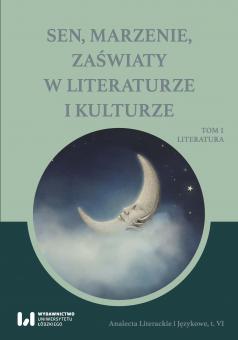
Sleepwalker or Hero? The Motive of Sleep/a Daydreams in a Fairy Tale of Young Poland
Keywords:
sny i wizje, marzenia senne, oniryczne inspiracje, oniryzm, mistycyzm, zaświaty, sąd Boży
Published:
29 August 2017
Categories:
Polish philology
The subject of lecture includes onirism — the important topic during the Young Poland period.
The author is trying to present the phenomenon of sleep, sleepwalking and dreams on the basis of the
achievements of philosophers such as Nietzsche or Schopenhauer. Also it is worth mentioning that the
difference between the dream and the daydream which — are often treated as synonymous and similar
concepts. There can be given many exemples of fairy tales, including an element of dramating, from the
epoch of Young Poland, e.g. ‘The Drowned Kingdom” in which is a boy, the main character, who has
sleepy dreams. Afterwards, when he it the story of imprisoned princess, which is told by his grandfather
and additional, which is a metaphor of captive Polish the child is going to decide to release the princess.
When he was dreaming he goes to another land, where he meets magical creatures, which help him to
overcome their weaknesses and also to find the princess. But at the crucial moment the boy suffered
pride and he missed a chance of freedom. He wakes up crestfallen and defeated. He realised that he is
only a child who cannot lead to the liberation of the country. He wanted to do something that for adult
people were too much and they did not have courage, but he forgot that saving the kingdom is not his
role. The situation is perfectly illustrated by Nietzsche’s dictum, which is the poor self that is the finest
enemy of man to achieve heroic deed. The author comes to the conclusion that there is no clear boundary
between dream and reality. The dream of Young Poland’s fairytale hero is not only the other side of reality,
but this is to delve into reality, it is created from matter, build by it.
Copyright (c) 2017 © Copyright by Authors, Łódź 2017; © Copyright by for this edition by Uniwersytet Łódzki, Łódź 2017
License
LicenseCategory
- Archaeology
- Bibliology and information science
- Biology
- Chemistry
- Economics and management
- Ethnology and cultural anthropology
- Polish philology
- Foreign language studies
- Philosophy
- Physics
- Geography
- History
- Linguistics
- Judaica
- Culture and art
- Literary Studies
- Mathematics
- Pedagogy
- Textbooks for foreigners
- Political science and international relations
- Law
- Psychology
- Sociology
- Other
- Open Access
Series
- 100 Years of Independence
- The Academy of Local Governments
- The Academy of Management and Finance
- Handicapable
- Literary and Linguistic Analects
- Balkans XX/XXI
- Bibliotheca Litteraria
- Bibliotheca Philosophica
- Biography and Biography Research
- Byzantina Lodziensia
- Contemporary Asian Studies Series
- Digitisation
- Education for Wisdom
- Economics
- Film! Scholars
- Finance
- Gerontology
- Interdisciplinary Urban Studies
- Literary Interpretations
- Jerzy Giedroyc and...
- Jerzy Giedroyc and Witnesses of History
- Winter of Life?
- Linguistics
- Judaica Lodzensia
- Jurisprudence
- What Is Man?
- Cognitive Science
- Communication and Media
- A Very Short Introduction
- Literary Culture of Lodz
- Literary Studies
- Lodz Studies in English and General Linguistics
- Lodz in the Polish People's Republic. The Polish People's Republic in Lodz
- Manufactura Hispánica Lodziense
- Marketing
- The monographs of the Section of Disability Sociology of the Polish Sociological Association
- The Art of Learning – The Learning of Art
- Neuroscience in Psychology
- Faces of Feminism
- Faces of war
- Biographical Perspectives
- Politology
- Poland and Central and Eastern Europe in the 20th Century
- Polish Film Culture
- Law
- The Polish People's Republic. Biographies
- Existence and Literature Project
- The Psychology of Everything
- Research on Science & Natural Philosophy
- Romanistyka dla Teatru
- Series Ceranea
- The Conference on Social Pedagogy under the Patronage of the Committee on Pedagogical Sciences of the Polish Academy of Sciences
- Art – Media – Culture
- Pedagogical Therapy
- Creativity and Education
- Vade Nobiscum
- Warsztaty z Geografii Turyzmu
- Early Education
- In Search for the 21st Century Ideas
- The Tower of Babel – in Polish
- Management
- Private Life of Poles in the 19th Century