

-
3622
-
3441
-
3222
-
3076
-
2626
Lucretius’ Ethical Teaching
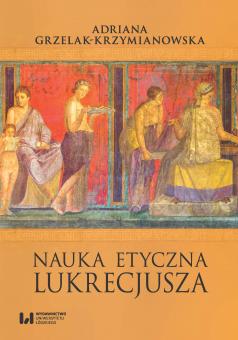
Adriana Grzelak-Krzymianowska
Uniwersytet Łódzki, Wydział Filologiczny, Zakład Latynistyki i Językoznawstwa
ISBN (e-book)
ISBN-13 (15)
978-83-8220-432-2
ISBN
ISBN-13 (15)
978-83-8220-431-5
ISBN AGENT PR
ISBN-13 (15)
978-83-64462-70-2
Keywords:
Lukrecjusz, epikurejska nauka o moralności, rozważania etyczne, O rzeczywistości, szczęście wg Lukrecjusza
Published:
13 April 2021
Categories:
Foreign language studies, Open Access
Downloads
In this book, I have tried to show first of all that the Epicurean ethical science is clearly represented in all six books of Lucretius’ De rerum natura. Using as a criterion the lexical-semantic references to the content of Epicurean ethical philosophy that can be found in the text of the poem, I have singled out those parts of poem that address moral issues. This approach allowed me to determine the proportions in which the ethical teaching contained in the work De rerum natura remains in relation to the “non-ethical” considerations of its author. Next, I showed the form that ethical reflection takes in Lucretius’ poem, indicating the characteristic solutions used by the poet in constructing his argumentation and the substantive relations between the ethical considerations present in the work and the lecture of physics. The analysis made it possible for me to conclude that poem De rerum natura, although it seems to concern mainly physics, also systematically, although not always explicitly, includes the Epicurean ethics lecture introduced by the poet. This fact allows me to consider the work De rerum natura as an almost complete compendium of Epicurean philosophy. For the reader, however, this work, despite its form of lecture, is not only a source of specific knowledge, but above all, it is a prothetic poem filled with the author’s personal reflection, that is, a poem that encourages and motivates us to explore the Epicurean doctrine, which is served by the art of persuasion, strongly present in the poem and taking various forms.
Bailey, C. (red.) (1950). Titi Lucretii Cari De rerum natura libri sex. Oxford: Clarendon.
Bailey, C. (red.) (1972). Titi Lucretii Cari De rerum natura libri sex. Edited with Prolegomena, Critical Apparatus, Translation and Commentary. Vol. I. Oxford: Oxford University Press.
Brown, P. M. (red.) (1984). Lucretius: De rerum natura I. London. Bristol Classical Press.
Leonard, W. E. & Smith, S. B. (red.) (1942). T. Lucreti Cari De Rerum Natura Libri Sex. Madison.
Martin, J. (red.) (1963). Titi Lucreti Cari De rerum natura libri sex. Lipsiae: Teubner.
Rouse, W. H. D (red.) (1959). Lucretius. De rerum natura. Londyn: Harvard University Press.
Lukrecjusz, (1957). O naturze wszechrzeczy. Przeł. E. Szymański. Warszawa: Państwowe Wydawnictwo Naukowe.
Lukrecjusz, (1995). O naturze rzeczy. Wybór. Przeł. G. Żurek. Warszawa: Ludowa Spółdzielnia Wydawnicza.
Tytus Lukrecjusz Karus, (1958). O rzeczywistości: Ksiąg sześć. Przeł. A. Krokiewicz, Wrocław: Ossolineum.
Allen, T. W. (1939). Homeri Opera. T. III. Odysseae Libros I–XII. Oxford: Clarendon.
Ameis, K. F. von (1895). Homer. Odyssee. Lipsiae: Teubner.
Brandt, S. (red.) (1890). Lactantius. Divinae institutions. Epitome divinarum institutionum [w:] Corpus Scriptorum Ecclesiasticorum Latinorum. T. 19. Wien: Hoelder-Pichler-Tempsky.
Burnet, J. (red.) (1948). Platonis Res Publica. Oxford: Oxford University Press.
Bury, R. G. (red.) (1961). Sexstus Empiricus. Against the Logicians. Vol. II. Cambridge: Harvard University Press.
Butler, H. E. (tłum.) (1958). Quintilian. The institutio oratoria. London: Heinemann.
Cherniss, H., Helmbold, W. C. (red.) (1957). Plutarch’s Morali. London: Heinemann.
Diels, H. (red.) (1966–67). Die Fragmente der Vorsokratiker. T. II. Dublin: Weidmann.
Diels, H., Kranz, W. (red.) (1951–52). Die Fragmente der Vorsokratiker. Berlin: Weidmann.
Donalson, M. D. (1996). A Translation of Jerome’s Chronicon With Historical Commentary. Lampeter: Mellen University Press.
Fairclough, H. R. (red.) (1960). Virgil. Aeneid I–VI. Cambridge: Harvard University Press and London: Heinemann.
Fohlen, G. (red.) (1960). Cicéron. Tusculanes disputationes. T. 1. Paris: Les Belles Lettres.
Gifford, E. H. (tłum.) (1903). Eusebii Pamphilii Evangelicae Praeparationis libri XV (Preparation for the Gospel). Oxford: Clarendon.
Gulick, Ch. B. (red.) (1959). Athenaeus. The Deipnosophistis. Vol. VI. London: The Loeb Classical Library.
Gummere, R. D. (1961). Seneca. Ad Lucilium Epistulae Morales. Vol. 1. Cambridge: Harvard University Press.
Hermanum, C. F. (red.) (1911). Plato. Cratylus. Theaetetus. Lipsiae: Teubner.
Ilberg, H. (red.) (1852). Ennius. Annalium libri primi fragmenta emendata, disposita, ilustrata. Bonnae: Formis Caroli Georgii.
Jones, W. H. S (tłum.) (1960). Pausanias. Description of Greece. London: Heinemann.
Kidd, D. (red.) (1997). Aratus: Phaenomena. Cambridge: Cambridge University Press.
Kock, T. (red.) (1880). Commicorum Atticorum Fragmenta. Lipsiae: Teubner.
Lagarde, P. (red.) (1858). Hyppoliti Romani quae feruntur omnia. Lipsiae: Teubner.
Matthieu, G. (red.) (1960). Isocrates. Discours. vol. II. Paris: Les Belles-Lettres.
Meineke, A. (red.) (1855). Stobaeus Ioannes. Florilegium. Lipsiae: Teubner.
Muehll, P. von der (red.) (1975). Epicuri epistulae tres et ratae sententiae a Laertio Diogene servatae. Stutgardiae: Teubner.
Mueller, C. F. (red.) (1879). Ciceroni de natura deorum libri tres. Lipsiae: Teubner.
Oldfather, W. A. (red.) (1956). Epictetus. The discourses as reported by Arrian. Vol. 1. London: The Loeb Classical Library.
Page, T. E. (red.) (1929). Isocrates in three volumes. Tłum. G. Norlin (vols. 1 and 2). London: Heinemann.
Rinarson, B. (red.) (1967). Plutarch’s Moralia. Vol. XIV. Cambridge: Harvard University Press.
Saint-Denis, E. de (transl.) (1960). Virgile. Géorgiques. Paris: Les Belles Lettres.
Usener, H. (1887). Epicurea. Lipsiae: Teubner.
Ajschylos, (1954). Tragedie. Tłum. S. Srebrny. Warszawa: Państwowy Instytut Wydawniczy.
Arystofanes, (1977). Komedie wybrane. Tłum. A. Sandauer, S. Srebrny. Kraków: Wydawnictwo Literackie.
Arystofanes, (1981). Trzy komedie. Tłum. J. Ławińska-Tyszkowska. Wrocław: Biblioteka Narodowa.
Arystoteles, (1988). Retoryka – Poetyka. Tłum. H. Podbielski, Warszawa: PWN.
Augustyn św., (1977). De doctrina Chrystiana. W: K. Burke. Tradycyjne zasady retoryki. Tłum. K. Biskupski. Pamiętnik Literacki. R. 68.
Augustyn z Hippony, (1989). De doctrina Chrystiana = O nauce chrześcijańskiej: tekst łacińsko-polski. Tłum. J. Sulowski. Warszawa: Instytut Wydawniczy PAX.
Cicero, M. T. (2004). On moral ends. J. Annas (red.), transl. R. Woolf. Cambridge: Cambridge University Press.
Diogenes Laertios, (2004). Żywoty i poglądy słynnych filozofów. Tłum. I. Krońska. Warszawa: Wydawnictwo Naukowe PWN.
Epiktet, (1961). Diatryby. Encheiridion. Tłum. L. Joachimowicz. Warszawa: PWN.
Eurypides, (1980). Błagalnice. W: Tragedie. Tłum. J. Łanowski. Warszawa: PIW.
Filodemos, (2002). O muzyce. O utworach poetyckich. Epigramy. Tłum. K. Bartol, Warszawa: Prószyński i S-ka.
Hezjod, (1999). Prace i dni. W: Narodziny bogów. Prace i dni. Tarcza. Tłum. J. Łanowski, Warszawa: Prószyński i S-ka.
Klemens Aleksandryjski, (1994). Kobierce. T. II. Tłum. J. Niemirska-Pliszczyńska. Warszawa: PAX ATK.
Kwintus Horacjusz Flakkus, (2000). Dzieła wszystkie. T. 2. Tłum. J. Sękowski. Warszawa: Wydawnictwo Naukowe PWN.
Myśli etyczne Epikura z Samos (Sentencje Watykańskie), (1996). Tłum. K. Pawłowski. Meander 7–8/96: 363–369.
Platon, (1958). Gorgiasz. Tłum. W. Witwicki. Warszawa: PWN.
Platon, (1991). Państwo. Tłum. W. Witwicki. Warszawa: PWN.
Platon, (1995). Protagoras. Tłum. L. Regner. Warszawa: PWN.
Platon, (2002). Sofista. Polityk. Tłum. W. Witwicki. Kęty: Antyk.
Plutarch, (1988). Moralia II. Tłum. Z. Abramowiczówna. Warszawa: PWN.
Pseudo-Longinos, (1951). O górności. W: Trzy poetyki klasyczne: Arystoteles, Horacy, Pseudo-Longinos. Tłum. T. Sinko. Kraków: Ossolineum.
Seneka, (1998). Listy moralne do Lucyliusza. Tłum. W. Kornatowski. Warszawa: ALFA.
Sofokles, (1990). Antygona. Tłum. K. Morawski. Rzeszów: Krajowa Agencja Wydawnicza.
Teofrast, (1953). O stylu. W: Trzy stylistyki greckie. Tłum. W. Madyda. Wrocław: Zakład Narodowy im. Ossolińskich.
Teofrast, (1963). Pisma filozoficzne i wybrane pisma przyrodnicze. Tłum. D. Gromska i J. Schnayder. Warszawa: PWN.
Teokryt, (1973). Sielanki. Tłum. A. Sandauer. Warszawa: PIW.
Tukidydes, (1957). Wojna peloponeska. Tłum. K. Kumaniecki. Warszawa: Czytelnik.
Wergiliusz, (1956). Georgiki. Tłum. A. L. Czerny. Warszawa: PIW.
Wergiliusz, (1998). Eneida. Tłum. Z. Kubiak. Warszawa: Świat Książki.
Aymard, A., Auboyer, J. (1956). Histoire Generale des Civilisations, [w:] Rome et Son Empire (II edition). Paris: Presses Universitaire de France.
Hammond, N. G. L., Scullard, H. H. (red.) (1973). The Oxford Classical Dictionary. Oxford: Oxford University Press.
Jedynak, S. (red.) (1994). Mały słownik etyczny. Bydgoszcz: Oficyna Wydawnicza Branta.
Krajewski, Wł. (red.) (1996). Słownik pojęć filozoficznych. Warszawa: Scholar.
Maryniarczyk, A. (red.) (2002). Powszechna Encyklopedia Filozofii. T. 3. Lublin: PTTA.
Molinari, J. (1820). Regia Parnasi seu Palatium Musarum. Venezia: J. Molinari.
Skorupko, St. (1988). Słownik terminów bliskoznacznych. Warszawa: Wydawnictwo Wiedza Powszechna.
Sławiński, M. (red.) (1998). Słownik terminów literackich. Wrocław: Zakład Narodowy im. Ossolińskich.
Aleksandrowicz, T. (1990). Zainteresowania literackie rzymskiej nobilitas w schyłkowym okresie Republiki. Katowice: Uniwersytet Śląski.
Andersen, S. (2003). Wprowadzenie do etyki. Tłum. L. Żylicz i R. Piotrowski. Warszawa: Wydawnictwo Akademickie „Dialog”.
Annas, J. (1992). Hellenistic Philosophy of Mind. Berkeley: University of California.
Annas, J. (1993). The Morality of Happiness. New York: Oxford University Press.
Arendt, H. (2003). Odpowiedzialność i władza sądzenia. Tłum. W. Madej i M. Godyń. Kraków: Prószyński i S-ka.
Arenson, K. (2016). Epicureans on Marriage as Sexual Therapy. Polis: The Journal for Ancient Greek Political Thought 2 (33): 291–311.
Armstrong, J. M. (1997). Epicurean Justice. Phronesis XLII 3: 324–345.
Asmis, E. (1984). Epicurus’ Scientific Method. V. 42. Cornell Studies in Classical Philology. Ithaca (N.Y.): Cornell University Press.
Bailey, C. (1928). The Greek Atomists and Epicurus. Oxford: Clarendon Press.
Baldry, H. C. (1952). Who invented the Golden Age? Classical Quarterly 2: 83–92.
Bernstein, A. E. (2006). Jak powstało piekło. Śmierć i zadośćuczynienie w świecie starożytnym oraz początkach chrześcijaństwa. Tłum. A. Piskozub-Piwosz. Kraków: Libron.
Bignone, E. (1940). Lucrezio come interprete della filosofia di Epicuro. Italia e Grecia: 151–165.
Biscuso, M. (2015). Progresso della civiltà e inventio della verità in Lucrezio (De rerum natura I 635–920). Lexicon Philosophicum 3: 148–197.
Bollack, M. (1978). La Raison de Lucrèce. Constitution d’une poétique philosophique avec un essai d’interprétation de la critique lucrétienne. Paris: Éditions de Minuit.
Boyancé, P. (1963). Lucrèce et l’épicurisme. Paris: Presses de France.
Brown, R. D. (1987). Lucretius on Love and Sex: A Commentary on De Rerum Natura IV 1030–1287. Leiden: Brill Academic Pub.
Brożek, M. (1973). Do problemu wczesnej recepcji Lukrecjusza w Polsce. Eos LXI: 77–90.
Brożek, M. (1997). Dzieje tekstu poematu Lukrecjusza. Meander XXVI 3: 101–115.
Burke, K. (1977). Tradycyjne zasady retoryki. Tłum. K. Biskupski. Pamiętnik Literacki 68 (2): 219–250.
Butling, Ot. (1927). Lucrez: Von der Natur der Dinge. Leipzig.
Campbel, G. (2002). Lucretius and the Memes of Prehistory. Leeds International Classical Studies, Discussion Paper 1: 1–32. [online] http://mural.maynoothuniversity.ie/95/1/lucretius.pdf [dostęp: 06.06.2020].
Campbell, G. (2003). Lucretius on Creation and Evolution: A Commentary on De rerum natura 5.772–1104. Oxford: Oxford University Press.
Campbell, G. (2008). And bright was the flame of their friendship (Empedocles B130): humans, animals, justice, and friendship in Lucretius and Empedocles. Leeds International Classical Studies, 7 (4).
Castagna, L. (2000). Vecchiaia e morte del mondo in Lucrezio, Seneca e San Cipriano. Aevum Antiquum 13: 239–263.
Cerasuolo, S. (2015). La definizione di Venus e Amor nella diatriba del Libro IV del De rerum natura. Atene e Roma, Nuova Serie Seconda VIII/3–4: 172–190.
Cichocka, H., Lichański, J. Z. (1995). Zarys historii retoryki. Od początku do upadku cesarstwa bizantyńskiego. Warszawa: Wydawnictwa Uniwersytetu Warszawskiego.
Classen, C. J. (1986). Probleme der Lukrezforschung. Zurich and New York: Hildesheim.
Clay, D. (1983). Lucretius and Epicurus. Ithaca, New York: Cornell University Press.
Clay, D. (1996). An Anathomy of Lucretian metaphor. W: Giannantoni and Gigante (red.). Epicureismo greco e romano. Atti del congresso internazionale Napoli, 19–26 Maggio, 1993. Naples: Bibliopolis: 2. 779–793.
Cooper, J. (1999). Pleasure and Desire in Epicurus. W: Reason and Emotion. Esseys on Ancient moral Psychology and Ehical Theory. Princeton: Princeton university Press.
Copleston, F. (2004). Historia filozofii. T. 1. Grecja i Rzym. Tłum. H. Bednarek. Warszawa: Instytut Wydawniczy PAX.
Cox, A. S. (1971). Lucretius and his Message: A Study in the Prologues of the De Rerum Natura. Greece & Rome 2nd ser. 18.1: 1–16.
Cox, A. S. (1986). Didactic Poetry: Lucretius. W: J. Classen (red.). Probleme der Lukrezforschung. Hildesheim: Olms: 221–230.
Cytowska, M., Szelest, H., Rychlewska, L. (1996). Literatura rzymska. Okres archaiczny. Warszawa: PWN.
Danek, Z. (1979). Lukrecjusza i Owidiusza hymny do Wenus. Praca magisterska napisana na Wydziale Filologicznym Uniwersytetu Łódzkiego. Łódź.
Danek, Z. (1984). Lukrecjusz o początkach rodzaju ludzkiego. Studia Filozoficzne 1/218: 121–134.
Diano, C. (1942). La psicologia d’Epicuro e la teoria delle passioni. Giornale Critico della Filosofia Italiana II Ser. 10: 5–49.
Domański, J. (1996). Metamorfozy pojęcia filozofii. Warszawa: Polska Akademia Nauk.
Dudley, D. R. (1967a). Lucretius. London: Routledge and Kegan Paul.
Dudley, D. R. (1967b). The Satiric Element in Lucretius. W: idem. Lucretius. London: Routledge and Kegan Paul: 121–129.
Dworacki, S. (1991). Eupolis i fragmenty jego komedii. Poznań: Wydawnictwo Naukowe Uniwersytetu im. Adama Mickiewicza.
Eckerman, Ch. (2013). “Lucretius’ Self-positioning in the History of Roman Epicureanism”. The Classical Quarterly. New Series 63/2: 785–800.
Eckerman, Ch. (2019). Lucretius on the Divine. DRN 3.17–30, 5.1161–93, and 6.68–79. Mnemosyne 72: 284–299.
Eliade, M. (1998). Aspekty mitu. Tłum. P. Mrówczyński. Warszawa: Wydawnictwo KR.
Elzenberg, H. (1966). Próby kontaktu, Eseje i studia krytyczne. Kraków: Znak.
Farrington, B. (1954). Nauka grecka. Tłum. Z. Glinka. Warszawa: PWN.
Farrington, B. (1964). The Faith of Epicurus. London: Weidenfeld and Nicolson.
Farrington, B. (1967). Che cosa ha veramente detto Epicuro. Roma: Astrolabio.
Farrington, B. (1967). Form and Purpose in the De rerum natura. W: D. R. Dudley (red.). Lucretius. London: Routledge and Kegan Paul: 19–34.
Ferrarino, P. (1955). Struttura e spirito del poema lucreziano. W: Studi in onore di G. Funaioli. Roma: Signorelli: 40–64.
Finnegan, R. (1999). Plagues in Classical Literature. Classics Ireland 6: 23–42.
Franczak, G. (1997). Mit i topos wieków ludzkości jako model historii świata w literaturze greckiej. Nowy Filomata 3: 163–171.
Franczak, G. (1998). Mit i topos wieków ludzkości jako model historii świata w literaturze łacińskiej. Nowy Filomata 1: 29–36.
Fratantuono, L. (2015). A Reading of Lucretius’ De Rerum Natura. Lanham, Boulder, New York and London: Lexington Books
Furley, D. J. (1967). Two Studies in the Greek Atomists. Princeton: Princeton University Press.
Furley, D.J. (1970). Variations on Themes from Empedocles in Lucretius’s Proem. BICS 17: 64.
Gagliardi, P. (2008). IL Capricorno. Lucrezio e i termini della serenità. [online] https://www.academia.edu/12100264/Il_linguaggio_della_serenit%C3%A0_in_Lucrezio [dostęp: 14.05.2020].
Galasiński, D. (1992). Chwalenie się jako perswazyjny akt mowy. Kraków: Polska Akademia Nauk.
Gale, M. (1994). Myth and Poetry in Lucretius. Cambridge: Cambridge University Press.
Gale, M. (2000). Virgil on the Nature of Things: The Georgics, Lucretius, and the Didactic Tradition. Cambridge: Cambridge University Press.
Gale, M. (2001a). Etymological Wordplay and Poetic Succession in Lucretius. Classical Philology 96/2: 168–172.
Gale, M. (2001b). Lucretius and the Didactic Epic. Londyn: Bristol Classical Press.
Gale, M. (2018). Contemplating Violence. W: M. Gale & J. Scourfield (red.). Texts and Violence in the Roman World. Cambridge: Cambridge University Press: 63–86.
Galzerano, M. (2017). Ending with World Destruction: a Closural Device in Lucretius’ De Rerum Natura and its Influence on Later Latin Poetry. Graeco-Latina Brunensia XXII: 43–55.
Galzerano, M. (2019). Cosmic Shipwreck with Spectator. Lucretius and the End of Rome. W: R. Colombo, F. Gasti, M. Gay, F. Sorbello (red.). Il vero condito: caratteri e ambiti della poesia didascalica nel mondo antico. Atti della XI Giornata Ghisleriana di Filologia Classica Pavia (29–30/11/2017). Pavia: Pavia University Press: 19–36.
Garani, M. (2007). Empedocles Redivivus: Poetry and Analogy in Lucretius (Studies in Classics). New York and London: Routledge.
Gardner, H. H. (2019). Pestilence and the Body Politic in Latin Literature. Oxford: Oxford University Press.
Gellar-Goad, T. (2018). Lucretius’ Personified Natura Rerum, Satire, and Ennius’ Saturae. Phoenix 72 (1/2): 143–160.
Giancotti, F. (1959). Il preludio di Tito Lucrezio Caro. Messyna: G. D’Anna.
Giancotti, F. (1989). Religio, natura, voluptas. Studi su Lucrezio. Con un’antologia di testi annotati e tradotti. Bologna: Pàtron.
Gigante, M. (1976). Il tirso di Lucrezio. W: Scritti in onore di Cleto Carbonara. Napoli: Giannini.
Gillespie, S., Hardie, P. (red.) (2007). The Cambridge Companion to Lucretius. Cambridge: Cambridge University Press.
Grzelak-Krzymianowska, A. (2002). Oryginalność i inspiracja. Koncepcja Lukrecjusza dotycząc a narodzin człowieka, jego pierwotnej egzystencji oraz rozwoju cywilizacji ludzkiej na tle wcześniejszej tradycji. Łódź. (Praca magisterska napisana w Katedrze Filologii Klasycznej Uniwersytetu Łódzkiego).
Grzelak-Krzymianowska, A. (2006). Czy dobro najwyższe Lukrecjusza ma charakter racjonalny? Collectanea Philologica IX: 73–77.
Grzelak-Krzymianowska, A. (2009). Periodyzacja dziejów cywilizacji ludzkiej w ujęciu Lukrecjusza. Komentarz do odcinka poematu De rerum natura 5.925–1439. W: Czerwińska (red.). Kategorie i funkcje czasu w ujęciu starożytnych. Łódź: Wydawnictwo Uniwersytetu Łódzkiego: 213–222.
Grzelak-Krzymianowska, A. (2013). The Presence of Ethical Teaching in the De Rerum Natura of Lucretius. Collectanea Philologica XVI: 103–113.
Grzelak-Krzymianowska, A. (2018). Starożytne źródła o przyjaźni kobiet rzymskich W: A. Marchewka (red.). Ideał i antyideał kobiety w literaturze greckiej i rzymskiej. Gdańsk: Wydawnictwo Uniwersytetu Gdańskiego: 249–262.
Grzelak-Krzymianowska, A. (2019). Sugestywność etycznego przekazu prologów w poemacie Lukrecjusza. Collectanea Philologica XXII: 85–99.
Grzesiowski, M. (1985). Między egoizmem i altruizmem. U podstaw etyki Epikura. Meander VII: 233–246.
Guthrie, W. K. C. (1957). In the Beginning, Some Greek Views on the Origins of Life and the Early State of Man. London: Methuen.
Gwiazdecka, J. (2003). Etyka Platona. O formie platońskiej refleksji moralnej. Kęty: Antyk.
Hadot, P. (2000). Czym jest filozofia starożytna. Tłum. P. Domański. Warszawa: Wyd. Aletheia.
Harrison, S. (2002). Ennius and the Prologue to Lucretius DRN 1 (1.1–148), Leeds International Classical Studies 1.4. [online] http://www.leeds.ac.uk/classics/lics [dostęp: 06.06.2020].
Harrison, S. (2018). Lucretius and Memmius: De Rerum Natura 1.42. Cadernos de Letras da UFF 28/56: 21–27.
Harwas-Napierała, B., Trempała, J.(red.) (2003). Psychologia rozwoju człowieka, Rozwój funkcji psychicznych. T. III. Warszawa: Wydawnictwo Naukowe PWN.
Hill, B. (2018). Didactic warfare: Military imagery and progressive exposure in Lucretius’ De Rerum Natura. Paper delivered at the 2018 SCS Annual Meeting in Boston. [online] https://www.academia.edu/36001916/Didactic_Warfare_Military_Imagery_and_Progressive_Exposure_in_Lucretius_De_rerum_natura [dostęp: 06.06.2020].
Holford-Strevens, L. (2002). Horror vacui in Lucretian biography. Leeds International Classical Studies 1.1 [online] http://www.leeds.ac.uk/classics/lics/ [dostęp: 06.06.2020].
Ingalls, W. B. (1971). Repetition in Lucretius. Phoenix 25/3: 227–36.
Jackson, P. (2006). The Polytheism of the Epicureans. [online] https://www.academia.edu/36564126/The_Polytheism_of_the_Epicureans [dostęp: 06.06.2020].
Jankowska, M. (2005). Zarys psychologii. Warszawa: Wydawnictwo Archidiecezji Warszawskiej.
Jaroszyński, P. (2002). Nauka w kulturze. Radom: Polwen.
Jaśtal, J. (red.) (2004). Etyka cnót, etyka charakteru, [w:] idem. Etyka i charakter. Kraków: Aureus.
Johncock, M. (2016). Metaphor and Argumentation in Lucretius, Royal Holloway, University of London, PhD Classics. [online] https://pure.royalholloway.ac.uk/portal/files/26500239/2016johncockmspphd.pdf [dostęp: 06.06.2020].
Jope, J. (1983). Lucretius’ Psychoanalytic Insight: His Notion of Unconscious Motivation. Phoenix 37/3: 224–238.
Kennedy, D. F. (2002). Rethinking Reality. Lucretius and the Textualization of Nature. Michigan: Ann Arbor. University of Michigan Press.
Kenney, E. J., Clausen W. V. (1983). The Cambridge History of Classical Literature. Cambridge: Cambridge University Press.
Kirk, G. S., Raven J. E., Schofield, M. (1999). Filozofia przedsokratejska. Tłum. J. Lang. Warszawa–Poznań: Wydawnictwo Naukowe PWN.
Konstan, D. (1973). Some aspects of Epicurean Psychology. Leiden: Brill.
Konstan, D. (2008). A Life Worthy of the Gods: The Materialist Psychology of Epicurus. Las Vegas: Parmenides Publishing.
Korolko, M. (1990). Sztuka retoryki. Przewodnik encyklopedyczny. Warszawa: Wiedza Powszechna.
Korpanty, J. (1988a). Pojęcie religio w poemacie Lukrecjusza. Meander 9–10: 371–396.
Korpanty, J. (1988b). Terminologia społeczno-polityczna u Lukrecjusza i epikurejski pogląd na aktywność publiczną. Meander 6: 243–266.
Korpanty, J. (1991). Lukrecjusz – rzymski apostoł epikureizm. Warszawa: Ossolineum.
Kranz, W. (1943). Lukrez und Empedokles. Philologus: 68–107.
Krokiewicz, A. (1961). Hedonizm Epikura. Warszawa: Instytut Wydawniczy PAX.
Krokiewicz, A. (2000). Nauka Epikura. Warszawa: Aletheia.
Kronenberg, L. (2019). The Light Side of the Moon: A Lucretian Acrostic (LUCE, 5.712–15) and Its Relationship to Acrostics in Homer (LEUKĒ, Il. 24.1–5) and Aratus (LEPTĒ, Phaen. 783–87). Classical Philology 114/2: 278–292.
Krukowska, S. (2007). De fabulis veteribus In Lucretii „De rerum natura” carmine occurrentibus. Lodzie MMVII. (Praca magisterska napisana w Katedrze Filologii Klasycznej Uniwersytetu Łódzkiego).
Krukowska, S. (2013). Motywy mitologiczne w poemacie Lukrecjusza De rerum natura. Wratislaviensium Studia Classica II (XXXIII): 5–19.
Kumaniecki, K. (1977). Literatura rzymska. Okres cyceroński. Warszawa: PWN.
Kutsiumari, M. I. (2018). Ο μύθος των πέντε γενεών του Ησιόδου (Ἔργ. 106–201) στο De Rerum Natura (5.925–1010, 5.1241–96) του Λουκρητίου: Αληθοφάνεια–Απομυθοποίηση – Μετατόπιση. W: Πρακτικά 9ου Συνεδρίου Μεταπτυχιακών Φοιτητών και Υποψηφίων Διδακτόρων του τμήματος Φιλολογίας, Εθνικό και Καποδιστριακό Πανεπιστήμιο Αθηνών, 4–7 Οκτωβρίου 2017, ΕΚΠΑ ΑΘΗΝΑ: 105–117.
Kwiatek, A., Worwąg, W. (1997). Podróż po historii filozofii. Starożytność. Warszawa: Scholar.
Laigneau, S. (2001). Présence de Lucrèce. Actes du Colloque de Tours, 3–5 décembre 1998. W: Revue belge de philologie et d’histoire 79 (1). Antiquité – Oudheid: 267–269.
Lausberg, H. (2002). Retoryka literacka. Podstawy wiedzy o literaturze. Tłum. A. Gorzkowski. Bydgoszcz: Homini.
Lehoux, D., Morrison, A. D., Sharrock, A. (red.) (2013). Lucretius: Poetry, Philosophy, Science. Oxford: OUP Oxford.
Lenz, J. R. (2011). How Epicurean Science Saves Humanity in Lucretius. W: T. Madigan, D. B. Suits (red.). Lucretius, His Continuing Influence and Contemporary Relevance. Rochester, Rochester, New York: RIT Press: 89–106.
Leone, G. (1983). Syzetesis, Studi sull’epicureismo greco e romano offerti a Marcello Gigante. Napoli: Centro internazioanle per lo studio dei pappiri ercolanesi.
Leśniak, K. (1960). Lukrecjusz. Warszawa: Wiedza Powszechna.
Lichański, J. (1996). Co to jest retoryka? Kraków: PAN.
Lienhard, J. T. (1969). The Prooemia of De Rerum Natura. The Classical Journal LXIV: 346–353.
Lillegard, N. (2003). On Epicurus. Michigan: Wadsworth/Thompson Learning.
Lipiec, J. (2001). Świat wartości. Wprowadzenie do aksjologii. Kraków: AWA.
Luciani, S. (2017a). Cybèle et les mystères de la matière (Lucrèce, De rerum natura II, 581–660). Revue des Etudes Latines, Les Belles Lettres 94: 45–66.
Luciani, S. (2017b). Lucrèce et la tradition de la consolation. Exercises de Rhétorique 9. [online] http://journals.openedition.org/rhetorique/519 [Dostęp: 06.06.2020].
MacGillivray, E. D (2010). Epicurean Mission and Membership from Early Garden to the Late-Roman Republic. A thesis presented for the degree of Master of Theology (by research) at the University of Aberdeen. [online] https://www.academia.edu/36835414/Epicurean_Mission_and_Membership_from_the_Early_Garden_to_the_Late-Roman_Republic [dostęp: 06.06.2020].
MacGillivray, E. D (2012). The Popularity of Epicureanism in Late-Republic Roman Society. The Ancient World XLIII: 151–172.
Madigan, D. R., Suits D. B. (2003). Epicurus: His Continuing Influence and Contemporary Relevance. Rochester, New York: RIT Press.
Madyda, W. (1950). Starożytne teorie metafory i ich aktualność. Eos XLIV (2): 77–101.
Madyda, W. (1953). Trzy stylistyki greckie. Wrocław: Zakład Narodowy im. Ossolińskich.
Maguinnes, W. S. (1967). The Language of Lucretius. W: J. Dudley (red.). Lucretius. London: Routledge and Kegan Paul.
Malinowski, B. (1990). Dzieła. T. 7. Mit, magia, religia. Tłum. B. Leś, D. Praszałowicz. Warszawa: PWN.
Mammi, D. (2017). Il piacere prima di Epicuro: l’origine della musica e della poesia secondo Lucrezio. Un commento a De Rerum Natura V 1379–1411. Tesi di Laurea Triennale – Corso di Laurea in Lettere Classiche. [online] https://www.academia.edu/37728152/Il_piacere_prima_di_Epicuro_lorigine_della_musica_e_della_poesia_secondo_Lucrezio [dostęp: 06.06.2020].
Masson, J. (1909). Lucretius: Epicurean and Poet. London: Murray.
Mazur, T. (2007). Kapryśni bogowie Sokratesa. Człowiek i świat wartości w tradycji filozofii zachodniej. Kęty: Antyk.
McConnell, S. (2015). Epicurean Education and the Rhetoric of Concern. Acta Classica LVIII: 111–145.
McConnell, S. (2018). Lucretius on the Nature of Parental Love. Antichthon 52: 72–89.
McLeod, E. M. (1963). Lucretius’ carmen dignum. The Classical Journal 58/4: 145–156.
Mecci, S. (2018). “The Ethical Implications Of Epicurus’ Theology”. Philosophia. Yearbook of the Research Centre for Greek Philosophy at the Academy of Athens 48: 195–204.
Merlan, P. (1950). Lucretius – Primitivist or Progressivist?. Journal of the History of Ideas 3: 364–368.
Mitosek, Z. (1983). Teorie badań literackich. Przegląd historyczny. Warszawa: PWN.
Mitsis, P. (1988). Epicurus’ Ethical Theory: The Pleasures of Invulnerability. Ithaca (N.Y.): Cornell University Press.
Morselli, F. (1892). Il pessimismo di Tito L. Caro. Torino-Palermo: C. Clausen.
Mrówka, K. (2004). Heraklit. Warszawa: Scholar.
Müller, R. (1991). Die Epikureische Ethik. Schriften zur Geschichte und Kultur der Antike, 32. Berlin: Akademie Verlag.
Myakin, T. (2019). “The Goddess Venus in Lucretius Poem De rerum natura”. Scholae 13 (1): 153–179.
Myśli etyczne Epikura z Samos (Sentencje Watykańskie). Tłum. K. Pawłowski. Meander 7–8: 363–369
Nethercut, J. S. (2014). Ennius and the Revaluation of Traditional Historiography in Lucretius’ De Rerum Natura. W: Ch. Pieper and J. Ker (red). Valuing the Past in the Greco-Roman World. Proceedings from the Penn-Leiden Colloquia on Ancient Values VII. Leiden: Brill: 435–461.
Nethercut, J. S. (2017). Empedocles’ «Roots» in Lucretius’ De Rerum Natura. American Journal of Philology 138 (1): 85–105.
Nethercut, J. S. (2018). Provisional Argumentation and Lucretius’ Honeyed Cup. The Classical Quarterly 68 (2): 523–533.
Neumann, G. (2003). Epikureizm. Tłum. A. Rytmowska. Olsztyn: Adiaphora.
Nichols, J. H. (1976). Epicurean Political Philosophy. The De rerum natura. London: Cornell University Press.
Norbrook, D., Harrison, S. J., Hardie Ph. R. (red.) (2016). Lucretius and the Early Modern. Oxford: Oxford University Press.
Nowicki, A. (1983a). Z rozważań nad filozofią Lukrecjusza i genezą jego ateizmu. Euhemer 1/127: 11–25.
Nowicki, A. (1983b). Policentryczna struktura osobowości Lukrecjusza. Meander 10–11: 407–418.
Nowicki, A. (1986). Zarys dziejów krytyki religii. Starożytność. Warszawa: Książka i Wiedza.
Nussbaum, M. C. (1986). The Fragility of Goodness: Luck and Ethics in Greek Tragedy and Philosophy. Cambridge: Cambridge University Press.
Nussbaum, M. C. (1989). Mortal Immortals: Lucretius on Death and the Voice of Nature. Philosophy and Phenomenological Research 50 (2): 303–351.
Nussbaum, M. C. (1994). The Therapy of Desire: Theory and Practice in Hellenistic Ethics. Princeton: Princeton University Press.
O’Keefe, T. (1996). Does Epicurus Need the Swerve as an Arche of Collision? Phronesis XLI (3): 305–317.
O’Keefe, T. (2002). The Reductionist and Compatibilist Argument of Epicurus On nature Book 25. Phronesis XLVII (2): 153–186.
O’Keefe, T. (2003). Lucretius on the Cycle of Life and the Fear of Death. Apeiron 36 (1): 53–65.
O’Keefe, T. (forthcoming). Lucretius and the Philosophical Use of Literary Persuasion. W: D. O’Rourke (red.). Approaches to Lucretius: traditions and innovations in reading De Rerum Natura. Cambridge: Cambridge University Press.
Olberding, A. (2005). The Feel of Not to Feel It: Lucretius’ Remedy for Death Anxiety. Philosophy and Literature 29 (1): 114–129.
Olmedo, P. R. (2017). “«(…) iuraque constiutere, ut vellent legibus uti.» Sociedad humana y derecho en el De rerum natura v de Lucrecio”. Trazos II: 30–44.
Olszewski, M. (1990). Aporie Epikura. Meander 4–6: 165–184.
Ossowska, M. (1963). Podstawy nauki o moralności. Warszawa: PWN.
Ossowska, M. (2000). Normy moralne. Próba systematyzacji. Warszawa: Wydawnictwo Naukowe PWN.
Ossowska, M. (2002). Motywy postępowania. Z zagadnień psychologii moralności. Warszawa: Książka i Wiedza.
Patin, M. (1869). L’Anti-Lucrèce chez Lucrèce. W: Études sur la poesie latine. T. 1. Paris: 117–137.
Pawlaczyk, A. (1997). Sposoby i formy perswazji w poemacie Lukrecjusza. Meander 3: 205–217.
Pąkcińska, M. (1959). Hedonistyczna etyka Epikura. Warszawa: PWN.
Pieri, B. (2010). Venere degli animali. Lucrezio, Virgilio e le metafore dell’eros. Materiali e discussioni per l’analisi dei testi classici 65: 99–127.
Pigoniowa, M. (1995). Opis zarazy w Atenach, Lukrecjusz, De rerum natura VI 1138–1286. Eos LXXXIII (2): 285–305.
Poignault, R. (1998). Présence de Lucrèce. Actes du colloque tenu à Tours, 3–5 décembre. Tours: 267–269
Popławski, M. (1932). Lukrecjusz i Rzymianie. Droga 2: 71–82.
Powarkow, J. (1981). Epikur. Paradoksy hedonizmu. Tłum. E. Rutkowski. Warszawa: Książka i Wiedza.
Probucka, D. (1999). Utylitaryzm; Aksjologiczno-etyczne aspekty kategorii użyteczności. Częstochowa: Wydawnictwo Wyższej Szkoły Pedagogicznej w Częstochowie.
Przełęcki, M. (2004). Sens i prawda w etyce. Warszawa: Znak – Język – Rzeczywistość: Polskie Towarzystwo Semiotyczne.
Purinton, J. S. (1999). Epicurus on the ‘Free Volition’ and the Atomic Swerve. Phronesis XLIV (4): 253–299.
Reale, G. (1999). Historia filozofii starożytnej. T. III. Tłum. E. I. Zieliński. Lublin: TN KUL.
Reale, G. (2003). Myśl starożytna. Tłum. E. I. Zieliński. Lublin: TN KUL
Rebeggiani, S. (2019), Roman Agamemnon: political echoes in the proem to Lucretius’ De Rerum Natura. Mnemosyne: 1–19.
Regenbogen, O. (1932). Lucrez: Seine Gestalt in seinem Gedicht. Leipzig: Teubner.
Reinhardt, T. (2002). The Speech of Nature in Lucretius‘ De Rerum Natura 3.931–71. The Classical Quarterly 52 (1): 291–304.
Rutkowski, M. (2001). Obowiązek moralny a motywacja. Szczecin: Wydawnictwo Naukowe Uniwersytetu Szczecińskiego.
Salemme, C. (2016). Lucrezio e la conclusione dell’opera. Bollettino di studi latini XLVI (1): 10–25.
Sarnowski, St., Fryckowski, E. (red.) (1993). Problemy etyki. Wybór tekstów. Bydgoszcz: Agencja Marketingowa Branta.
Schiesaro, A. (1990). Simulacrum et imago. Gli argomenti analogici nel De rerum natura. Pisa: Giardini.
Schiesaro, A. (2007a). Didaxis, Rhetoric, and the Law in Lucretius. W: S. J. Heyworth (red.). Classical Constructions: 62–90.
Schiesaro, A. (2007b). Lucretius and Roman Politics and History. W: S. Gillespie, P. Hardie (red.). The Cambridge Companion to Lucretius. Cambridge: 41–58.
Schmid, W. (1963). Epikur. W: Reallexikon fűr Antike und Christentum 5: 681–819.
Schrijvers, P.H. (1970). Horror ac divina voluptas: etudes sur la poétique et la poésie de Lucrèce. Amsterdam: Hakkert.
Schrijvers, P.H. (1986). Eléments psychagogiques dans l’oeuvre de Lucrèce. W: C. J. Classen, Probleme der Lukrezforschung. Zurich and New York: Hildesheim: 375–381.
Sedley, D. (1998). Lucretius and the Transformation of Greek Wisdom. Cambridge: Cambridge University Press.
Sedley, D. (1999). Lucretius’ Use and Avoidance of Greek. W: J. N. Adams, R. Mayer (red.). Aspects of the Language of Latin Poetry. Proceedings of the British Academy. Oxford: Oxford University Press: 227–246.
Segal, Ch. (1990). Lucretius on Death and Anxiety. Poetry and Philosophy in „De rerum natura”. Princeton. New Jersey: Princeton University Press.
Serres, M. (1977). La naissance de la physique dans le texte de Lucrèce. Fleuves et turbulences. Paris: Ed. de Minuit.
Sieroń, J. (1983). Problem wolności w filozofii Epikura. Meander 6/83: 187–197.
Sihvola, J. (1989). Decay, Progress, the Good Life? Hesiod and Protagoras on the Development of Culture. (Commentationes Humanarum Litterarum, 89). Helsinki: Societas Scientiarum Fennica.
Sikes, E. (1936). Lucretius: Poet and Philosopher. Cambridge: The University Press.
Singer, P. (red.) (2002). Przewodnik po etyce. Warszawa: Książka i Wiedza.
Sinker, A. P. (1937). Introduction to Lucretius. Cambridge: The University Press: XVIII–XXIV.
Sinko, T. (1960). Od filantropii do humanitaryzmu i humanizmu. Warszawa: Instytut Wydawniczy PAX.
Snyder, J. M. (1980). Puns and Poetry in Lucretius’ „De rerum natura”. Amsterdam: B. R. Grüner.
Snyder, J. M. (1983). The Warp and Woof of the Universe in Lucretius. Illinois Classical Studies 8 (1): 37–43.
Solomon, D. (2004). Lucretius’ Progressive Revelation of Nature in “DRN” 1.149–502. Phoenix 58 (3/4): 260–283.
Springer, L. A. (1977). The Role of Religio, Solvo, and Ratio In Lucretius. The Classical Word 71 (1): 55–61.
Stępień, B. (1995). Wstęp do filozofii. Lublin: TN KUL.
Suerbaum, W. (1994). Herculanensische Lucrez-Papyri – Neue Belege für die Phase der Majuskel-Kursive eines bekannten Klassikertextes, Nachbetrachtungen zur Edition von K. Kleve, CronErc 19, 1989, 5–27. W: Zeitschrift für Papirologie und Epigraphik 104: 1–21.
Swoboda, M. (1980). De Lucretii hymno Veneris sacro. Eos LXVIII (1): 95–102.
Ślipko, T. (2002). Zarys etyki ogólnej. Kraków: WAM.
Świątek, J. (1998). W świecie powszechnej metafory. Metafora językowa. Kraków: PAN.
Tatarkiewicz, Wł. (1965). O szczęściu. Warszawa: PWN.
Taylor, B. (2016). Rationalism and the theatre in Lucretius. Classical Quarterly 66 (1): 140–154.
Toulmin, S. (1986). The Place of Reason in Ethics. Chicago: University of Chicago Press.
Townend, G. (1967b). Imagery in Lucretius. W: D. R. Dudley (red.). Lucretius. London: Routledge and Kegan Paul: 95–114.
Trempała, J. (1993). Rozumowanie moralne i odporność dzieci na pokusę oszustwa. Bydgoszcz: Wyższa Szkoła Pedagogiczna.
Tsouna, V. (2019). Epicurean dreams. Elencheos 39 (2): 231–256.
Tutrone, F. (2018). Granting Epicurean Wisdom at Rome. Exchange and Reciprocity in Lucretius Didactics (DRN 1.921–950). Harvard Studies in Classical Philology 109: 275–337.
Voisé, W. (1983), Lukrecjusz o ludzkim czasie. Meander 10–11: 419–427.
Volkmann, R. (1995). Wprowadzenie do retoryki Greków i Rzymian. W: H. Cichocka, J. Z. Licheński. Zarys historii retoryki. Od początku do upadku cesarstwa bizantyńskiego. Wprowadzenie do retoryki Greków i Rzymian. Warszawa: Wydawnictwo Uniwersytetu Warszawskiego: 155–167.
Warren, J. (2002). Epicurus and Democritean Ethics. An Archeology of Ataraxia. Cambridge: Cambridge University Press.
Warren, J. (2004). Facing Death. Epicurus and his Critics. Oxford: Oxford University Press.
Wendlandt, L., Baltzly, D. (2004). Knowing Freedom: Epicurean Philosophy Beyond Atomism and the Swerve. Phronesis XLIX (1): 41–71.
Wesoły, M. (1970). Poemat Lukrecjusza „De rerum natura” jako próba naukowej interpretacji zjawisk, Poznań [praca magisterska w maszynopisie, Instytut Filologii Klasycznej UAM].
West, D. (1969). The Imagery and Poetry in Lucretius. Edinburgh: Edinburgh University Press.
Woolf, R. (2004). What kind of Hedonist was Epicurus. Phronesis XLIX (4): 303–322.
Wormell, D. E. (1967). The Personal World of Lucretius. W: D. R. Dudley. Lucretius. London: Routledge and Kegan Paul: 38–49.
Ziembiński, Z. (1994). Zarys zagadnień etyki. Poznań: Wydawnictwo Edytor.
Download data is not yet available.
Copyright (c) 2021 © Copyright by Adriana Grzelak-Krzymianowska, Łódź–Kraków 2021;© Copyright for this edition by Uniwersytet Łódzki, Łódź–Kraków 2021; © Copyright for this edition by AGENT PR, Łódź–Kraków 2021
License

This work is licensed under a Creative Commons Attribution-NonCommercial-NoDerivatives 4.0 International License.
Category
- Archaeology
- Bibliology and information science
- Biology
- Chemistry
- Economics and management
- Ethnology and cultural anthropology
- Polish philology
- Foreign language studies
- Philosophy
- Physics
- Geography
- History
- Linguistics
- Judaica
- Culture and art
- Literary Studies
- Mathematics
- Media
- Pedagogy
- Textbooks for foreigners
- Political science and international relations
- Law
- Psychology
- Sociology
- Other
- Open Access
Series
- 100 Years of Independence
- The Academy of Local Governments
- The Academy of Management and Finance
- Handicapable
- Literary and Linguistic Analects
- Balkans XX/XXI
- Bibliotheca Litteraria
- Bibliotheca Philosophica
- Biography and Biography Research
- Byzantina Lodziensia
- Contemporary Asian Studies Series
- Digitisation
- Education for Wisdom
- Economics
- Film! Scholars
- Finance
- Gerontology
- Interdisciplinary Urban Studies
- Literary Interpretations
- Jerzy Giedroyc and...
- Jerzy Giedroyc and Witnesses of History
- Winter of Life?
- Linguistics
- Judaica Lodzensia
- Jurisprudence
- What Is Man?
- Cognitive Science
- Communication and Media
- A Very Short Introduction
- Literary Culture of Lodz
- Literary Studies
- Lodz Studies in English and General Linguistics
- Lodz in the Polish People's Republic. The Polish People's Republic in Lodz
- Manufactura Hispánica Lodziense
- Marketing
- The monographs of the Section of Disability Sociology of the Polish Sociological Association
- The Art of Learning – The Learning of Art
- Neuroscience in Psychology
- Faces of Feminism
- Faces of war
- Biographical Perspectives
- Politology
- Poland and Central and Eastern Europe in the 20th Century
- Polish Film Culture
- Law
- The Polish People's Republic. Biographies
- Existence and Literature Project
- The Psychology of Everything
- Research on Science & Natural Philosophy
- Romanistyka dla Teatru
- Series Ceranea
- The Conference on Social Pedagogy under the Patronage of the Committee on Pedagogical Sciences of the Polish Academy of Sciences
- Art – Media – Culture
- Pedagogical Therapy
- Creativity and Education
- Vade Nobiscum
- Warsztaty z Geografii Turyzmu
- Early Education
- In Search for the 21st Century Ideas
- The Tower of Babel – in Polish
- Management
- Private Life of Poles in the 19th Century