

-
3611
-
3397
-
3103
-
2984
-
2597
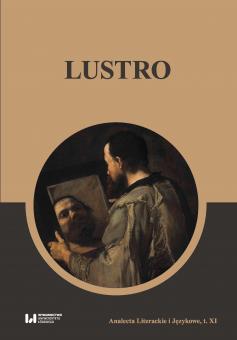
Jan Lechoń in Front of the Mirror of the Tribunal of Conscience
Monika Urbańska
Uniwersytet Łódzki, Wydział Filologiczny, Instytut Filologii Polskiej i Logopedii, Zakład Literatury Dawnej, Edytorstwa i Nauk Pomocniczych
https://orcid.org/0000-0002-7965-8547 (unauthenticated)
Publication:
Series:
Literary and Linguistic Analects
Pages:
57-78
Keywords:
lustro, literatura polska
Published:
30 December 2020
Categories:
Polish philology, Open Access
Downloads
Jan Lechoń hid his face under the mask of Konrad, creating himself as the heir of the great romantics, the fourth bard. In reflections on the mirror’s topics, along with Erynie poem, his Diary is the basic source that allows to understand the various stages of Lechoń creativity, the periods of his creative collapse, and the internal path in which the writer made regular vivisection. Bills of conscience, spiritual confrontations with the glass of the mirror, in Diary was called by him as the „court of justice”. However, he was not honest in his records, he made many silences. Portraits of total destruction were not an option in the case of Lechoń, he wanted to keep the face that was needed — to the end. Throughout his life and consistently, in the final moment, Lechoń remained a prisoner of form and mask. We will discuss this topic in the article.
Monika Urbańska, Uniwersytet Łódzki, Wydział Filologiczny, Instytut Filologii Polskiej i Logopedii, Zakład Literatury Dawnej, Edytorstwa i Nauk Pomocniczych
adiunkt w Zakładzie Literatury Dawnej, Edytorstwa i Nauk Pomocniczych w Instytucie Filologii Polskiej i Logopedii na Wydziale Filologicznym Uniwersytetu Łódzkiego; ul. Pomorska 171/173, 90-236 Łódź; email: monika.urbanska@uni.lodz.pl. Autorka książek: Utwory prozatorskie na łamach „Zabaw Przyjemnych i Pożytecznych”. Wybór. Edycja krytyczna ze wstępem (Łódź 2006), „Udawać do końca” — „Dziennik” Jana Lechonia jako świadectwo (Łódź 2010); edycji: Anna Mostowska, Powieści, listy (Łódź 2014), Jan Brzechwa, Wiersze polityczne (wraz z J. Podwysocką-Modrzejewską, Łódź 2019), jak również kilkudziesięciu artykułów skupionych wokół edytorstwa naukowego oraz poezji XX wieku, szczególnie twórczości J. Lechonia.
Copyright (c) 2020 © Copyright by Authors, Łódź 2020; © Copyright for this edition by Uniwersytet Łódzki, Łódź 2020
License

This work is licensed under a Creative Commons Attribution-NonCommercial-NoDerivatives 4.0 International License.
How to Cite
Urbańska, M. (Ed.). (2020). Jan Lechoń in Front of the Mirror of the Tribunal of Conscience. In (Ed.), Lustro (Vol. XI, pp. 57-78). Lodz University Press. https://doi.org/10.18778/8142-812-5.05
Category
- Archaeology
- Bibliology and information science
- Biology
- Chemistry
- Economics and management
- Ethnology and cultural anthropology
- Polish philology
- Foreign language studies
- Philosophy
- Physics
- Geography
- History
- Linguistics
- Judaica
- Culture and art
- Literary Studies
- Mathematics
- Media
- Pedagogy
- Textbooks for foreigners
- Political science and international relations
- Law
- Psychology
- Sociology
- Other
- Open Access
Series
- 100 Years of Independence
- The Academy of Local Governments
- The Academy of Management and Finance
- Handicapable
- Literary and Linguistic Analects
- Balkans XX/XXI
- Bibliotheca Litteraria
- Bibliotheca Philosophica
- Biography and Biography Research
- Byzantina Lodziensia
- Contemporary Asian Studies Series
- Digitisation
- Education for Wisdom
- Economics
- Film! Scholars
- Finance
- Gerontology
- Interdisciplinary Urban Studies
- Literary Interpretations
- Jerzy Giedroyc and...
- Jerzy Giedroyc and Witnesses of History
- Winter of Life?
- Linguistics
- Judaica Lodzensia
- Jurisprudence
- What Is Man?
- Cognitive Science
- Communication and Media
- A Very Short Introduction
- Literary Culture of Lodz
- Literary Studies
- Lodz Studies in English and General Linguistics
- Lodz in the Polish People's Republic. The Polish People's Republic in Lodz
- Manufactura Hispánica Lodziense
- Marketing
- The monographs of the Section of Disability Sociology of the Polish Sociological Association
- The Art of Learning – The Learning of Art
- Neuroscience in Psychology
- Faces of Feminism
- Faces of war
- Biographical Perspectives
- Politology
- Poland and Central and Eastern Europe in the 20th Century
- Polish Film Culture
- Law
- The Polish People's Republic. Biographies
- Existence and Literature Project
- The Psychology of Everything
- Research on Science & Natural Philosophy
- Romanistyka dla Teatru
- Series Ceranea
- The Conference on Social Pedagogy under the Patronage of the Committee on Pedagogical Sciences of the Polish Academy of Sciences
- Art – Media – Culture
- Pedagogical Therapy
- Creativity and Education
- Vade Nobiscum
- Warsztaty z Geografii Turyzmu
- Early Education
- In Search for the 21st Century Ideas
- The Tower of Babel – in Polish
- Management
- Private Life of Poles in the 19th Century