

-
3593
-
3355
-
3122
-
2980
-
2553
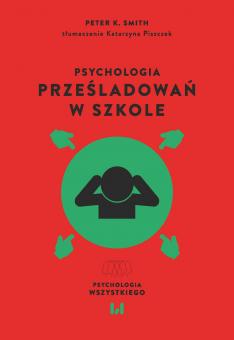
The Psychology of School Bulling
Series:
The Psychology of Everything
ISBN
ISBN-13 (15)
978-83-8331-179-1
ISBN (e-book)
ISBN-13 (15)
978-83-8331-180-7
Keywords:
bullying in school, participant roles in bullying, cyberbullying, peer-support schemes, consequences of bullying
Published:
20 October 2023
Categories:
Psychology
Why do children get involved with bullying? Does cyberbullying differ from traditional bullying? How can bullying at school be prevented?
The Psychology of School Bullying explores what bullying is and what factors lead to children playing roles as bullies, victims, defenders, bystanders or even some combination of these. The book examines proactive strategies to reduce the likelihood of bullying happening in school, but also looks at what action the school could take if bullying incidents do occur.
As bullying can have such far-reaching consequences and sometimes tragic outcomes, it is vital to grasp how and why it happens, and The Psychology of School Bullying shows how improved knowledge and understanding can lead to effective interventions.
Peter K. Smith, University of London
Peter K. Smith is Emeritus Professor of Psychology at Goldsmiths, University of London, UK. He has written and edited many books and articles on the topic of school bullying. In 2015 he was awarded the William Thierry Preyer award for Excellence in Research on Human Development.
Arseneault, L. (2018). Annual research review: The persistent and pervasive impact of being bullied in childhood and adolescence: Implications for policy and practice. Journal of Child Psychology and Psychiatry, 59, 405–421.
Ayers, S.L., Wagaman, M.A., Geiger, J.M., Bermudez-Parsai, M. i Hedberg, E.C. (2012). Examining school-based bullying interventions using multilevel discrete time hazard monitoring. Prevention Science, 13, 539–550.
Ball, H.A., Arsenault, L., Taylor, A., Maughan, B., Caspi, A. i Moffitt, T.E. (2008). Genetic and environmental influences on victims, bullies and bully-victims in childhood. Journal of Child Psychiatry and Psychiatry, 49, 104–112.
Beckman, L. i Svensson, M. (2015). The cost-effectiveness of the Olweus bullying prevention program: Results from a modeling study. Journal of Adolescence, 45, 127–139.
Bibou-Nakou, I., Tsiantis, J., Assimopoulos, H. i Chatzilambou, P. (2012). Bullying/victimization from a family perspective: A qualitative study of secondary school student’ views. European Journal of Psychology of Education, 28, 53–71.
Blakemore, S.-J. i Mills, K.L. (2014). Is adolescence a sensitive period for sociocultural processing? Annual Review of Psychology, 65, 187–207.
Bronfenbrenner, U. (1979). The ecology of human development. Cambridge: Harvard University Press.
Brown, E.C., Low, S., Smith, B.H. i Haggerty, K.P. (2011). Outcomes from a school-randomized controlled trial of Steps to Respect: A bullying prevention Program. School Psychology Review, 40, 423–443.
Brown, S. i Taylor, K. (2008). Bullying, education and earnings: Evidence from the National child development study. Economics of Education Review, 27, 387–401.
Campbell, M. i Bauman, S. (eds.) (2018). Reducing cyberbullying in schools. London: Elsevier.
Cornell, D. i Huang, F. (2016). Authoritative school climate and high school student risk behavior: A cross-sectional multi-level analysis of student self-reports. Journal of Youth and Adolescence, 45, 2246–2259.
Cornell, D., Shukla, K. i Konold, T. (2015). Peer victimization and authoritative school climate: A multilevel approach. Journal of Educational Psychology, 107, 1186.
Cowie, H. i Smith, P.K. (2010). Peer support as a means of improving school safety and reducing bullying and violence. W: B. Doll, W. Pfohl i J. Yoon (eds.), Handbook of Youth Prevention Science. New York: Routledge, s. 177–193.
Cross, D., Monks, H., Hall, M., Shaw, T., Pintabona, Y., Erceg, E. i inni (2011). Three year results of the friendly schools whole-of-school intervention on children’s bullying behavior. British Educational Research Journal, 37, 105–129.
Cyberbullying tragedy: New Jersey family to sue after 12-year-old daughter’s suicide. https://www.nbcnews.com/news/us-news/new-jersey-family-sue-school-district-after-12-year-old-n788506 (dostęp: 24.04.2023).
Department for Education (2017). Preventing and tackling bullying: Advice for headteachers, staff and governing bodies. www.gov.uk/government/publications (dostęp: 24.04.2023).
Ditch the label (2017). Coroczna ankieta dot. prześladowania. https://www.ditchthelabel.org/ (dostęp: 14.08.2023).
Ellis, B.J., Volk, A.A., Gonzalez, J-M. i Embry, D.D. (2016). The meaningful roles intervention: An evolutionary approach to reducing bullying and increasing prosocial behavior. Journal of Research on Adolescence, 22, 622–637.
Ennis, J. (2012). Unbelievable – From My Childhood Dreams To Winning Olympic Gold. London: Hodder & Stoughton.
Ewaluacja programu Tellus4 (2010). http://webarchive.nationalarchives.gov.uk/20120503103309/www.education.gov.uk/publications/eOrderingDownload/DFE-RR002.pdf (dostęp: 24.04.2023).
Farrington, D.P., Lösel, F., Ttofi, M.M. i Theodorakis, N. (2012). School bullying, depression and offending behaviour later in life: An updated systematic review of longitudinal studies. Stockholm: Swedish National Council for Crime Prevention.
Finkelhor, D., Turner, H.A. i Hamby, S. (2012). Let’s prevent peer victimization, not just bullying. Child Abuse & Neglect, 36, 271–274.
Flygare, E., Frånberg, G-M., Gill, P., Johansson, B., Lindberg, O., Osbeck, C. i Söderström, Å. (2011). Evaluation of anti-bullying methods. Report 353. Stockholm: National Agency for Education. www.skolverket.se (dostęp: 24.04.2023).
Frisén, A., Hasselblad, T. i Holmqvist, K. (2012). What actually makes bullying stop? Reports from former victims. Journal of Adolescence, 35, 981–990.
Garandeau, C.F., Poskiparta, E. i Salmivalli, C. (2014). Tackling acute cases of school bullying in the KiVa anti-bullying program: A comparison of two approaches. Journal of Abnormal Child Psychology, 40, 289–300.
Gradinger, P., Yanagida, T., Strohmeier, D. i Spiel, C. (2016). Effectiveness and sustainability of the ViSC social competence program to prevent cyberbullying and cyber-victimization: Class and individual level moderators. Aggressive Behavior, 42, 181–193.
Guldberg, H. (2010). Sorry, but it can be GOOD for children to be bullied. www.dailymail.co.uk/femail/article-1281630/DR-HELENE-GULDBERG-Sorry-GOOD-children-bullied.html (dostęp: 24.04.2023).
Harter, S. (1985). Manual for the self-perception profile for children. Denver, CO: University of Denver.
Hawley, P.H. i Williford, A. (2015). Articulating the theory of bullying intervention programs: Views from social psychology, social work, and organizational science. Journal of Applied Developmental Psychology, 37, 3–15.
Hayes, R. i Herbert, C. (2011). Rising above bullying: From despair to recovery. London–Philadelphia: Jessica Kingsley.
Hong, J.S. i Espelage, D.L. (2012). A review of research on bullying and peer victimization in school: An ecological system analysis. Aggression and Violent Behavior, 17, 311–322.
Huitsing, G. i Veenstra, R. (2012). Bullying in classrooms: Participant roles from a social network perspective. Aggressive Behavior, 38, 494–509.
Juvonen, J., Nishina, A. i Graham, S. (2001). Self-views versus peer perceptions of victim status among early adolescents. W: J. Juvonen i S. Graham (eds.), Peer harassment at school: The plight of the vulnerable and victimised. New York: Guildford, s. 105–124.
Kanetsuna, T., Smith, P.K. i Morita, Y. (2006). Coping with bullying at school: Children’s recommended strategies and attitudes to school-based interventions in Japan and England. Aggressive Behavior, 32, 570–580.
Kärnä, A., Voeten, M., Poskiparta, E. i Salmivalli, C. (2010). Vulnerable children in varying classroom contexts: Bystanders’ behaviors moderate the effects of risk factors on victimization. Merrill-Palmer Quarterly, 56, 261–282.
Kwestionariusz Prześladowcy/Ofiary Olweusa. University of Bergen, Norway. olweus@uni.no. Zob. też https://www.pdastats.com/PublicFiles/Olweus_Sample_Standard_School_Report.pdf (dostęp: 24.04.2023).
Lee, S-H., Smith, P.K. i Monks, C. (2012). Meaning and usage of a term for bullying-like phenomena in South Korea: A lifespan perspective. Journal of Language and Social Psychology, 31, 342–349.
Lereya, S.T., Samara, M. i Wolke, D. (2013). Parenting behavior and the risk of becoming a victim and a bully/victim: A meta-analysis study. Child Abuse & Neglect, 37, 1091–1108.
Machmutow, K., Perren, S., Sticca, F. i Alsaker, F.D. (2012). Peer victimisation and depressive symptoms: Can specific coping strategies buffer the negative impact of cybervictimisation? Emotional and Behavioural Difficulties, 17, 403–420.
Menesini, E., Nocentini, A. i Palladino, B.E. (2012). Empowering students against bullying: and cyberbullying: Evaluation of an Italian peer-led model. International Journal of Conflict and Violence, 6, 313–320.
Monks, C. i Coyne, I. (eds.). (2011). Bullying in different contexts. Cambridge: Cambridge University Press.
Mooney, S. i Smith, P.K. (1995). Bullying and the child who stammers. British Journal of Special Education, 22, s. 24–27.
Nansel, T.R., Craig, W., Overpeck, M.D., Saluja, G., Ruan, W.J. i The Health Behaviour in School-aged Children Bullying Analyses Working Group. (2004). Cross-national consistency in the relationship between bullying behaviors and psychosocial adjustment. Archives of Pediatrics and Adolescent Medicine, 158, 730–736.
Nocentini, A. i Menesini, E. (2016). KiVa anti-bullying program in Italy: Evidence of effectiveness in a randomised control trial. Prevention Science, 17, 1012–1023.
Olweus, D. (1993). Bullying at school: What we know and what we can do. Oxford: Blackwell.
Olweus, D. i Limber, S. (2010). The Olweus bullying prevention program: Implementation and evaluation over two decades (s. 377–401). W: S. Jimerson, S. Swearer i D. Espelage (eds.), Handbook of bullying in schools: An international perspective. New York: Routledge.
Peeters, M., Cillessen, A.H.N. i Scholte, R.H.J. (2010). Clueless or powerful? Identifying subtypes of bullies in adolescence. Journal of Youth and Adolescence, 39, 1041–1052.
Purdy, N. i Smith, P.K. (2016). A content analysis of school anti-bullying policies in Northern Ireland. Educational Psychology in Practice, 32, 281–295.
Ramirez, M., Ten Eyck, P., Peek-Asa, C., Onwuachi-Willig, A. i Cavanaugh, J.E. (2016). Evaluation of Iowa’s anti-bullying law. Injury Epidemiology, 3(1), 15.
Raporty uczniów dot. prześladowania: wyniki z przeprowadzonej w 2015 r. narodowej ankiety dot. wiktymizacji przestępczej, https://nces.ed.gov/pubsearch/pubsinfo.asp?pubid=2017015 (dostęp: 24.04.2023).
Rigby, K. (2016). School perspectives on bullying and preventative strategies: An exploratory study. Australian Journal of Education, 61, 24–39.
Rigby, K. i Griffiths, C. (2010). Applying the method of shared concern in Australian schools: An evaluative study. Canberra: Department of Education, Employment and Workplace Relations (DEEWR).
Rivers, I., Poteat, V.P., Noret, N. i Ashurst, N. (2009). Observing bullying at school: The mental health implications of witness status. School Psychology Quarterly, 24, 211–223.
Salmivalli, C. i Poskiparta, E. (2012). KiVa antibullying program: Overview of evaluation studies based on a randomized controlled trial and national rollout in Finland. International Journal of Conflict and Violence, 6, 294–302.
Salmivalli, C., Lagerspetz, K., Björkqvist, K., Österman, K. i Kaukiainen, A. (1996). Bullying as a group process: Participant roles and their relations to social status within the group. Aggressive Behavior, 22, 1–15.
Slee, P., Skrzypiec, G., Sandhu, D. i Campbell, M. (2018). PhotoStory: A legitimate research tool in cross-cultural research. W: P.K. Smith, S. Sundaram, B. Spears, C. Blaya, M. Schafer i D. Sandhu (eds.), Bullying, cyberbullying and pupil well-being in schools: Comparing European, Australian and Indian perspectives. Cambridge: Cambridge University Press.
Smith, P.K. (2014). Understanding school bullying: Its nature and prevention strategies. London: Sage.
Smith, P.K. (2016). School-based interventions to address bullying. Estonian Journal of Education, 4, 142–164.
Smith, P.K. (2017). Bullying and theory of mind: A review. Current Psychiatry Reviews, 13, 90–95.
Smith, P.K., Robinson, S. i Marchi, B. (2016). Cross-national data on victims of bullying: What is really being measured? International Journal of Development Science, 10, 9–19.
Smith, P.K., Talamelli, L., Cowie, H., Naylor, P. i Chauhan, P. (2004). Profiles of non-victims, escaped victims, continuing victims and new victims of school bullying. British Journal of Educational Psychology, 74, 565–581.
Sojusz przeciwdziałający prześladowaniu. Prześladowanie na tle seksualnym: opracowywanie efektywnej praktyki przeciwdziałającej prześladowaniu. www.anti-bullyingalliance.org.uk (dostęp: 24.04.2023).
Spiel, C. i Strohmeier, D. (2011). National strategy for violence prevention in the Austrian public school system: Development and implementation. International Journal of Behavioral Development, 35, 412–418.
Stonewall (2017). School report: The experiences of lesbian, gay, bi and trans young people in Britain’s schools in 2017. www.stonewall.org.uk/get-involved/education (dostęp: 24.04.2023).
Thompson, F. i Smith, P.K. (2011). The use and effectiveness of anti-bullying strategies in schools. DFE-RR098.
Thompson, F. i Smith, P.K. (2012). Anti-bullying strategies in schools – What is done and what works. British Journal of Educational Psychology, Monograph Series II, 9, 154–173.
Thompson, F. i Smith, P.K. (2013). Bullying in schools. W: N. Purdy (ed.), Pastoral care 11–16: A critical introduction (s. 64–95). London: Bloomsbury.
Ttofi, M.M. i Farrington, D.P. (2011). Effectiveness of school-based programs to reduce bullying: A systematic and meta-analytic review. Journal of Experimental Criminology, 7, 27–56.
Ttofi, M.M., Farrington, D.P. i Lösel, F. (2011). Do the victims of school bullies tend to become depressed later in life? A systematic review and meta-analysis of longitudinal studies. Journal of Aggression, Conflict and Peace Research, 3, 63–73.
Veiga Simão, A.M., Costa Ferreira, P., Freire, I., Caetano, A.P., Martins, M.J. i Vieira, C. (2017). Adolescent cybervictimization – Who they turn to and their perceived school climate. Journal of Adolescence, 58, 12–23.
Webster, D. i Webster, V. (2012). So many everests. Oxford: Lion Hudson.
Wolke, D. i Lereya, T. (2015). Long-term effects of bullying. Archives of Disease in Childhood, 100, 879–885.
Wright, M.F. (2016). Cybervictims’ emotional responses, attributions, and coping strategies for cyber victimization: A qualitative approach. Safer Communities, 15, 160–169.
Ybarra, M.L., Espelage, D.L. i Mitchell, K.J. (2014). Differentiating youth who are bullied from other victims of peer-aggression: The importance of differential power and repetition. Journal of Adolescent Health, 55, 293–300.
Yeager, D.S., Fong, C.J., Lee, H.Y. i Espelage, D.L. (2015). Declines in efficacy of anti-bullying programs among older adolescents: Theory and athree-level meta-analysis. Journal of Applied Developmental Psychology, 37, 36–51.
Download data is not yet available.
Copyright (c) 2023 © Copyright by Peter K. Smith, 2019; © Copyright for this edition by Uniwersytet Łódzki, Łódź 2023; © Copyright for Polish translation by Katarzyna Piszczek, Łódź 2023
License
LicenseCategory
- Archaeology
- Bibliology and information science
- Biology
- Chemistry
- Economics and management
- Ethnology and cultural anthropology
- Polish philology
- Foreign language studies
- Philosophy
- Physics
- Geography
- History
- Linguistics
- Judaica
- Culture and art
- Literary Studies
- Mathematics
- Media
- Pedagogy
- Textbooks for foreigners
- Political science and international relations
- Law
- Psychology
- Sociology
- Other
- Open Access
Series
- 100 Years of Independence
- The Academy of Local Governments
- The Academy of Management and Finance
- Handicapable
- Literary and Linguistic Analects
- Balkans XX/XXI
- Bibliotheca Litteraria
- Bibliotheca Philosophica
- Biography and Biography Research
- Byzantina Lodziensia
- Contemporary Asian Studies Series
- Digitisation
- Education for Wisdom
- Economics
- Film! Scholars
- Finance
- Gerontology
- Interdisciplinary Urban Studies
- Literary Interpretations
- Jerzy Giedroyc and...
- Jerzy Giedroyc and Witnesses of History
- Winter of Life?
- Linguistics
- Judaica Lodzensia
- Jurisprudence
- What Is Man?
- Cognitive Science
- Communication and Media
- A Very Short Introduction
- Literary Culture of Lodz
- Literary Studies
- Lodz Studies in English and General Linguistics
- Lodz in the Polish People's Republic. The Polish People's Republic in Lodz
- Manufactura Hispánica Lodziense
- Marketing
- The monographs of the Section of Disability Sociology of the Polish Sociological Association
- The Art of Learning – The Learning of Art
- Neuroscience in Psychology
- Faces of Feminism
- Faces of war
- Biographical Perspectives
- Politology
- Poland and Central and Eastern Europe in the 20th Century
- Polish Film Culture
- Law
- The Polish People's Republic. Biographies
- Existence and Literature Project
- The Psychology of Everything
- Research on Science & Natural Philosophy
- Romanistyka dla Teatru
- Series Ceranea
- The Conference on Social Pedagogy under the Patronage of the Committee on Pedagogical Sciences of the Polish Academy of Sciences
- Art – Media – Culture
- Pedagogical Therapy
- Creativity and Education
- Vade Nobiscum
- Warsztaty z Geografii Turyzmu
- Early Education
- In Search for the 21st Century Ideas
- The Tower of Babel – in Polish
- Management
- Private Life of Poles in the 19th Century